The 2024 audit of Lytton, B.C.'s post-wildfire recovery reveals far more
Beyond the Ashes: The Systemic Failures Exposed by Lytton's Rebuild Crisis
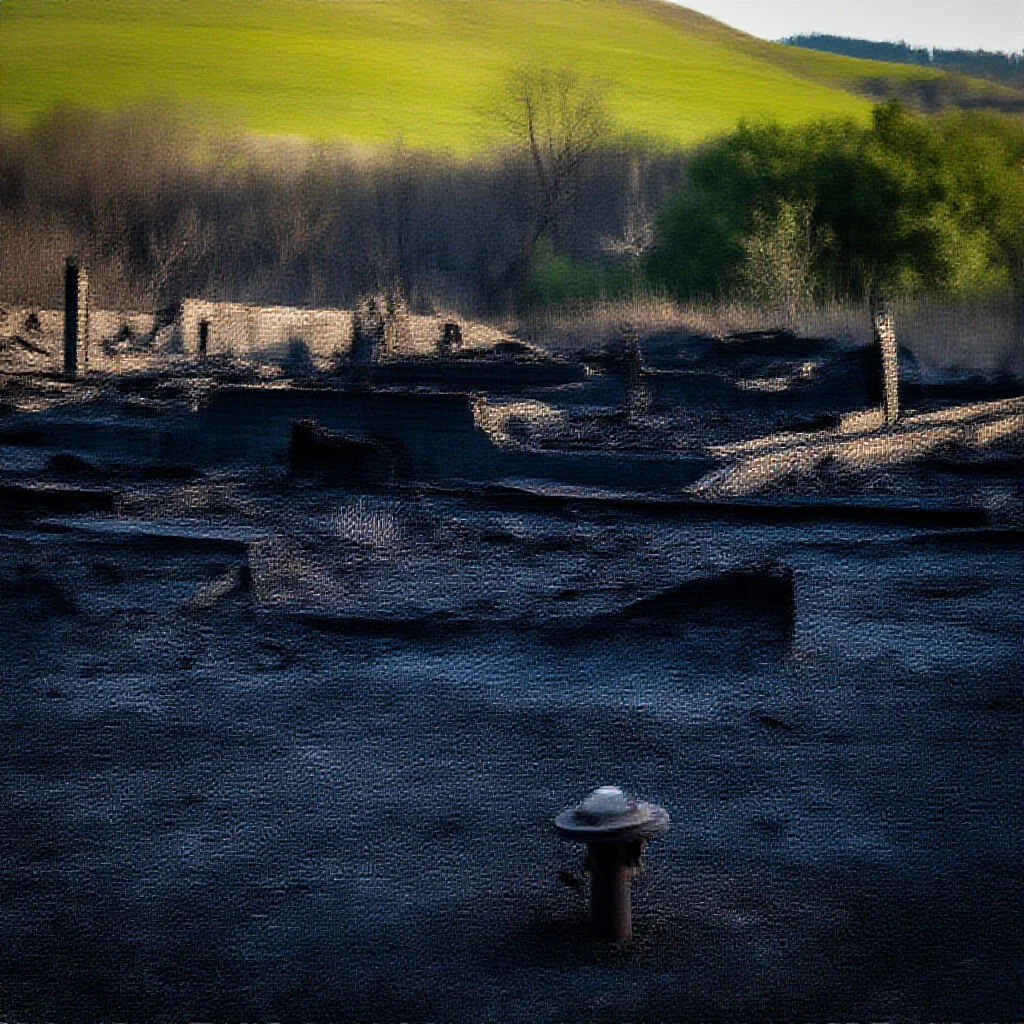
A stark, high-contrast photograph showing the charred remains of a building foundation in Lytton against a backdrop of green, recovering hills. In the foreground, a single untouched fire hydrant stands as a silent witness.
Introduction: Lytton as a Microcosm of a Macro Problem
The wildfire that destroyed the Village of Lytton, British Columbia, in June 2021 was a catastrophic climate event. The formal assessment of its aftermath, delivered in an audit report released on February 20, 2024, provides a structural diagnosis of failure. The report from Auditor General Michael Pickup details a local administration "immediately overwhelmed" by the scale of the disaster (Source 1: [Auditor General Report, Feb 20, 2024]). This finding transcends a single village’s tragedy. It exposes a foundational flaw in the Canadian disaster preparedness model: the assumption that local governments possess the inherent capacity to bear the primary burden of catastrophic recovery.
The Audit's Core Finding: A System Designed for Peace, Not War
The audit’s evidence delineates a systemic mismatch. The village lacked a recovery plan and had no emergency operations centre, indicating a critical preparedness failure (Source 2: [Auditor General Report, Feb 20, 2024]). Furthermore, its financial management system was not designed for a disaster of this scale, creating a critical bureaucratic impediment to rapid response (Source 3: [Auditor General Report, Feb 20, 2024]). The statement that local capacity was "immediately overwhelmed" is not merely an observation of strain but a verdict on scale. This reveals a "peacetime administration" model, optimized for routine municipal governance, that is structurally ill-equipped for the "wartime" demands of a cataclysmic event. This vulnerability is not unique to Lytton but is a latent condition in small municipalities globally.
The Provincial Intervention: A Stopgap, Not a Solution
The provincial government’s appointment of a third-party manager in August 2021 was a necessary, reactive measure that formally confirmed the local capacity collapse (Source 4: [Provincial Government Action, Aug 2021]). This intervention functioned as a critical stopgap. However, it does not address the root systemic gap it revealed. The timeline from the June 2021 fire to the February 2024 audit report underscores this is a "slow analysis" issue—a deep audit of intergovernmental disaster governance rather than a simple verification of events. The intervention treated the symptom (failed local management) but did not cure the disease (a system that expects unsustainable resilience from local entities).
The Hidden Economic Logic: The True Cost of Underwriting Local Risk
The long-term economic impact of a delayed rebuild extends far beyond municipal borders. It disrupts regional supply chains, stresses insurance markets through protracted claims, and creates chronic liabilities for provincial coffers supporting displaced populations and businesses. The provincial government’s acceptance of all 12 audit recommendations is a fiscal necessity, not merely a bureaucratic response (Source 5: [Provincial Government Acceptance of Recommendations]). Inefficient recovery multiplies costs through business failure, increased mental health service demands, and prolonged social dependency. The underlying pattern indicates that climate disasters are shifting from episodic, bounded expenses to chronic, systemic liabilities. Current municipal revenue and capacity models are fundamentally unable to absorb or manage this scale of financial shock.
A New Paradigm: From Reactive Recovery to Proactive Resilience
The accepted recommendations point toward a required paradigm shift. The solution is not only to rebuild Lytton but to reconfigure the disaster governance framework. This necessitates moving from a reactive model, which intervenes after local failure, to a proactive system of pre-emptive resilience. For vulnerable, low-capacity municipalities, this implies standardized, scalable disaster response templates, pre-authorized emergency financial protocols, and defined escalation triggers for provincial or federal operational support. The model must acknowledge that "local responsibility" has a breaking point, beyond which a higher order of government must automatically assume a command role, not as a failure but as a designed feature of the system.
Conclusion: Lytton as a Canary in the Coal Mine
The Lytton audit is a diagnostic tool for a national ailment. It demonstrates that the scale and frequency of modern climate disasters have outstripped a governance model built for a different era. The failure was predictable, not due to local negligence, but due to a systemic mismatch between risk and capacity. The path forward, as indicated by the audit’s trajectory, requires a formal reallocation of disaster response roles and resources. The logical prediction is that without such a paradigm shift, the pattern observed in Lytton—local collapse followed by belated, higher-level intervention—will replicate, with escalating human and economic costs, across an increasing number of Canadian communities.