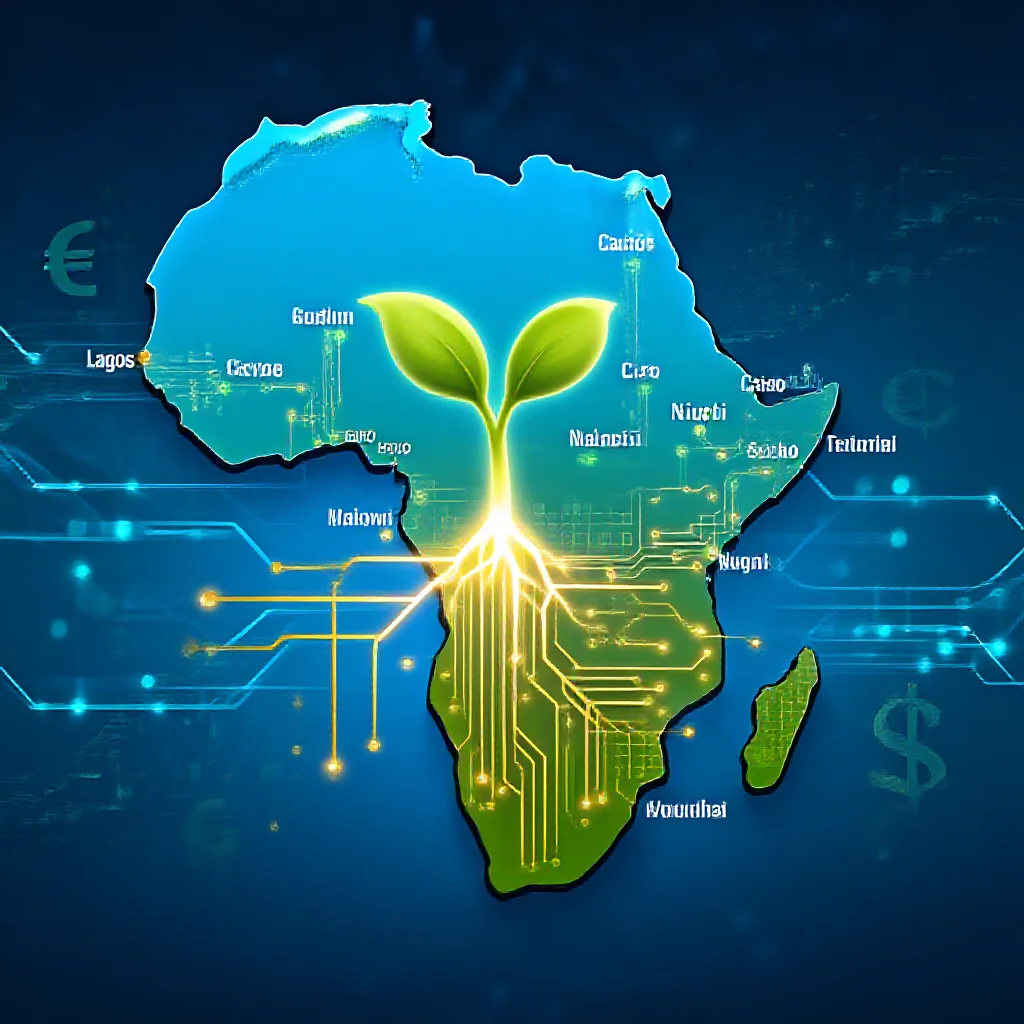
Africa's renewable energy infrastructure market is poised for rapid growth as global investments surge. This analysis explores the opportunities, policy implications, and long-term economic transformation potential for the continent.
Executive Summary
The global renewable energy infrastructure market is undergoing significant expansion, with market size projected to grow from $1.0 trillion in 2024 to $2.0 trillion by 2035, at a compound annual growth rate (CAGR) of 6.5%. While much of this growth is concentrated in North America and Asia-Pacific, Africa is increasingly positioned as a strategic frontier for renewable energy infrastructure development. The continent's abundant solar, wind, and hydropower resources, combined with rising energy demand and urbanization, present a compelling investment case. However, unlocking this potential requires deliberate policy coordination, regional integration, and public-private partnerships. This article analyzes the market dynamics, business implications, and regional strategies that will shape Africa's renewable energy infrastructure trajectory over the next decade.
Introduction
Across the globe, the transition to low-carbon energy systems is accelerating. Government policies, corporate sustainability commitments, and technological advancements in energy storage are driving unprecedented investment in renewable energy infrastructure. According to recent market research, the sector is set to double in size by 2035. For Africa, this global shift represents both a challenge and an opportunity. The continent faces a persistent energy access gap, yet it holds some of the world’s best renewable energy resources. The expanding global market for renewable energy infrastructure offers African economies a chance to leapfrog traditional fossil-fuel-based development, attract foreign direct investment (FDI), and build resilient energy systems that support industrialization and regional trade.
Main Analysis
Global Market Trends and Africa’s Position
The renewable energy infrastructure market is characterized by rapid technological innovation, declining costs, and supportive regulatory frameworks. Solar power currently dominates the technology segment, due to significant advancements in photovoltaic efficiency and cost reductions—over 80% decline since 2010. Wind power is also growing, particularly in regions with favorable wind regimes. Energy storage is the fastest-growing application segment, addressing the intermittency of renewable sources and enabling grid stability.
Africa is well-positioned to benefit from these trends. The continent receives some of the highest solar radiation levels globally, and its vast land mass offers ample space for utility-scale solar and wind projects. Hydropower continues to play a role in East and Central Africa, while emerging geothermal potential in the Rift Valley adds further diversity. However, infrastructure remains sparse. Attracting investment in renewable energy infrastructure is therefore a priority for many African governments.
Key Drivers in the African Context
Several drivers are propelling renewable energy infrastructure development in Africa:
- Government Policies and Incentives: Many African countries have introduced feed-in tariffs, tax exemptions, and renewable energy targets. The African Development Bank and other development finance institutions are actively funding renewable projects, reducing the risk for private investors.
- Corporate Sustainability Initiatives: Multinational corporations operating in Africa are increasingly committing to 100% renewable energy targets, creating demand for green power purchase agreements and dedicated infrastructure.
- Rising Energy Demand and Urbanization: Africa’s population is projected to double by 2050, with rapid urbanization driving electricity consumption. Renewable energy infrastructure is essential to meet this demand sustainably.
- Public Awareness and Environmental Concerns: A growing global focus on climate change is influencing African policymakers and businesses to pursue cleaner energy pathways.
Investment Trends and Market Players
The global market’s expansion is underpinned by major players such as NextEra Energy, Siemens Gamesa, Vestas Wind Systems, and others. While these companies operate globally, their technologies and expertise are increasingly being deployed in Africa. In 2025, global investment in renewable energy infrastructure reached approximately $500 billion, largely driven by favorable policies. Africa’s share of this investment is still modest, but the trend is upward. Countries like Egypt, Morocco, South Africa, and Kenya are leading in project development, while others are beginning to attract interest.
Challenges and Policy Imperatives
Despite the potential, African renewable energy infrastructure faces significant hurdles: inadequate grid networks, limited financing capacity, regulatory inconsistencies, and skills shortages. To overcome these, governments must prioritize:
- Grid Modernization: Expanding transmission and distribution networks to integrate variable renewable energy.
- Regional Cooperation: Cross-border power pools (e.g., the Southern African Power Pool, West African Power Pool) can optimize resource sharing and reduce costs.
- Local Content Requirements: Encouraging local manufacturing of solar panels, batteries, and other components to create jobs and build industrial capacity.
- Risk Mitigation Instruments: Providing guarantees and political risk insurance to attract private capital.
Business Impact
Renewable energy infrastructure is set to have transformative impacts on African economies:
- Industrialization: Affordable and reliable clean energy can power manufacturing, agro-processing, and other value-added industries, enhancing Africa’s competitiveness.
- Foreign Direct Investment: A robust renewable energy sector signals a stable business environment, attracting FDI in energy, manufacturing, and technology.
- Supply Chain Resilience: Localized energy generation reduces dependence on imported fuels and strengthens economic resilience.
- Employment: From construction to operations, renewable infrastructure creates significant job opportunities, especially for youth.
- Financial Inclusion: Decentralized renewable solutions (e.g., mini-grids) can extend energy access to rural areas, enabling productive activities and digital services.
The growth of the renewable energy infrastructure market will also drive innovation in energy storage, smart grids, and energy efficiency, creating new business ecosystems that support Africa’s digital economy.
Regional Perspective
Renewable energy infrastructure development varies across African regions, each with distinct opportunities and challenges:
- North Africa: Rich in solar potential, North Africa is establishing itself as a hub for concentrated solar power and green hydrogen. Morocco’s Noor complex is a flagship, and Egypt’s Benban solar park is among the world’s largest. These projects enhance integration with Europe through interconnectors.
- East Africa: Hydropower dominates, but geothermal potential in the Rift Valley offers a stable base-load source. Kenya is a leader in geothermal, while Ethiopia’s Grand Ethiopian Renaissance Dam will bolster regional electricity trade.
- West Africa: Solar and wind projects are emerging, but the region faces infrastructure deficits. The West African Power Pool aims to facilitate trade, and countries like Nigeria are pursuing decentralized solutions to improve access.
- Southern Africa: South Africa’s Renewable Energy Independent Power Producer Procurement Programme has attracted substantial private investment. The region’s mining sector can also leverage renewable energy for cost reduction and decarbonization.
- Central Africa: Hydropower potential is immense, yet underdeveloped. The region could become a net exporter of clean energy if cross-border transmission infrastructure improves.
Future Outlook
Over the next 3–5 years, several developments are expected to shape Africa’s renewable energy infrastructure:
- Green Hydrogen: Africa’s renewable resources could support large-scale electrolysis, positioning the continent as a future exporter of green hydrogen to global markets.
- Energy Storage Expansion: Falling battery costs will enable more standalone storage projects and hybrid systems, improving grid reliability.
- Digitalization: Smart grids, AI-based energy management, and mobile payment platforms will enhance operational efficiency and consumer access.
- Climate Financing: International climate funds and carbon credit mechanisms will increasingly flow to African renewable projects, especially those with social co-benefits.
To fully seize these opportunities, African governments and development partners must accelerate policy harmonization, invest in transmission infrastructure, and foster innovative financing models. The potential reward is significant: a cleaner, more resilient, and more industrialized Africa that contributes meaningfully to global climate goals while improving the lives of its people.
Conclusion
The renewable energy infrastructure market is a pivotal component of Africa’s economic transformation. Global growth trends provide a powerful tailwind, but the continent must actively shape its own path. By leveraging its resource endowments, implementing enabling policies, and fostering regional cooperation, Africa can attract the investment needed to build a sustainable, inclusive, and competitive energy sector. The next decade will be critical, and the decisions made today will determine whether Africa emerges as a leader in the global energy transition or remains a peripheral player. The business implications are clear: investing in renewable energy infrastructure is not just an environmental imperative, but a strategic economic choice for the continent’s long-term prosperity.
Key Takeaways
- Global renewable energy infrastructure market is expected to reach $2 trillion by 2035, offering significant opportunities for Africa.
- Africa’s solar, wind, hydro, and geothermal resources provide a competitive advantage in attracting clean energy investment.
- Government policies, corporate sustainability commitments, and falling technology costs are key drivers.
- Regional integration and grid modernization are essential for maximizing the impact of renewable projects.
- Private-public partnerships and innovative financing are critical to addressing infrastructure gaps.
- Africa’s energy transition can catalyze industrialization, job creation, and economic resilience.