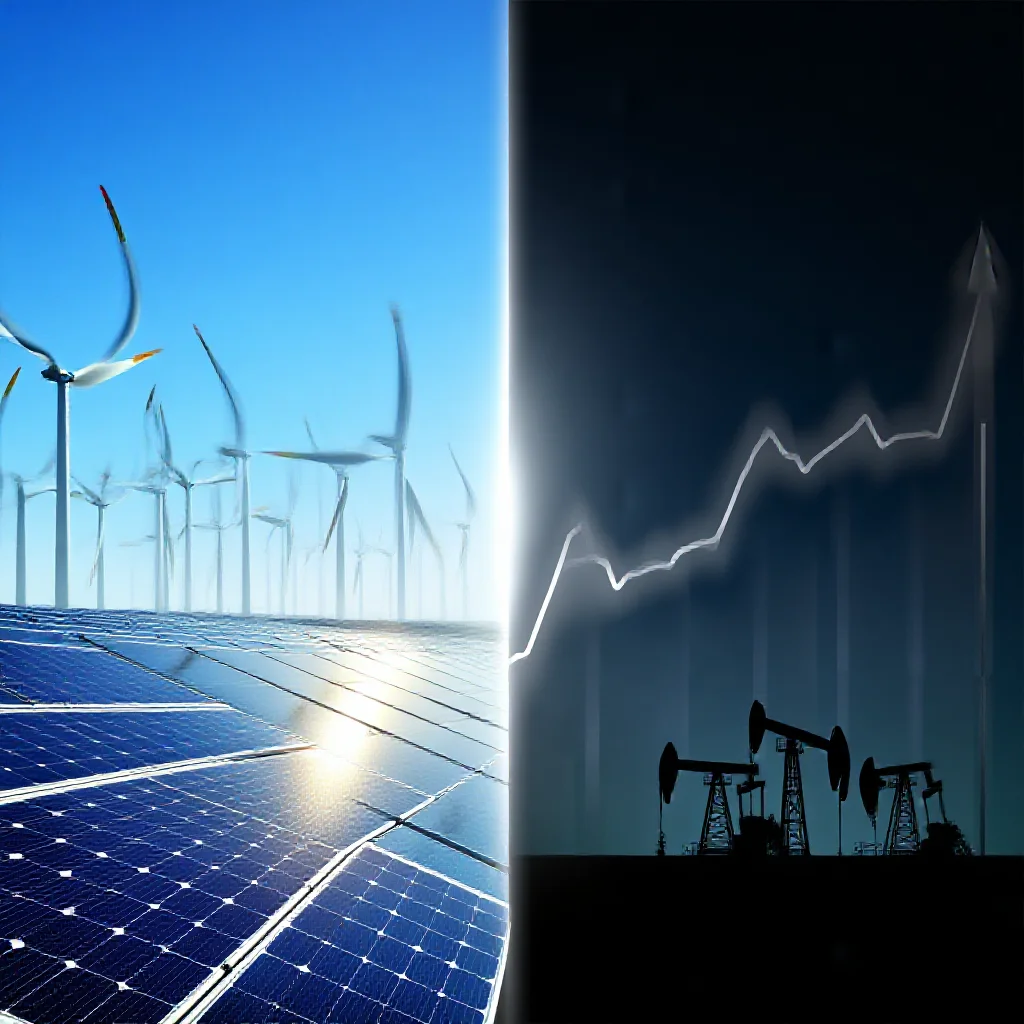
The news that renewables now constitute 50% of global electricity generation
Beyond the 50% Milestone: The Hidden Economic and Geopolitical Shift in Global Energy
The global electricity system has crossed a structural threshold. Renewable energy sources, including solar, wind, and hydro, now constitute 50% of the world’s installed electricity generation capacity (Source 1: [Primary Data]). This numerical milestone coincides with the scheduled convening of the inaugural Fossil Fuel Exit Summit in the coming months. These parallel developments represent not a coincidence but a causal sequence, signaling a profound reordering of global capital flows, supply chain dependencies, and strategic statecraft.
The 50% Tipping Point: More Than Just a Headline Number
The 50% figure refers specifically to installed capacity, the maximum potential output under ideal conditions. Actual electricity generation from these sources remains lower, due to the variable nature of solar and wind. However, this capacity milestone is a critical leading indicator. It reflects a decisive convergence of economic and policy drivers that have moved renewable deployment from niche to norm.
The primary driver is unequivocally economic. Levelized costs of electricity from utility-scale solar photovoltaics and onshore wind have achieved and sustained parity with, or undercut, fossil fuel alternatives in most major markets. This cost trajectory, documented in annual reports from the International Renewable Energy Agency (IRENA), has transformed the investment case. Concurrently, sovereign energy security policies, particularly in the wake of geopolitical disruptions to hydrocarbon trade, have accelerated national deployment targets. These market and policy signals have been amplified by institutional divestment pressures, as major financial entities recalibrate portfolios in response to transition risk. The 50% capacity mark is the aggregate output of this convergence.
Dual-Track Reality: Fast Deployment Meets Slow, Strategic Unwinding
The current energy transition operates on two distinct, yet interconnected, tracks. The first is the fast, technology-and-market-driven deployment of renewable infrastructure. This track operates on a logic of addition, competition, and scaling manufacturing. Its most significant impact is the erosion of peak demand for fossil fuel-generated electricity, flattening and then depressing the operational hours and economic viability of incumbent thermal assets.
The second track is the slow, deliberate, and politically complex process of strategic unwinding. The forthcoming Fossil Fuel Exit Summit embodies this track. It initiates a diplomatic marathon focused on the coordinated management of decline—addressing stranded asset risks, labor force transitions, and the recalibration of national economies reliant on fossil fuel extraction and export. The central negotiations will likely revolve around the mechanisms of phase-out, the definition of a "just transition," and the composition of coalitions between demand-side and supply-side nations.
The critical interplay between these tracks is that the velocity of the first creates the political and economic space for the second. As renewable capacity expands and storage technologies advance, the perceived economic and security cost of fossil fuel dependence rises, thereby altering the negotiation calculus for the exit summit.
The Deep Entry Point: Capital Reallocation and the New Supply Chain Battleground
The transition’s most consequential effects are occurring beneath the headline capacity figures, in the reallocation of global capital and the formation of new supply chain dependencies. Investment is decisively shifting from upstream hydrocarbon exploration and extraction to mineral processing, grid modernization, and storage technologies. Annual investment in energy transition technologies now consistently surpasses that in fossil fuel supply, a trend quantified in analyses by BloombergNEF (Source 2: [Financial Analysis]).
This capital shift redefines geopolitical and industrial bottlenecks. The new system’s constraints are not wellheads and pipelines, but access to critical minerals—lithium, cobalt, nickel, rare earth elements—and manufacturing dominance in batteries, electrolyzers, and high-voltage direct current transmission. Control over these supply chains confers future industrial and strategic advantage. Reports from the International Energy Agency (IEA) and the United States Geological Survey (USGS) highlight the concentrated geography of mineral processing and component manufacturing, creating a new map of trade dependencies and potential friction points distinct from 20th-century oil politics.
Pre-Summit Positioning: The New Calculus of Energy Statecraft
In advance of the Fossil Fuel Exit Summit, nations are engaging in strategic positioning based on their comparative advantages in the post-fossil value chain. This positioning falls into distinct archetypes. Resource-rich nations are leveraging control over critical mineral deposits. Industrial and technological powers are competing for leadership in manufacturing complexity, from battery cells to smart grid software. Legacy fossil fuel exporters face the most acute strategic challenge, navigating between short-term revenue needs and long-term economic diversification.
This recalibration is fundamentally altering doctrines of energy security. Security is increasingly defined by resilience of mineral supply, manufacturing autonomy for key components, and grid cybersecurity, rather than by naval control of sea lanes for tanker traffic. The summit will serve as a forum where these reconfigured priorities are formally articulated and where alliances based on new energy interdependencies begin to crystallize.
Neutral Market and Industry Trajectories
Based on the established drivers, several trajectories appear structurally embedded. The growth rate of renewable capacity additions will continue to be dictated by supply chain scalability and grid integration capabilities, not by cost competitiveness. Financial markets will intensify scrutiny on companies and states for credible transition plans, moving beyond divestment to actively pricing transition execution risk. The first Fossil Fuel Exit Summit is unlikely to produce a binding, universal phase-out treaty. Its substantive outcome will be the formalization of a negotiation framework and the establishment of working groups on finance, technology transfer, and adjustment mechanisms, setting the tempo for subsequent diplomatic rounds.
The 50% capacity milestone is therefore a confirmed signal of directional change. The summit is the first formal attempt to manage the political and economic consequences of that change. Together, they frame the central strategic undertaking of the coming decades: the deliberate dismantling of one foundational industrial system and the concurrent construction of its successor.