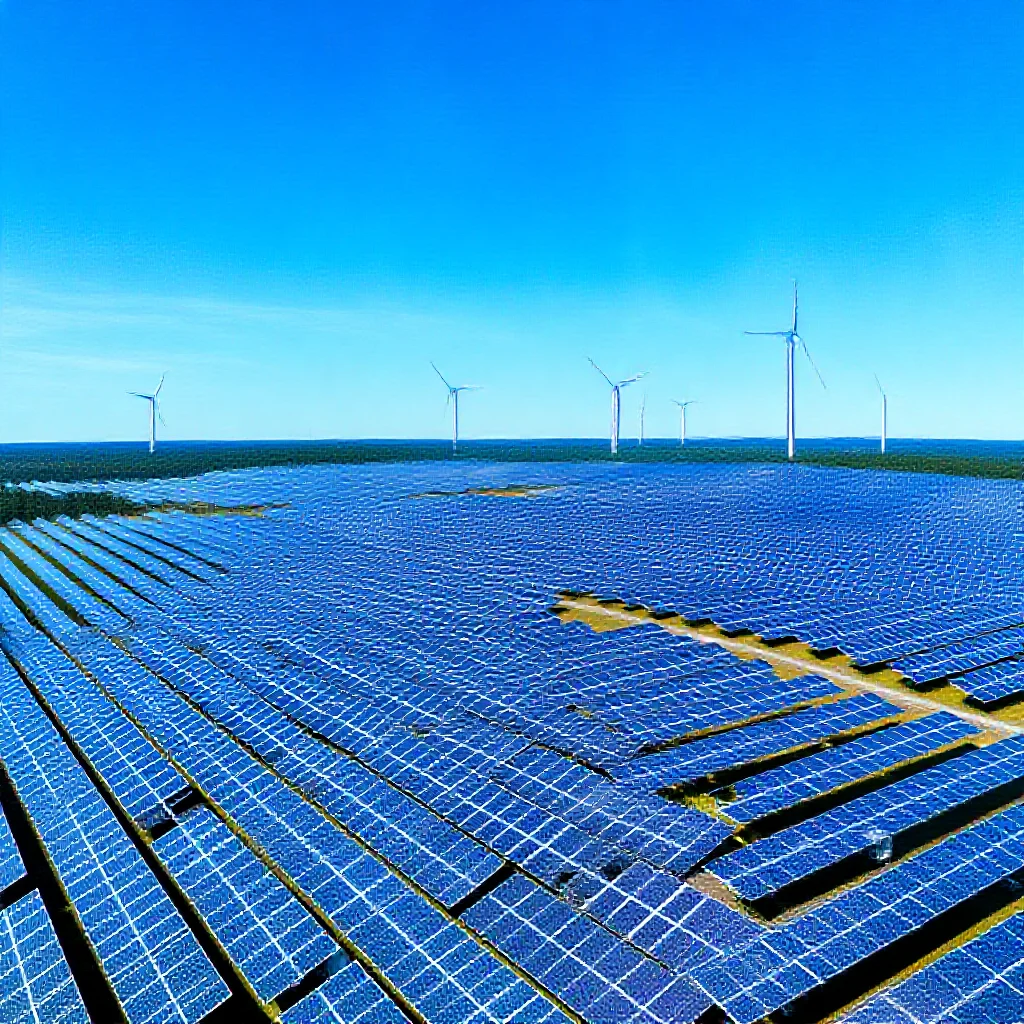
Ontario's latest renewable energy procurement reveals a clear market shift.
Solar's Dominance & Price Signals: Decoding Ontario's 2027 Renewable Energy Procurement
A recent procurement by Ontario’s Independent Electricity System Operator (IESO) has delivered a decisive verdict on the current state of renewable energy economics. The competitive request for proposals (RFP), intended to advance the province’s goal of adding 2,000 megawatts (MW) of new renewable capacity, resulted in the selection of only 14 projects for a combined 739 MW (Source 1: [Primary Data]). The outcome was characterized by a pronounced preference for solar power, which constituted 12 of the 14 winning bids, and a new benchmark for affordability, with an average accepted bid price of 8.9 cents per kilowatt-hour (kWh) (Source 1: [Primary Data]). The results, distilled from 103 proposals offering over 4,200 MW, signal a strategic pivot toward selectivity and cost discipline, with all awarded projects slated for operation by 2027 (Source 1: [Primary Data]).
The Procurement in Numbers: A Story of Selectivity and Solar Surge
The numerical outcome of the IESO’s procurement process reveals a clear hierarchy of market priorities. The most immediate contrast is between the targeted capacity—2,000 MW—and the awarded capacity of 739 MW. This 63% shortfall against the target is not an indicator of market failure but of stringent selectivity. The IESO evaluated proposals against criteria where price competitiveness was a pivotal factor, leading to a rejection of nearly 90% of the submitted volume.
Within the selected portfolio, solar power’s dominance is unequivocal. The 12 solar projects dwarf the two wind projects, a ratio that translates into a significant majority of the 739 MW of new capacity. This establishes solar’s decisive victory in this specific procurement round. The critical price point anchoring this selection is the 8.9 cents/kWh average. This figure now serves as a concrete affordability benchmark for new-build, utility-scale renewable generation in Ontario, providing a data point for comparison against both historical renewable energy contracts and the marginal cost of conventional generation.
Beyond the Headlines: The Hidden Economic Logic of the Selection
The underlying economic logic of the procurement results can be decoded through three analytical lenses: cost competitiveness, project viability, and grid strategy.
First, the 8.9¢/kWh average price is a direct signal of technological maturation. It confirms that utility-scale solar photovoltaic (PV) technology, in particular, has achieved a level of cost-competitiveness that allows it to succeed in a purely competitive RFP format against other generation types, including wind. This price point reflects global declines in PV module costs, increased project development experience, and favorable financing conditions.
Second, solar’s dominance may be attributed to factors beyond simple levelized cost. For a procurement with a fixed 2027 operational deadline, developers and the IESO must consider development timelines and execution risk. Solar projects typically have shorter, more predictable construction phases and face fewer siting complexities related to height and environmental impact compared to wind projects. Their modular nature also allows for scalable development that can align more easily with local grid interconnection capacities.
Third, the procurement’s focus on pure generation assets—solar and wind without integrated storage—is a strategic statement. It implies a continued near-term reliance on the existing grid and its fleet of dispatchable resources (e.g., nuclear, hydro, gas) to manage the intermittency of the new renewable influx. This suggests a phased approach where establishing low-cost generation is the immediate priority, potentially deferring large-scale investment in storage or other flexibility resources to a subsequent phase of grid evolution.
The 2027 Horizon: Supply Chain and Grid Integration Implications
The commitment to approximately 740 MW of primarily solar capacity, with a 2027 operational deadline, triggers a series of logistical and planning considerations.
From a supply chain perspective, this volume represents a significant near-term demand signal for solar PV components in Ontario and Canada. It will test the capacity of domestic and international manufacturing, logistics for inverters and mounting systems, and the availability of skilled labor for installation and grid connection. While unlikely to single-handedly spur new manufacturing, it provides a stable demand base for the industry.
The long-term grid integration implications are more complex. A generation mix with high solar penetration will require analysis of local distribution network upgrades to handle new injection points. It also elevates the risk of curtailment during periods of peak solar output and low demand, typically in the spring and fall. This very risk, however, begins to establish the future business case for complementary assets, such as energy storage or advanced demand response programs, which can capture and shift this excess generation. Cross-referenced with the IESO’s own Annual Planning Outlook, this procurement round appears to be executing on the early stages of a long-term capacity expansion roadmap, with a deliberate choice to lock in low-cost energy first.
Market Verdict and Future Trajectory: Reading the Signals
The market has rendered a clear verdict. In the context of Ontario’s 2024-2027 procurement window, solar PV is the most bankable and affordable non-emitting generation technology available for rapid deployment. The 8.9¢/kWh benchmark resets expectations for what constitutes competitive clean energy in the province.
The trajectory for subsequent procurement rounds will likely be influenced by this outcome. Future RFPs may see increased competition from wind if technological advances or site-specific factors improve its bid profile. More critically, the success of this solar-heavy buildout will inevitably increase the grid’s need for flexibility. This creates a predictable demand signal for the next phase of investment, potentially making hybrid (solar-plus-storage) projects or standalone storage RFPs more economically attractive in the late 2020s. The IESO’s selective approach in this round demonstrates a model of capacity acquisition that prioritizes ratepayer cost containment today while shaping the necessary conditions for the next evolution of the grid tomorrow.