A critical impasse at the January 2024 IPCC meeting reveals a fundamental
The IPCC's AR7 Timeline Debate: How Political Timetables Are Shaping Climate Science
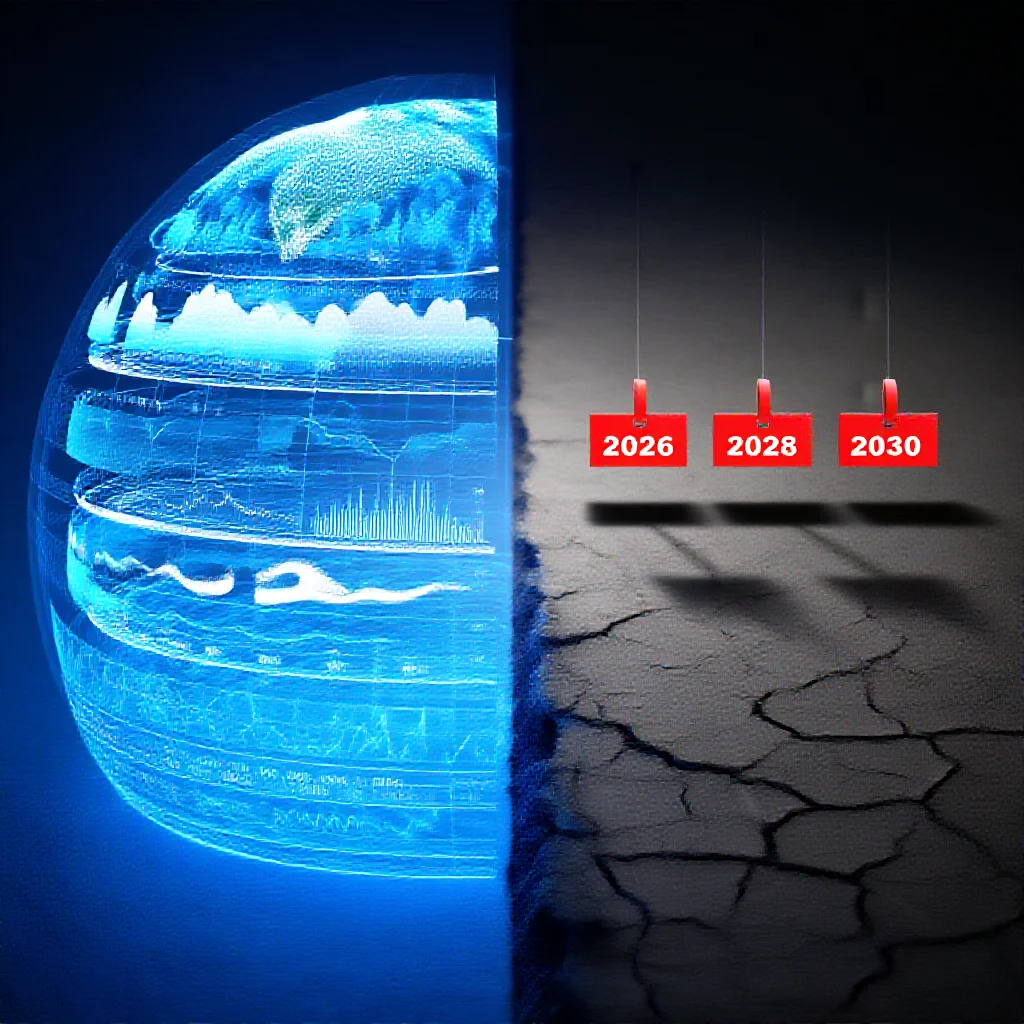
Cover Image Description: A dramatic, split-image photomontage. On the left side, a detailed, intricate scientific model of Earth's climate system with layers of data and graphs, rendered in cool blues and whites, representing deep scientific assessment. On the right side, a stark, minimalist calendar with the years 2026, 2028, and 2030 highlighted in red, casting a long shadow, representing political deadlines. The two halves are divided by a cracked, dry earth texture, symbolizing the tension and high stakes. Cinematic lighting, hyper-realistic style, no people, no text.
Introduction: The Istanbul Impasse – More Than a Scheduling Conflict
The January 2024 plenary meeting of the Intergovernmental Panel on Climate Change (IPCC) concluded without a definitive plan for its Seventh Assessment Report (AR7) (Source 1: [Primary Data]). This procedural deadlock underscores a fundamental structural tension within the science-policy interface: the conflict between the methodological requirements for a comprehensive global scientific assessment and the demand for timely, actionable input for predefined political decision cycles. The core debate centers on whether to produce a full assessment cycle culminating around 2030 or to deliver a more focused report by 2026 or 2027.
!An empty international conference room after a meeting, with nameplates still on the table.

Deconstructing the Timeline Debate: Competing Priorities Within the Assessment Process
Divergent positions on the AR7 schedule reflect differing prioritization of core functions within the scientific assessment process. One perspective emphasizes methodological rigor and comprehensiveness. This view advocates for a full assessment cycle aligned with a 2030 completion, allowing for the integration of new climate models, observational data, and literature. The argument is that a complete cycle is necessary to establish a robust, peer-reviewed baseline for global climate policy beyond 2030, and that an expedited process entails a trade-off in scope and depth.
A contrasting perspective prioritizes direct policy relevance to imminent political milestones. This view supports a shorter, more targeted report timed for 2026 or 2027. The objective is to provide synthesized scientific input specifically for the second Global Stocktake under the Paris Agreement in 2028, a process designed to ratchet up national climate commitments. A report aligned with this timeline would likely focus on thematic areas deemed most actionable for near-term policy, such as adaptation, urban systems, and near-term mitigation pathways.

The Functional Logic: Assessment Schedules and the Flow of Scientific Authority
The scheduling decision for AR7 carries significant implications for how scientific authority is mobilized within international climate governance. IPCC assessments function as the principal institutional mechanism for certifying scientific knowledge for policy use. The timing of their release directly influences the factual foundation available for critical negotiation phases.
A report finalized in 2026/27 would provide contemporaneous, IPCC-branded scientific input directly into the 2028 Global Stocktake deliberations. This would supply negotiators with an updated, consensus-based reference point, though one necessarily limited in its scope due to the compressed timeline. The knowledge input would be current but constrained.
Conversely, a schedule culminating in a full AR7 around 2030 creates an interval where the most recent comprehensive IPCC assessment (AR6) will be approximately eight years old at the time of the 2028 stocktake. This scenario would require the stocktake to rely either on that older consensus report or on more recent but non-IPCC-branded scientific literature, which may be perceived as less authoritative or more contested in diplomatic settings. The outcome could influence the technical specificity and potential ambition of decisions arising from the 2028 process.
Conclusion: Neutral Projections on Process and Outcome
The failure to reach consensus in Istanbul and the planned resumption of discussions in July 2024 (Source 1: [Primary Data]) indicate the high stakes perceived in structuring the scientific assessment calendar. The eventual decision will signal whether the governing body’s primary operational emphasis is on comprehensive scientific baselining or on synchronized policy injection.
A compromise outcome appears probable. This may involve a multi-component AR7 cycle, potentially initiating a focused thematic report for the 2028 stocktake while simultaneously commencing the longer-term work for a full assessment around 2030. Such a structure would represent an institutional attempt to reconcile the competing demands of scientific comprehensiveness and policy timeliness. The specific thematic focus of any interim report will itself be a critical indicator of which scientific questions are deemed most urgent for the immediate policy horizon. The operational resolution will ultimately define the character of the scientific evidence available to frame the next pivotal phase of global climate action.