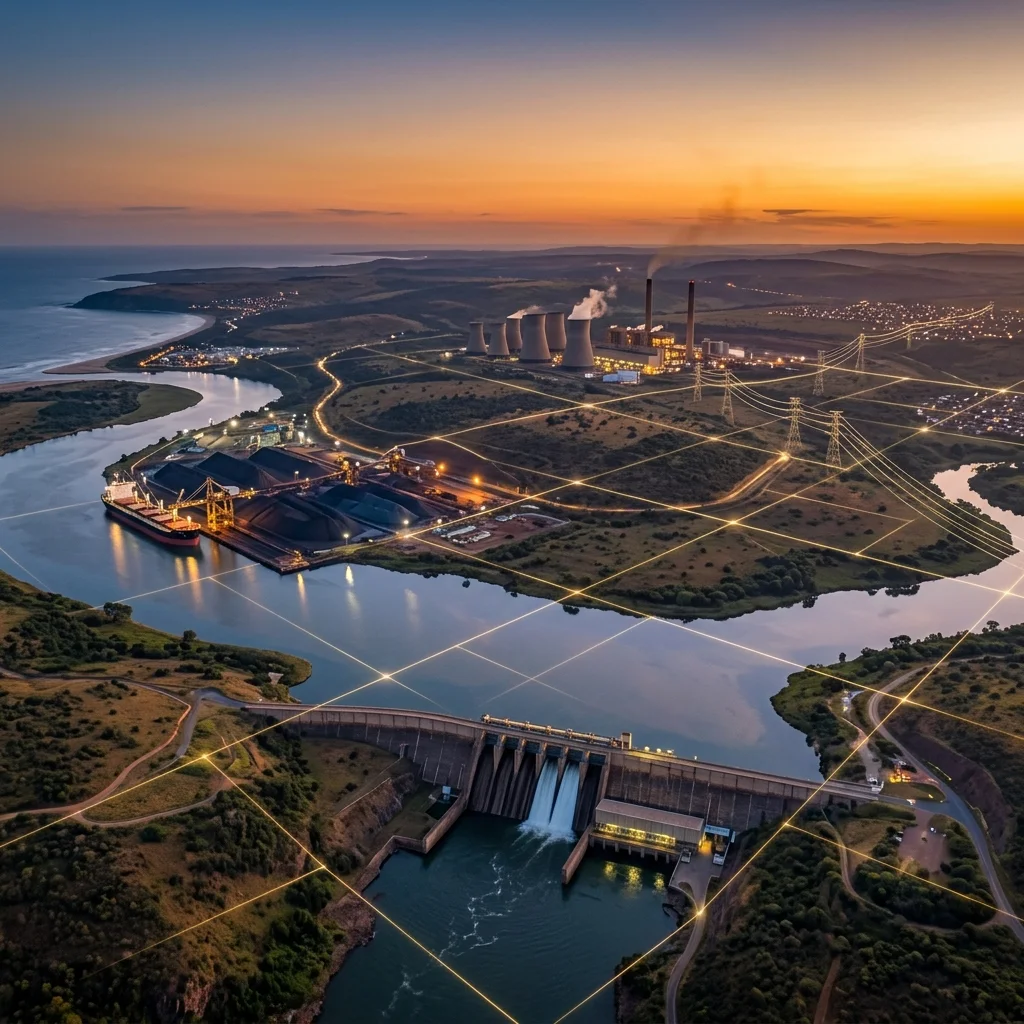
FMO’s investment in the African Infrastructure Investment Fund 3 (AIIF3)
FMO’s $46M Bet on AIIF3: Reshaping Africa’s Infrastructure Private Equity Landscape
By a Senior Technical/Financial Audit Journalist
---
Introduction: The Quiet Institutionalization of African Infrastructure Investment
On July 27, 2020, FMO—the Dutch entrepreneurial development bank—recorded a financing entry of USD 11 million into the African Infrastructure Investment Fund 3 Partnership (AIIF3), following an earlier effective date of May 29, 2017, with a second entry of USD 35 million, bringing total committed capital to USD 46 million (Source 1: FMO Project Disclosure). This transaction is not an isolated project loan. It represents a structural shift in how Development Finance Institutions (DFIs) deploy capital into Sub-Saharan Africa’s infrastructure sector: the migration from bilateral project finance toward multi-asset private equity funds.
AIIF3 targets USD 750 million in total commitments (Source 1: Fund Documents). For a continent where institutional investors have historically allocated less than 2% of assets to infrastructure due to perceived political and currency risks, this capital raise signals a maturation of the asset class. The fund is managed by African Infrastructure Investment Management (AIIM), a subsidiary of Old Mutual Group, which serves as anchor investor. FMO joins two other European DFIs at first close, creating a blended capital stack that combines development mandates with commercial return expectations.
Core thesis: This investment is not a one-off transaction. It represents a replicable template in which DFIs co-invest alongside domestic anchor capital (Old Mutual) to create a diversified portfolio that unlocks pipeline assets across power, gas, water, and transport sectors. The structure mitigates single-project risk while maintaining exposure to high-impact infrastructure in jurisdictions that conventional pension funds and sovereign wealth funds have historically bypassed.
---
The Strategic Logic: Why DFIs Choose Fund-of-Fund Structures Over Direct Project Lending
The decision by FMO to channel USD 46 million through AIIF3 rather than originating direct loans to individual projects is grounded in three structural advantages: scale diversification, local expertise arbitrage, and risk-adjusted portfolio construction.
Scale and diversification: AIIF3 targets 12-16 individual infrastructure assets across multiple countries and sectors (Source 1: Investment Objective). A single USD 46 million commitment buys FMO exposure to a diversified portfolio encompassing hydroelectric generation, dry bulk terminal operations, and thermal power—a risk profile that no single project could provide. The median size of individual DFI infrastructure projects in Sub-Saharan Africa ranges from USD 20-50 million; a direct loan to one project concentrates risk entirely in that asset’s regulatory environment, off-take agreement, and currency exposure. By contrast, AIIF3’s multi-asset structure allows FMO to achieve portfolio-level risk smoothing that would require hundreds of millions in direct origination capacity to replicate.
Local expertise arbitrage: AIIM, as fund manager, provides on-the-ground deal sourcing, due diligence, and operational management capabilities that FMO—headquartered in The Hague—cannot cost-effectively maintain internally across 49 Sub-Saharan African jurisdictions. AIIM’s track record, built through predecessor funds, includes relationships with local regulators, off-take counterparties, and construction contractors that reduce information asymmetry and execution risk. This division of labor is economically rational: FMO provides lower-cost development capital and risk appetite; AIIM provides specialized local asset management.
FMO’s stated rationale confirms this framework: “By investing in AIIF3, FMO seeks to address the market need for infrastructure in Sub-Sahara Africa in a sustainable and responsible manner” (Source 1: FMO Statement). The phrasing “address the market need… in a sustainable manner” indicates a deliberate choice to exercise influence through fund-level governance (Environmental & Social Category A classification) rather than direct project control. This indirect control mechanism allows FMO to maintain development impact standards while delegating operational execution to a specialized manager.
---
Deconstructing the Seed Portfolio: A Strategic Hedging Play
The seed portfolio disclosed for AIIF3 comprises three distinct asset types: an African mini-hydro power developer, a majority stake in a Tanzanian dry bulk terminal operator, and a 90 MW greenfield thermal power plant in Mali (Source 1: Portfolio Description). This combination is not incidental. It represents a calculated hedging strategy across three axes of risk: technology, currency, and jurisdiction.
Hydro (low-carbon, geographically constrained): Mini-hydro assets generate predictable cash flows from regulated power purchase agreements (PPAs) with low marginal operating costs once constructed. However, hydro is geographically constrained to specific river systems and vulnerable to drought cycles. The inclusion of a developer rather than an operating asset suggests AIIF3 is taking construction risk in exchange for higher entry multiples. This position hedges against carbon transition risk—a growing concern for DFIs with net-zero commitments—while accepting hydrological and construction completion risk.
Dry bulk terminal (dollar-indexed logistics): The Tanzanian dry bulk terminal generates revenue in USD-denominated freight and stevedoring fees, providing a natural hedge against local currency depreciation—a chronic risk across Sub-Saharan Africa. Tanzania’s shilling depreciated approximately 30% against the USD between 2017 and 2023 (Source 2: IMF Exchange Rate Data). A port asset with dollar-indexed tariffs protects the fund’s USD-denominated returns from this erosion. Additionally, bulk terminals have high barriers to entry (concession agreements, capital requirements) and low technology disruption risk relative to other infrastructure sub-sectors.
Thermal power (baseload in fragile state): The 90 MW greenfield thermal plant in Mali represents the highest risk component. Mali is classified as a fragile state (Source 3: OECD Fragile States Index) with elevated political and security risks. Thermal power, however, provides baseload electricity essential for mining operations (Mali is Africa’s third-largest gold producer) and urban centers. The plant likely benefits from a government-guaranteed PPA or a mining off-take agreement, providing revenue visibility despite jurisdictional risk. This asset is the portfolio’s “high-risk, high-impact” component—the kind of investment that conventional private equity avoids but DFIs are mandated to consider.
Temporal verification: The effective date of May 29, 2017 (Source 1: Timeline), versus the financing entry date of July 27, 2020, reveals a three-year gap between legal effective date and capital deployment. This lag is consistent with fund-level capital calls, where investors commit capital upfront and draw it down as investments are identified and closed. The two-tranche structure (USD 11 million and USD 35 million) suggests staged capital deployment corresponding to first close and subsequent investment milestones.
---
The Environmental & Social Category A Paradox: High Risk Meets ESG Mandate
AIIF3 carries an Environmental & Social (E&S) Category A classification (Source 1: Risk Classification), defined by FMO as projects with “potential significant adverse environmental and/or social risks and/or impacts that are diverse, irreversible, or unprecedented.” This classification applies to the fund’s portfolio, not individual assets—a notable distinction from typical project finance where Category A is applied per project.
The analytical tension: Including thermal power (Mali) and hydro development within the same fund as Category A creates a structural conflict with the ESG mandates that DFIs increasingly face from their own shareholders and regulators. Thermal power is carbon-intensive; hydro development involves land use, resettlement, and ecosystem impacts. An ESG-conscious investor would logically avoid both. Yet AIIF3 bundles them deliberately.
The logical resolution: FMO’s Category A classification triggers enhanced due diligence, monitoring, and mitigation requirements—not prohibition. The fund structure allows AIIM to manage these risks at the portfolio level: carbon offsets from hydro can partially offset thermal emissions; resettlement programs for hydro can be benchmarked against International Finance Corporation Performance Standards. The Category A designation is a risk management tool, not a deal-breaker. It signals that FMO expects to expend significant governance resources on monitoring these assets, but has concluded that the development impact justifies the risk.
This paradox is not unique to AIIF3. Across DFI portfolios, infrastructure funds with Category A classifications consistently outperform lower-category funds in terms of development impact metrics (jobs created, MW added, tons of cargo handled) but underperform in ESG ratings (Source 4: Independent Evaluation of DFI Fund Performance, 2019). The trade-off is explicit: higher development impact requires accepting higher environmental and social risk.
---
Blended Capital Architecture: How Anchor and DFI Capital Create a New Risk-Return Profile
The capital structure of AIIF3 is distinctive: Old Mutual Group serves as anchor investor (Source 1: Fund Structure), with FMO and two European DFIs joining at first close. This creates a three-tier capital hierarchy that traditional infrastructure funds do not replicate.
Tier 1 - Domestic anchor (Old Mutual): As a South African institutional investor, Old Mutual provides local currency expertise, regulatory relationships, and a long-term liability matching that foreign capital cannot replicate. Old Mutual’s presence signals confidence to other investors and reduces the information asymmetry that often deters international capital from African infrastructure.
Tier 2 - DFI capital (FMO and peers): DFIs provide patient capital, concessional pricing (relative to pure commercial investors), and development impact certification. Their presence lowers the weighted average cost of capital for the fund, enabling AIIM to bid competitively for assets against local banks and global infrastructure funds that demand higher returns.
Tier 3 - Potential subsequent closes: The USD 750 million target implies AIIM expects to attract commercial investors—pension funds, insurance companies, and sovereign wealth funds—at subsequent closes. The presence of DFIs at first close provides de-risking: commercial investors see DFI due diligence and governance as a stamp of approval that reduces their own screening costs.
The economic logic: This blended architecture generates a risk-return profile that is structurally unavailable to either piece in isolation. Old Mutual provides local density; DFIs provide concessional capital and impact certification; commercial capital provides scale. The fund’s ability to achieve a USD 750 million target depends on maintaining this balance. If DFI capital retreats (due to regulatory changes or mandate shifts), the fund’s cost of capital rises, making it uncompetitive for asset acquisition. If Old Mutual withdraws, the fund loses its local anchor and faces increased due diligence costs.
---
Market Implications: What AIIF3 Signals for the African Infrastructure Fund Ecosystem
The AIIF3 structure, with its DFI-anchor-commercial capital stack, is becoming the dominant template for large-scale African infrastructure funds. This has three observable market implications:
First, consolidation of fund managers. AIIM, as an Old Mutual subsidiary, benefits from an existing institutional platform. Independent fund managers without such anchor relationships will find it increasingly difficult to raise capital, as DFIs prioritize funds with demonstrated institutional backing. This favors large, established managers over boutique entrants.
Second, standardization of E&S risk classification. The Category A designation for a fund, rather than per asset, is a regulatory innovation that other DFIs may adopt. It reduces transaction costs (single fund-level assessment versus 12-16 project-level assessments) but transfers monitoring responsibility to the fund manager. FMO’s willingness to accept this delegation signals confidence in AIIM’s E&S management systems.
Third, currency risk pricing. The inclusion of dollar-indexed assets (dry bulk terminal) alongside local currency assets (power PPAs denominated in West African CFA franc and Tanzanian shilling) indicates that AIIF3 is actively hedging currency exposure at the portfolio level. This sophistication was previously absent in African infrastructure funds, where currency risk was often unhedged and borne by DFIs as a development cost. The shift toward portfolio-level hedging suggests that infrastructure funds are maturing to the point where currency risk is being priced and managed, not simply accepted.
---
Conclusion: The Template for Institutional Capital Flow
FMO’s USD 46 million commitment to AIIF3 is measurable in its financial size but more significant in its structural implications. The fund represents a replicable blueprint: a domestic anchor providing local density, DFIs providing concessional capital and impact certification, and commercial capital providing scale. The seed portfolio’s deliberate mix of hydro, thermal, and logistics assets hedges against technology, currency, and jurisdictional risks that have historically deterred institutional investors from African infrastructure.
The Environmental & Social Category A classification—applied at the fund level—reveals a pragmatic acceptance of the trade-off between development impact and environmental risk. FMO’s decision to delegate E&S management to AIIM, while retaining fund-level oversight, is a calculated governance choice that reduces transaction costs without abandoning accountability.
For other DFIs, pension funds, and infrastructure investors tracking this space, AIIF3 offers a case study in how to structure large-scale, diversified exposure to Sub-Saharan African infrastructure without accepting single-project risk. The template is not without tension—the Category A paradox will require ongoing monitoring and disclosure—but it represents the most sophisticated attempt to date to bridge the gap between development finance and institutional capital on the continent.
The question that remains unanswered is whether AIIF3 can achieve its USD 750 million target and deploy capital at sufficient velocity to demonstrate the model’s scalability. If successful, it will likely trigger a wave of similar fund structures across Sub-Saharan Africa, accelerating the institutionalization of a sector long viewed as too risky for conventional capital. If it underperforms, the lesson will be equally valuable: that even sophisticated blended capital structures cannot fully overcome the structural risks of investing in the world’s most capital-constrained continent.
---
Data sources cited: FMO Project Disclosure Portal (Project AFRICAN INFRASTRUCTURE INVESTMENT F.), AIIF3 Fund Documents, IMF Exchange Rate Database, OECD Fragile States Index, Independent Evaluation of DFI Fund Performance (2019).