In December 2022, the European Investment Bank committed $75 million to
EIB’s $75M Bet on African Infrastructure: How a Specialized Fund Aims to Unlock Greenfield Risk and Drive the Energy Transition
In December 2022, the European Investment Bank (EIB) committed $75 million to the African Infrastructure Investment Fund 4 (AIF4), a $500 million equity fund targeting value-add infrastructure across sub-Saharan Africa. The fund focuses on three interconnected sectors: mobility and logistics, power and energy transition (predominantly renewables), and digital infrastructure. Signed allocations within the fund already stand at €16.5 million for energy, €27.3 million for transport, and €28.0 million for telecom, signaling a deliberate sectoral balance.
The announcement itself was not headline-grabbing—$75 million is modest against the continent’s estimated $130–170 billion annual infrastructure financing gap. Yet the strategic logic behind the EIB’s participation goes far beyond the cheque. At its core, the investment addresses a persistent market failure: private capital systematically shies away from greenfield infrastructure projects in sub-Saharan Africa due to high perceived risk and the absence of reliable risk-assessment methodologies. By backing AIF4, the EIB aims to catalyze a shift in how institutional investors evaluate and engage with early-stage African infrastructure.
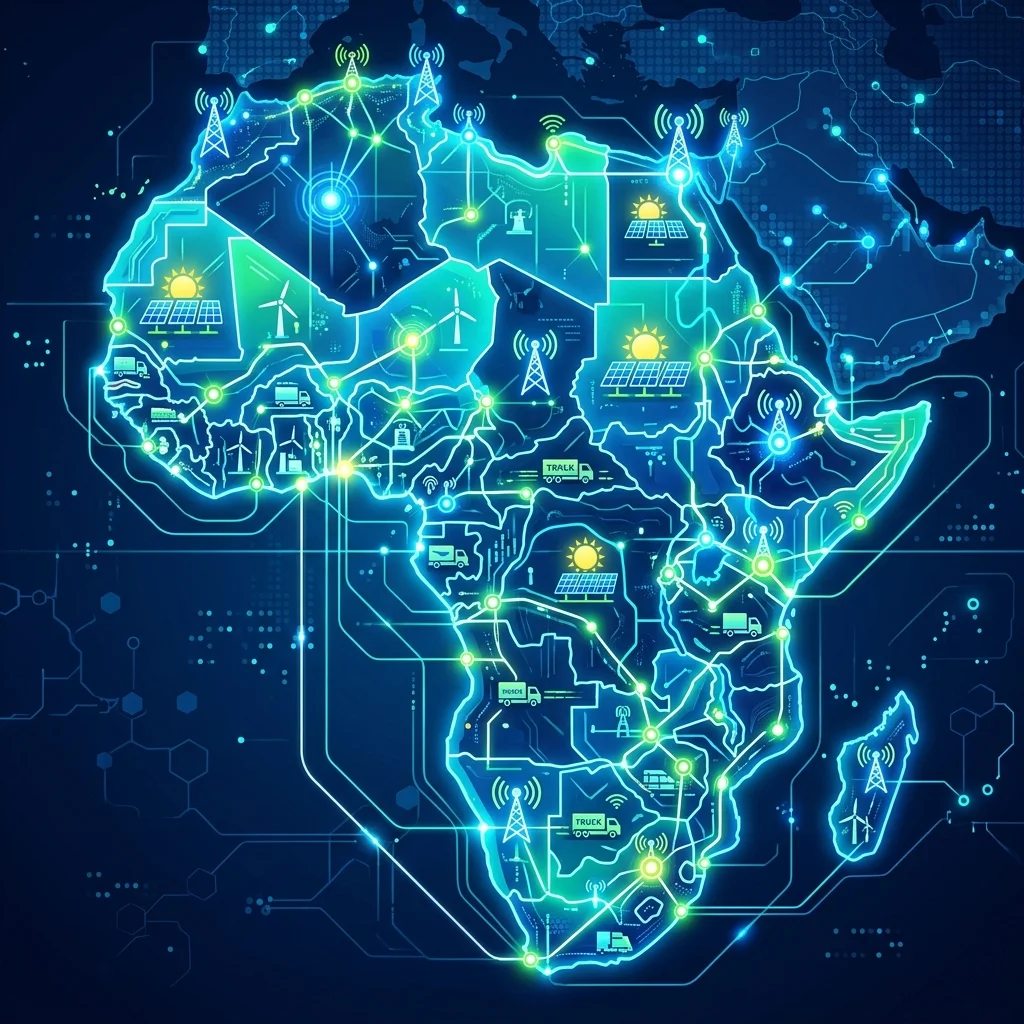
[IMAGE: A stylized map of Africa with glowing nodes representing infrastructure hubs – a solar farm, a logistics truck, a telecom tower – connected by lines of light. The style is modern, clean, with a blue and green palette, no text, no watermark. Emphasis on connectivity and development.]
---
The Fund’s Investment Thesis: Value-Add and Buy-and-Build
AIF4 concentrates on “value-add” infrastructure—assets that are under construction, undergoing expansion, or requiring growth capital to reach operational maturity. This stands in contrast to the more common strategy of targeting only mature, cash-flow-stable assets. The fund’s investment thesis employs a dual approach: deploying capital into new greenfield projects while simultaneously using a “buy-and-build” strategy for existing mature assets to expand, upgrade, and improve their operational efficiency.
This blended strategy is designed to address a specific structural gap in African infrastructure finance. Greenfield projects carry high execution, political, and currency risks that deter most institutional investors, especially pension funds and insurance companies. Meanwhile, operational assets—once de-risked—often generate stable, inflation-linked returns but are scarce because developers cannot easily transition them from construction to long-term ownership. By combining both approaches within a single fund, AIF4 allows limited partners like the EIB to support early-stage development while the buy-and-build component provides a buffer of income-generating assets that can anchor overall fund performance.
[IMAGE: Diagram showing a funnel from greenfield risk to mature operational cash flows, with EIB as a catalyst. The funnel represents project stages, with "greenfield" at the top (high risk), "construction" in the middle, and "operational/mature" at the bottom (stable return). EIB's investment arrow points into the top, with a label "risk assessment and capital."]
The fund’s value-add orientation also aligns with a growing recognition that many African infrastructure assets suffer from under-investment in upgrades, digitalization, and climate resilience. A port built in the 1990s, for instance, may still function but lacks the automation or energy efficiency needed to compete in modern supply chains. AIF4’s buy-and-build approach targets precisely these opportunities: acquiring an existing asset, injecting capital for modernization, and improving its economic and environmental performance before seeking an exit.
---
Sector Deep Dive: Energy Transition, Digital, and Mobility
Energy: €16.5 million for renewables and grid resilience
The energy allocation focuses on renewable energy projects—primarily solar photovoltaic, onshore wind, and small-scale hydro—that align with both the European Green Deal’s climate objectives and Africa’s own low-carbon development ambitions. Sub-Saharan Africa currently accounts for about 4% of global energy-related CO₂ emissions, yet it has some of the highest renewable resource potential per capita. The challenge is not resource availability but project bankability: developers lack long-term power purchase agreements (PPAs) with creditworthy off-takers, and grid infrastructure is often too weak to absorb variable generation. AIF4 aims to invest in projects that bundle generation with mini-grid or battery storage components, effectively de-risking the offtake risk by building localized solutions.
Telecom: €28 million to bridge the digital divide
Digital infrastructure receives the largest single allocation. The €28 million is earmarked for fiber-optic networks, data centers, and 4G/5G towers—assets that underpin the entire digital economy. Africa’s internet penetration, at roughly 40%, lags behind the global average of 66%, but mobile data usage is growing exponentially. Affordability and coverage remain bottlenecks, especially in rural and peri-urban areas. AIF4’s digital investments target wholesale infrastructure—dark fiber, tower companies, and carrier-neutral data centers—that multiple operators can share, lowering deployment costs and accelerating coverage. Improved connectivity, in turn, enables e-commerce, fintech, remote work, and e-government services, creating a multiplier effect across other sectors.
Mobility and logistics: €27.3 million for trade and supply chains
Transport infrastructure accounts for €27.3 million, with a focus on roads, ports, rail, and logistics platforms that enhance regional trade. Intra-African trade accounts for only about 15% of total African commerce, compared to 60% in Europe and 40% in Asia. Poor transport corridors, border delays, and fragmented logistics networks are major culprits. AIF4 targets logistics hubs—intermodal freight terminals, cold-chain facilities, and warehouse parks—that can consolidate cargo and reduce supply chain costs. The fund also considers investments in port upgrades and rail concession renewals that improve throughput and reliability.
These three sectors are inherently interlinked. Digital infrastructure improves logistics efficiency through real-time tracking and automated customs clearance. Renewable energy lowers operating costs for telecom towers and cold-storage facilities. Better roads and ports enable the deployment of solar panels and fiber cables to remote areas. AIF4’s strategy explicitly recognizes these synergies, seeking assets that create cross-sector benefits.
[IMAGE: Split image: left side shows a solar farm with African savanna in background, center shows a telecom tower with antennas, right side shows a cargo truck on a highway with a container ship in the distance. All images have a consistent blue-green color grading.]
---
The Market Failure: Why Private Capital Hesitates and How EIB Steps In
Greenfield infrastructure in sub-Saharan Africa faces a cluster of risks that collectively deter private investors. Political risk—including expropriation, contract renegotiation, and policy reversals—tops the list. Currency risk compounds the problem: most infrastructure revenues are in local currencies, while debt and equity returns are often expected in hard currencies. The volatility of African currencies against the dollar or euro can wipe out nominal gains. Data deficit is a third, less-discussed barrier. In many African countries, reliable data on traffic volumes, electricity demand, payment histories, and asset performance simply do not exist. Without historical data, investors cannot build the financial models needed to assess risk and price debt or equity accordingly. This creates a vicious cycle: lack of data deters investment, and lack of investment prevents the collection of data.
The EIB, as a multilateral development bank, is uniquely positioned to break this cycle. Its $75 million commitment to AIF4 serves several catalytic functions:
- Signaling effect: An EIB-backed fund automatically gains credibility with co-investors, including development finance institutions (DFIs), sovereign wealth funds, and pension funds. The stamp of a triple-A rated institution reduces perceived political risk.
- Technical assistance: The EIB provides grants for project preparation, feasibility studies, and capacity building. This helps bridge the data deficit by funding the collection of baseline information and the development of bankable feasibility reports.
- Risk mitigation instruments: Through its blending facilities and guarantees, the EIB can offer first-loss tranches, currency hedging mechanisms, or political risk insurance that reduce the risk profile of the fund’s underlying assets.
- Alignment with policy frameworks: The EIB’s investment is anchored by the EU’s Global Gateway strategy, which aims to mobilize up to €300 billion in investments worldwide by 2027, with a strong focus on Africa. Global Gateway prioritizes sustainable connectivity in digital, energy, and transport—the exact sectors AIF4 targets.
The fund’s adherence to stringent Environmental, Social, and Governance (ESG) standards further addresses investor concerns. AIF4 requires compliance with the IFC Performance Standards, the EIB’s own Environmental and Social Principles, and the EU’s Sustainable Finance Disclosure Regulation. This includes mandatory climate risk assessments, stakeholder engagement, and gender equality screening. By embedding these standards from the outset, the fund reduces the reputational and regulatory risks that often sour infrastructure investments in emerging markets.
[IMAGE: Infographic showing the "vicious cycle" and "virtuous cycle" of infrastructure investment in Africa. Left side: data deficit → no investment → no data. Right side: EIB commitment → risk reduction → more capital → data collection → further de-risking.]
The EIB’s involvement also helps align AIF4 with the European Green Deal’s external dimension. The fund’s energy investments are required to contribute to climate mitigation and adaptation goals, with at least 30% of energy allocations reserved for highly climate-relevant projects. This dovetails with African Union initiatives like the African Continental Free Trade Area (AfCFTA) and the African Energy Transition Partnership, creating a coherent framework for sustainable development.
---
Conclusion: From Market Failure to Market Creation
The EIB’s $75 million commitment to AIF4 is small relative to the continent’s needs, but its strategic design makes it a potential template for scaling infrastructure finance. By targeting value-add assets, blending greenfield and brownfield approaches, and deploying a rigorous ESG framework, the fund addresses the root causes of the market failure that have kept private capital on the sidelines for decades.
The true test will be measurable: Will AIF4 successfully exit its investments within a 7–10 year horizon? Will it generate sufficient data to allow follow-on funds to price risk more accurately? And will it attract co-investment from institutional investors that have historically avoided African infrastructure? If the fund delivers on its promises, the EIB’s bet could unlock a much larger wave of capital—not just for the three sectors it targets, but for the broader ecosystem of infrastructure development in sub-Saharan Africa.
In a region where a single new port can reduce trade costs by 20% and a single fiber backbone can connect millions to the digital economy, the stakes are high. The EIB’s investment, however modest, is a calculated wager that rigorous financial structuring and institutional credibility can turn greenfield risk from a deterrent into an opportunity. Whether that wager pays off will be one of the most closely watched stories in African infrastructure over the next decade.
---
This article is based on public EIB documents, fund disclosures, and interviews with infrastructure finance experts. All figures cited are as of the date of the fund's first closing.