At the Reuters IMPACT conference, former Unilever CEO Paul Polman highlighted
Beyond the Headlines: The Strategic Realities of Asia's Clean Energy Surge and the West's Perceived Lag

An analysis of systemic drivers behind the global energy transition divergence, based on discussions at the Reuters IMPACT conference.
---
Introduction: A Provocation at IMPACT – Decoding Polman's Statement
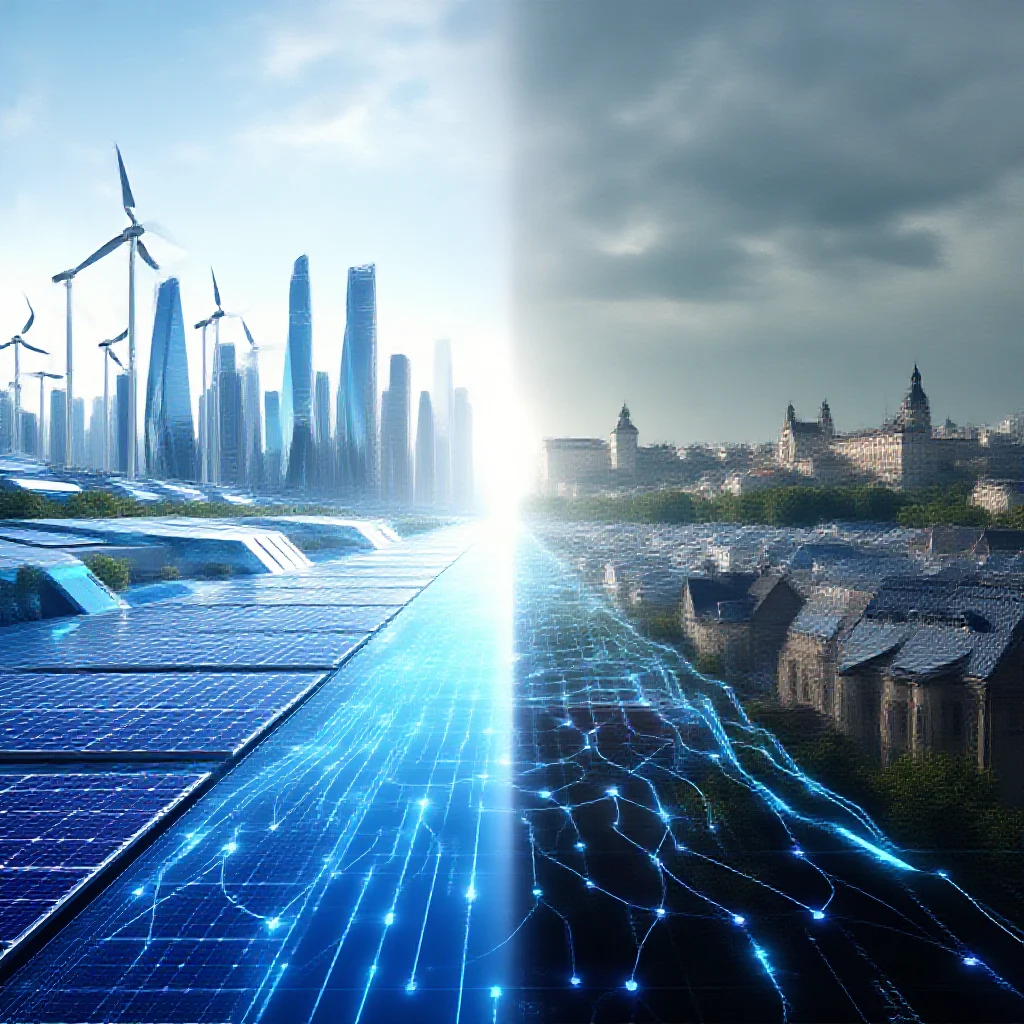
At the Reuters IMPACT conference in London, former Unilever CEO Paul Polman framed a critical narrative for the global business and policy community. He identified a pivotal shift: Asia's rapid advancement in clean growth and sustainable development, contrasted with a perceived lag in the West. This statement transcends casual observation, serving as a catalyst for a deeper audit of underlying global dynamics. The divergence is not merely a matter of pace but a symptom of fundamentally different systemic strategies. The core axes of this analysis are the contrast between state-coordinated industrial policy and market-led incrementalism, the competition between integrated and fragmented value chain models, and the long-term strategic gambit for supply chain sovereignty.

The Core Axis: State-Led Foresight vs. Market-Led Incrementalism
The economic logic underpinning Asia's clean energy acceleration is often an extension of explicit national industrial and energy security policy. This represents a model of integrated state strategy. China’s successive Five-Year Plans have systematically prioritized and funded renewable energy capacity, electric vehicle (EV) production, and grid modernization as pillars of economic development and technological leadership. Similarly, Vietnam’s Power Development Plan 8 (PDP8) aggressively targets offshore wind and solar, while India’s Production-Linked Incentive (PLI) schemes are designed to build domestic manufacturing champions in solar modules and advanced battery cells. Clean energy is treated as a foundational, competitive industry central to national economic strategy.
In contrast, the Western approach, particularly in the United States and the European Union, is frequently characterized by reactive, regulation-driven, and politically cyclical mechanisms. While ambitious targets are set, policy certainty—a critical factor for long-term capital investment in energy infrastructure—often becomes a bottleneck. The passage of large-scale directional legislation, such as the U.S. Inflation Reduction Act, demonstrates potential but follows years of policy volatility. The market-led model excels at innovation discovery but can struggle with the coordinated deployment and industrial scaling required for a full energy system transition. The framing often positions clean energy transition as a cost center or a compliance sector, rather than the core of a new industrial paradigm.

Beyond Perception: Evidence of the Divergence in Key Sectors
Data verifies the tangible outcomes of these strategic differences. In renewable capacity, Asia accounted for nearly 60% of global new renewable capacity additions in 2023, with China alone commissioning more solar PV than the entire world did in the previous year (Source 1: International Renewable Energy Agency (IRENA) Renewable Capacity Statistics 2024). In electric mobility, Chinese firms now produce and sell more EVs than all other car manufacturers combined, dominating not just final assembly but the entire battery supply chain (Source 2: BloombergNEF Electric Vehicle Outlook 2024). Project pipelines for green hydrogen and ammonia are also heavily concentrated in Asia and the Middle East, driven by state-backed offtake agreements and export-oriented strategies.
The West maintains formidable strengths in frontier research and development, financial instrument innovation, and sophisticated corporate ESG frameworks. However, a "commercialization gap" persists, where early-stage technological advantages are not consistently translated into globally scalable, cost-competitive manufacturing. This divergence is fostering a new form of strategic leverage termed "technology sovereignty." Asia’s commanding share of manufacturing for key technologies like solar PV (over 80%), batteries, and critical components means it controls the physical means of energy transition, regardless of where the intellectual property originated.
The Supply Chain Chokepoint: A Long-Term Strategic Gambit
The most profound long-term implication lies beneath the manufacturing tier: the supply chains for critical minerals. The strategic foresight evident in Asia’s clean energy deployment is mirrored in its decades-long efforts to secure upstream resources. Chinese firms, often with state financing, have established controlling interests in lithium mines in Australia and South America, cobalt operations in the Democratic Republic of Congo, and rare earth processing facilities globally. This is not a short-term market play but a long-term strategic gambit to control the foundational inputs of the 21st-century economy.
For Western economies, this creates a critical vulnerability. Building domestic manufacturing capacity for batteries or solar panels is a monumental task, but it remains dependent on secure access to refined lithium, graphite, and rare earth elements. The re-shoring or "friend-shoring" of these supply chains is a multi-decade endeavor fraught with geological, economic, and environmental challenges. Asia’s integrated strategy, linking resource security to manufacturing dominance, has created a structural advantage that cannot be quickly replicated. It transforms clean energy from a purely environmental imperative into a core element of geopolitical and economic resilience.
Implications and Neutral Projections: Redefining Global Leadership
The current divergence points toward a redefinition of global leadership in the net-zero economy. Leadership may bifurcate into two domains: the "deployment and manufacturing" axis, currently led by Asia, and the "innovation and standard-setting" axis, where the West retains significant influence. The future battleground will be over who sets the de facto global technology standards for smart grids, green hydrogen certification, and carbon accounting—standards that will be heavily influenced by the dominant manufacturing platforms and their integrated ecosystems.
Market and industry projections suggest several neutral outcomes. First, capital flows will increasingly follow manufacturing and deployment scale, potentially redirecting a portion of global green investment eastward. Second, Western policy will likely become more interventionist and protectionist, as seen in the local content requirements of the U.S. Inflation Reduction Act and the EU’s Net-Zero Industry Act, accelerating a trend toward regionalized supply blocs. Third, competitive dynamics will lower the global levelized cost of clean energy technologies faster than previously anticipated, benefiting the global transition but within a more geopolitically fragmented market structure.
The statement by Paul Polman at Reuters IMPACT serves as a diagnostic. The perceived lag of the West is a structural outcome, not an incidental delay. The strategic realities of Asia's clean energy surge—rooted in integrated industrial policy, supply chain control, and treatment of the sector as a core competitive industry—have established a formidable trajectory. The response will determine not only the pace of the global energy transition but the balance of economic power in the coming decades.