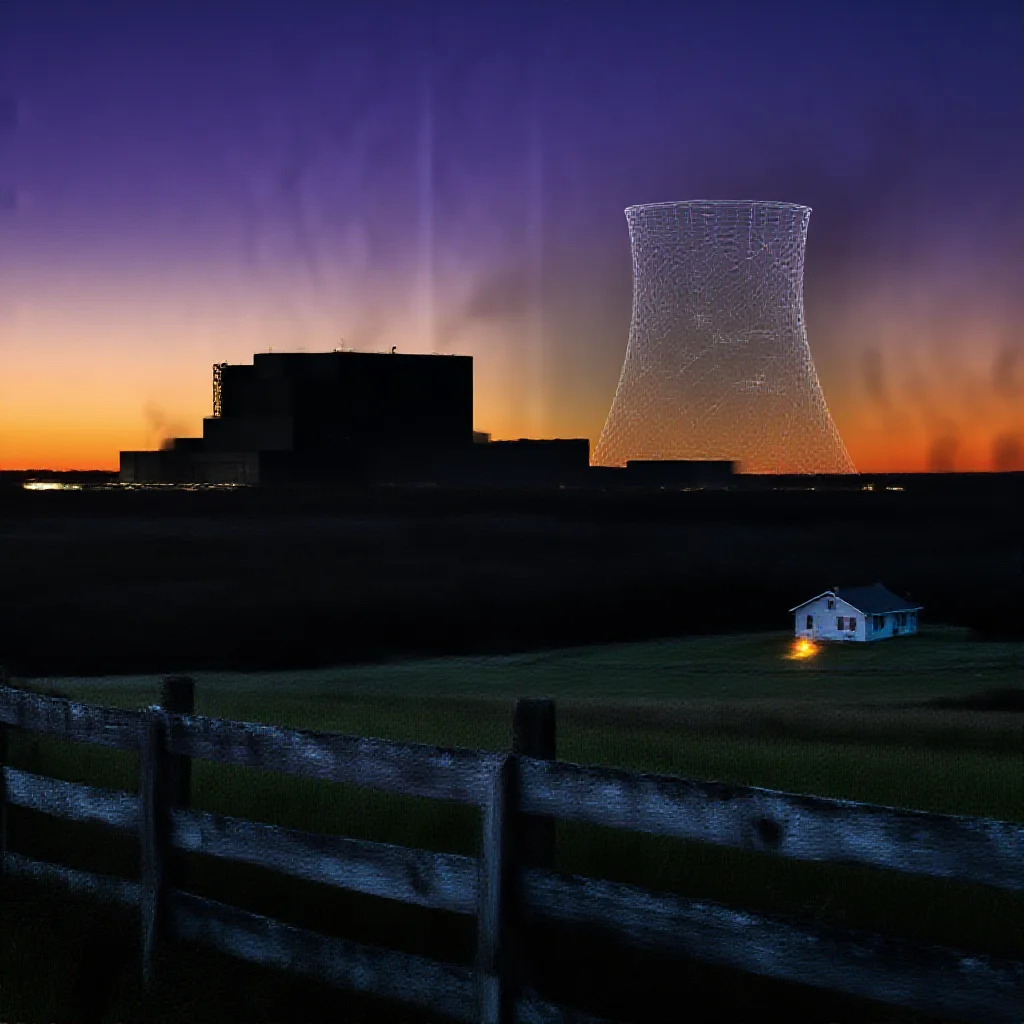
A new report by economist Tom Adams warns that the proposed ARC-100 small
The ARC-100 SMR Dilemma: Will New Brunswick's Nuclear Gamble Double Your Power Bill?
A recent economic analysis presents a stark financial forecast for New Brunswick’s energy future. The report, prepared by economist Tom Adams for the New Brunswick Anti-Shale Gas Alliance, concludes that the proposed ARC-100 small modular reactor (SMR) at Point Lepreau could double or triple electricity rates in the province (Source 1: [Primary Data]). This projection is anchored to a project model with an estimated capital cost of $5 billion and a 10-year construction timeline. The assertion introduces a fundamental tension between the promised economic benefits of next-generation SMR technology and the historical financial risks inherent in nuclear megaprojects.
The Stakes: A Report Predicting Rate Shock
The core finding of the Tom Adams report is an explicit warning of consumer impact. The analysis states, "The project could double or triple electricity rates in the province" (Source 1: [Primary Data]). This conclusion is not presented as a certainty but as a probable outcome based on the underlying financial model. The report embeds this claim within the context of the project’s scale, utilizing the $5 billion cost estimate as its primary input variable. The axis of contention is thus clearly defined: the viability of the ARC-100 hinges on its ability to avoid the capital cost escalation that has characterized previous nuclear construction, a challenge for a first-of-a-kind commercial design.
Deconstructing the Financial Logic: Why the Numbers Spell Trouble
The economic mechanism linking project costs to consumer rates is direct: capital expenditures for utility infrastructure, particularly debt-financed ones, are ultimately recovered through customer rates. The report’s logic follows established utility finance principles, where significant overruns or delays necessitate higher revenue requirements from a smaller customer base. A critical component of the analysis is the identified "financial blind spot": NB Power’s latest long-term financial forecast reportedly does not include the costs of the new reactor (Source 1: [Primary Data]). This omission separates the project’s promotional phase from its eventual fiscal integration.
This analysis is not the first to signal financial risk. The report references a 2020 study conducted by consultancy Power Advisory LLC for NB Power, which found the ARC-100 project would increase rates by 50% to 100% under certain cost and schedule conditions (Source 1: [Primary Data]). The Tom Adams report effectively extrapolates from this earlier, utility-commissioned work, applying a more pessimistic but historically plausible set of assumptions regarding final costs and timelines.
The Regulatory Vacuum: A Project Shielded from Scrutiny
A distinct procedural dimension intensifies the debate over financial transparency. The report states the New Brunswick government has exempted the project from oversight by the New Brunswick Energy and Utilities Board (EUB) (Source 1: [Primary Data]). This exemption removes the standard regulatory process wherein capital projects undergo public, evidence-based scrutiny regarding their prudency, necessity, and impact on ratepayers. The absence of this independent review layer occurs concurrently with substantial public investment, including a $10 million provincial commitment and a $50 million federal commitment to ARC Clean Technology (Source 1: [Primary Data]). The arrangement creates a scenario where significant public funds are allocated without the traditional, concomitant mechanism for ratepayer protection.
Beyond the Price Tag: The Long-Term Strategic Gamble
The financial analysis represents a "fast" audit of upfront costs. A "slow" audit, however, must consider the long-term strategic implications of the technology choice. Betting on a first-of-a-kind SMR design like the ARC-100 involves more than construction risk; it constitutes a commitment to a proprietary technology ecosystem. This lock-in carries future uncertainties regarding operations, maintenance, fuel supply, and decommissioning costs, which are decades-long liabilities for the utility and its customers. The opportunity cost of the investment must also be evaluated against alternative generation, storage, or efficiency investments that could be deployed on different scales and timelines.
Neutral Market and Industry Predictions
The trajectory of the ARC-100 project will serve as a consequential case study. Its outcome will influence the perceived financial viability of other SMR designs seeking commercial deployment. If the project proceeds and closely adheres to its budget and schedule, it could validate a new model for nuclear economics. Conversely, significant cost escalation would reinforce traditional risk perceptions and likely constrain investment in similar first-of-a-kind nuclear projects elsewhere. For New Brunswick, the long-term prediction hinges on the eventual reconciliation between the project’s projected costs and NB Power’s rate base. The integration of the ARC-100 into the utility’s financial forecasts will be the definitive moment that translates engineering estimates into tangible consumer rates, determining whether the current warnings were prescient or overstated.