Africa faces a critical infrastructure gap that hinders sustainable development,
The Risk-Reward Paradox: How Blended Finance and PPPs Are Reshaping Africa's Infrastructure Investment Landscape
Date: 2025-03-04
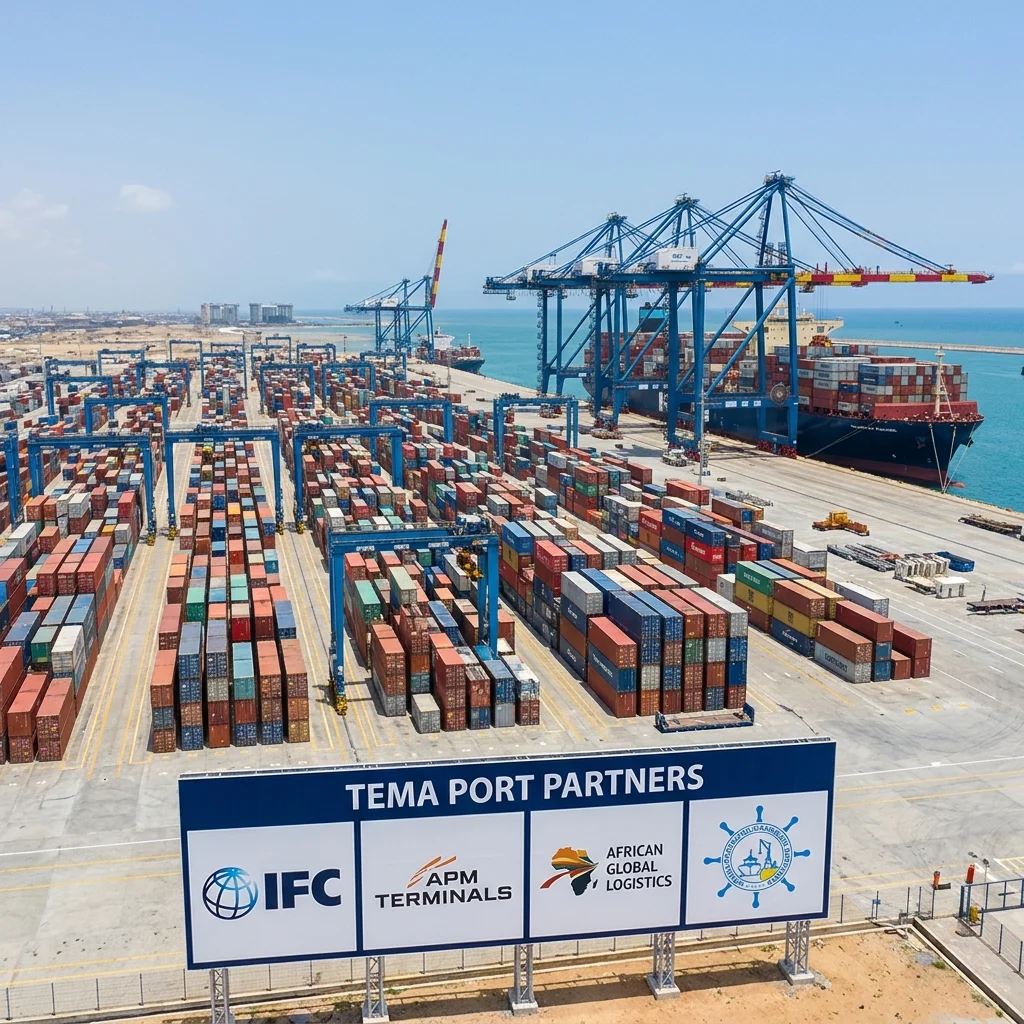
Africa’s infrastructure deficit remains a primary barrier to sustainable development, constraining trade, energy access, and digital connectivity. Global capital is searching for yield in low-growth environments, and African governments urgently need long-term investment. Yet structural barriers—underdeveloped capital markets, high foreign debt, and currency volatility—raise risk premiums that deter conventional private financing. Development finance institutions (DFIs) and multilateral development banks (MDBs) have emerged as intermediaries, deploying blended finance and public-private partnership (PPP) frameworks to de-risk projects. The US$667 million Tema Port expansion in Ghana, led by the International Finance Corporation (IFC) in 2016, exemplifies the complexity, multipolar actor landscape, and inherent paradoxes of this approach. This article examines the economic logic of de-risking, the institutional constraints that persist, and the enduring role of sovereign governments in securing infrastructure investment.
---
1. The Infrastructure Imperative: Why Africa’s Gap Holds Back Growth
The relationship between economic growth and the ratio of gross fixed investment to GDP is well established in macroeconomic literature. Infrastructure—transport, energy, water, and digital networks—constitutes a core component of that investment, enabling productivity, trade, and human capital development. Africa’s aggregate infrastructure investment is estimated to lag behind demand by US$68–$108 billion annually (Source: African Development Bank, 2022), a gap that depresses GDP growth by an estimated 2 percentage points per year.
This deficit is both a cause and a consequence of underdevelopment. Inadequate power supply reduces industrial output; poor road and port connectivity elevates logistics costs; and limited broadband penetration stifles digital services. The result is a self-reinforcing cycle: low investment leads to low growth, which in turn discourages further investment.
A central tension emerges: global capital pools—pension funds, sovereign wealth funds, and institutional investors—are seeking stable, long-term returns in an era of near-zero yields in developed markets. African governments, meanwhile, require massive capital inflows to close the infrastructure gap. Yet the structural conditions that make investment necessary also make it risky.
---
2. The Structural Straitjacket: Underdeveloped Markets, Debt, and Currency Risks
Private investors evaluate infrastructure projects on a risk-adjusted return basis. In Africa, multiple structural constraints inflate perceived risk:
- Underdeveloped capital markets: Local bond and equity markets are shallow, limiting options for local-currency financing and hedging. Long-term debt is scarce, with maturities often shorter than the payback period of infrastructure assets.
- High foreign debt burdens: Many African countries have debt-to-GDP ratios above 60%, with a significant share denominated in foreign currency. This increases sovereign credit risk and raises borrowing costs for both governments and private sponsors.
- Currency volatility: African currencies have historically depreciated against major reserve currencies, creating exchange-rate risk for projects with revenues in local currency but debt service in US dollars or euros. This mismatch can wipe out returns and deter lenders.
- Political and regulatory inconsistency: Changes in government, tariff revisions, and contract renegotiations introduce policy risk that is difficult to price.
Taken together, these factors produce a “risk premium” that raises the cost of capital. For a typical infrastructure project in a low-income African country, the weighted average cost of capital may exceed 15–20%, compared to 5–8% in developed economies. Such rates are often economically unviable for essential infrastructure, which yields moderate but stable returns.
DFIs and MDBs address this barrier through de-risking mechanisms: early-stage project preparation grants, partial credit guarantees, political risk insurance, and blended finance structures that layer concessional capital to lower the overall cost. By absorbing first-loss tranches or providing subordinated debt, these institutions reduce the risk exposure of private co-investors, enabling projects that would otherwise be unfinanceable.
---
3. The Multipolar Actor Landscape: Who Is Financing African Infrastructure?
Infrastructure financing in Africa involves a heterogeneous set of actors: Western DFIs, Chinese state-owned banks, African commercial banks, and private equity firms. The Tema Port expansion provides a concrete illustration of how these actors converge in a single transaction.
The Tema Port Case Study
In 2016, the IFC—a member of the World Bank Group—arranged a US$667 million syndicated loan to Meridian Port Services (MPS), the special-purpose vehicle created for the expansion of Ghana’s largest container port. The loan participants included:
- Industrial and Commercial Bank of China (ICBC) (China)
- Bank of China (China)
- Standard Bank of South Africa (South Africa)
- Dutch FMO bank (Netherlands)
- IFC (multilateral)
(Sources: IFC project disclosure documents, 2016; Dealogic syndicated loan database)
The equity structure of MPS is equally layered. The Ghana Ports and Harbour Authority (GPHA), a state entity, holds a 30% equity stake. The remaining 70% is held by Meridian Port Holdings (MPH), a consortium composed of two multinational terminal operators:
- APM Terminals (a subsidiary of Danish shipping conglomerate A.P. Møller-Mærsk) holds 35%.
- Bolloré Logistics (French) originally held 35%; following the takeover of Bolloré Africa Logistics by Mediterranean Shipping Company (MSC) in 2022, the stake was rebranded as African Global Logistics, part of the MSC group.
This structure encapsulates the multipolar reality: a Western-led DFI coordinating a syndicate that includes Chinese policy banks, African commercial banks, a Dutch development bank, and two European terminal operators, alongside a Ghanaian state entity.
De-risking in Practice
The IFC’s role went beyond lending. The institution provided early-stage project preparation support, helped structure the PPP framework, and offered a partial guarantee that reduced the risk perception of commercial lenders. The involvement of Chinese banks—which often require sovereign guarantees for cross-border lending—was facilitated by the presence of a multilateral lead arranger. This illustrates a key function of DFIs: they act as credibility bridges, enabling capital from diverse sources to flow into a single project.
---
4. Political and Institutional Risks: The Government’s Enduring Role
Despite the sophistication of blended finance and PPPs, political and institutional risks remain the most persistent obstacles to infrastructure investment. Regulatory inconsistencies, contract renegotiations, delays in land acquisition, and corruption can derail projects at any stage.
Empirical evidence indicates that these risks are not uniformly distributed. A 2019 study by Chaksukwa and Banik found that high levels of political and administrative corruption and weak implementation capacity in recipient country bureaucracies (Source: Chaksukwa M. and Banik D., 2019, Abstract) lead some donors and DFIs to bypass national institutional structures entirely, channeling funds through parallel delivery units or international NGOs. While this may increase project-level efficiency, it undermines long-term institutional development and can create dependency on external management.
The Tema Port project, while successfully implemented, required extensive government commitment. GPHA’s 30% equity stake and the provision of land and regulatory approvals were essential. The Government of Ghana also provided a sovereign guarantee for the IFC-led loan, exposing the national balance sheet to project risk. This dual role—as equity holder and guarantor—highlights the paradoxical position of the state in infrastructure PPPs: it must bear residual risk while ceding operational control to private partners.
The Risk-Reward Paradox
The very mechanisms designed to attract private capital—blended finance, guarantees, and concessional loans—create a paradox. De-risking transfers risk from private investors to DFIs and ultimately to donor governments. If a project fails, concessional tranches absorb losses first, protecting commercial lenders. This moral hazard may encourage excessive risk-taking by private actors, while the true economic cost is borne by taxpayers in both donor and recipient countries.
Furthermore, the proliferation of off-balance-sheet PPPs can obscure public debt. When a government provides guarantees or minimum revenue commitments, these contingent liabilities may not appear in official debt statistics, yet they represent real fiscal exposure. The International Monetary Fund (IMF) has increasingly called for transparent reporting of PPP-related liabilities to avoid hidden debt accumulation.
---
5. Outlook: Blended Finance as a Necessary but Insufficient Tool
Blended finance and PPPs are not panaceas. They are pragmatic responses to a structural mismatch between the risk profiles of African infrastructure and the return requirements of global capital markets. DFIs and MDBs will continue to play a critical intermediary role, but their capacity is finite. The OECD estimates that total DFI commitments to Africa are around US$30–40 billion annually—far short of the estimated US$130–170 billion needed.
Future trends suggest three developments:
- Increased localization of financing: African pension funds and insurance companies, which hold over US$1 trillion in assets, are beginning to invest in infrastructure. Regulatory reforms to allow higher allocations to domestic projects could reduce reliance on foreign currency borrowing.
- Standardization of blended finance structures: Replicable frameworks—standardized project preparation facilities, common guarantee templates, and pooled funds—can lower transaction costs and accelerate deal flow. The African Development Bank’s Alliance for Green Infrastructure in Africa is one such initiative.
- Greater government capacity building: The most durable de-risking strategy remains the strengthening of national institutions—legal and regulatory frameworks, procurement systems, and independent dispute resolution mechanisms. Without this, the bypassing of state structures will persist, and the risk-reward paradox will remain unresolved.
The Tema Port expansion stands as a successful but exceptional case. Its replication across Africa will depend not only on financial engineering but on the willingness of governments to maintain policy stability, enforce contracts, and accept the political costs of private-sector participation in public assets.