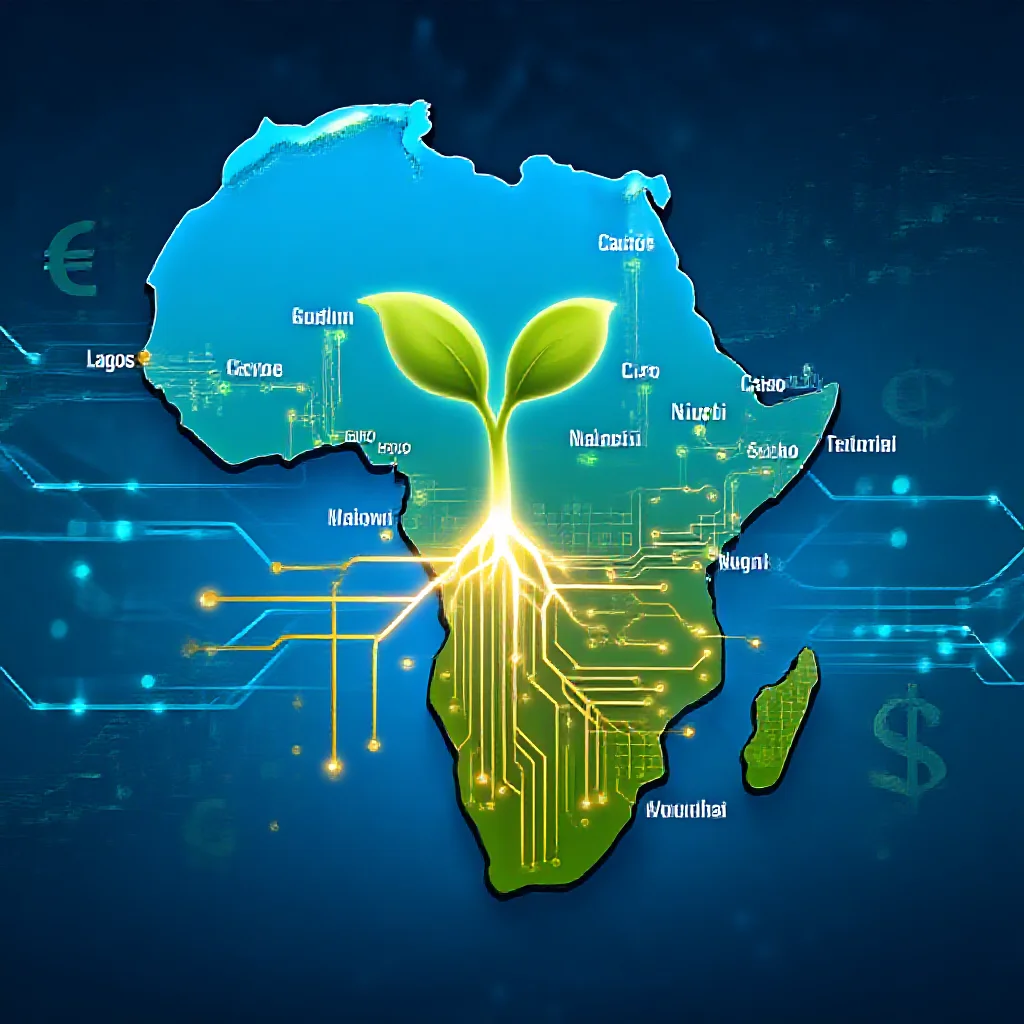
Analysis of integrated strategies—including soil health management, precision agriculture, and climate-smart technologies—necessary to secure global food production against climate change.
Climate Resilience and Precision Agriculture: Securing Global Food Systems
Executive Summary
Climate change poses significant threats to global food production, necessitating a fundamental shift toward integrated agricultural strategies. Achieving the projected 50% increase in global food production by 2050 requires optimizing land and water use through enhanced soil health, precision agriculture, and the adoption of smart technologies. This analysis details the technical and policy pathways—such as remote sensing, IoT, and ecological assessments—that enable resilient farming practices, moving beyond traditional methods to build sustainable and productive food systems.
Introduction
The global food security crisis is being exacerbated by a confluence of factors, including population growth, climate variability, and inequitable distribution. Addressing these challenges demands urgent research and the implementation of strategies focused on land and water management, development of stress-resistant crops, disaster prediction, and waste reduction across the entire food chain. Effective land resource management remains a cornerstone for ensuring sustained agricultural output in an era of environmental volatility.
Main Analysis
Rational Use of Land Resources
Efficient land use is paramount to sustaining agricultural capacity. Scientific land classification and evaluation are essential for informed decision-making. This involves utilizing high-resolution remote sensing and land cover data to distinguish between arable land, grassland, and forest through rigorous classification methods. Furthermore, soil fertility and moisture retention capacity are quantified using spectral data and laboratory results to create a soil fertility index, providing an empirical measure of productivity potential. Topographical analysis, often employing Geographic Information Systems (GIS) and simulation models, assesses land features to optimize usage patterns, particularly in sloped terrains, thereby informing the deployment of precision agriculture techniques.
Precision Agriculture and Technological Integration
Precision agriculture technologies are key to enhancing productivity under environmental stress. The integration of remote sensing and the Internet of Things (IoT) allows for real-time monitoring of land conditions, enabling targeted interventions. These technologies support the adoption of sustainable practices, such as cover cropping and organic farming, when these are guided by explicit ecological assessments. The deployment of biochar and bioremediation techniques further reinforces the synergy between ecological integrity and agricultural yield by restoring degraded lands and enhancing soil fertility.
Water Resource Management
Efficient water resource allocation is fundamental. Scientific allocation models, based on groundwater maps and precipitation data, facilitate scientific management. The application of water-saving irrigation technologies, such as drip irrigation, reduces water consumption while maintaining high efficiency. Policy support for comprehensive water management and incentives for water-saving agricultural practices are crucial for encouraging sustainable water use.
Crop Stress Tolerance Research
Advancements in crop stress tolerance research aim to increase resilience. While certain approaches have shown promise in developing drought- and flood-tolerant varieties, the widespread deployment of these traits is contingent upon continuous, targeted research. Research into salt tolerance, for instance, focuses on improving crop growth in saline soils through the use of specific rhizobacteria, illustrating the ongoing need for tailored biotechnological solutions.
Business Impact
Business Competitiveness
For agricultural enterprises, the shift towards data-driven farming and resource efficiency directly impacts operational resilience and profitability. Companies that successfully integrate precision agriculture and sustainable soil management can achieve optimized yields while minimizing input costs and environmental impact, thereby enhancing long-term competitiveness. This necessitates strategic investment in digital infrastructure and data analytics capabilities.
Corporate Strategy
Corporate strategy must pivot toward building supply chain resilience. This involves moving away from linear production models toward integrated systems that manage land, water, and input use holistically. Investment in agroecology, sustainable farming practices, and climate-smart technologies represents a strategic imperative for mitigating climate-related risks and securing future supply chains.
Investment Significance
Investment opportunities lie in technologies that enhance monitoring, data processing, and resource efficiency in agriculture. This includes precision farming tools, satellite monitoring services, and solutions for soil health diagnostics. The financial markets are increasingly recognizing the necessity of investing in climate adaptation within the agricultural sector.
Regional Perspective
In the context of Africa's economic development, agricultural resilience is intrinsically linked to regional stability and economic growth. For East and West Africa, where agriculture forms the backbone of many economies, the successful adoption of these strategies can significantly bolster food security, reduce dependency on volatile global markets, and foster localized value addition. Cross-border cooperation on water management and shared research on climate-resilient crops are vital for regional economic integration.
Future Outlook
Over the next five years, the integration of Artificial Intelligence (AI) and advanced sensing technologies will become mainstream in African agriculture. AI-driven platforms will enhance the accuracy of land classification, provide hyper-localized climate forecasting, and automate decision-making regarding irrigation and resource allocation. The digital economy will play a pivotal role in democratizing access to agricultural science, allowing SMEs and smallholder farmers to adopt advanced techniques more easily. Furthermore, the focus will remain on developing regionally adapted, climate-smart crop varieties and strengthening the supply chains to minimize post-harvest losses, ensuring that agricultural productivity contributes sustainably to regional economic diversification.
Conclusion
Securing global and regional food systems requires a multidisciplinary approach that moves beyond incremental adjustments. The combination of rigorous scientific land evaluation, precision technology adoption, and proactive policy intervention is essential for building an agricultural sector that is both productive and resilient in the face of climatic uncertainty.
Key Takeaways
* Integrated Management: Sustainable food production relies on integrating soil health management, precision agriculture, and climate-smart technologies.
* Data-Driven Decisions: High-resolution remote sensing and IoT are essential tools for accurate land classification and resource allocation.
* Resilience Building: Focus must shift towards developing stress-tolerant crops and robust supply chains to mitigate climate shocks.
* Policy Imperative: Supportive policies for water management and ecological conservation are necessary to incentivize sustainable agricultural practices.
SEO Requirements
SEO Title: Climate Resilience and Precision Agriculture for Sustainable Food Systems
SEO Description: Analysis of integrated strategies—including soil health management, precision agriculture, and climate-smart technologies—necessary to secure global food production against climate change.