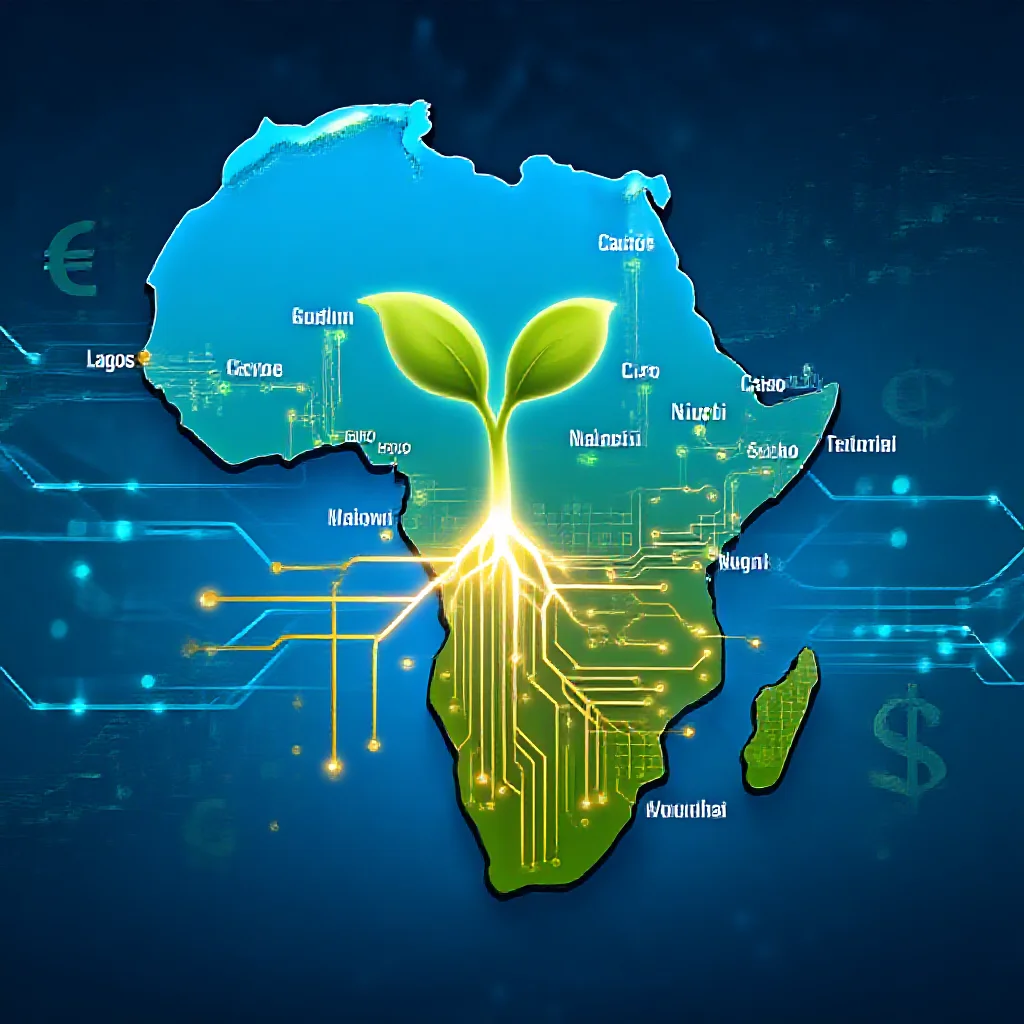
Analyzing the strategic role of renewable energy, energy storage, and smart infrastructure investment in driving industrialization and economic transformation across the African continent.
Energy Transition and Infrastructure Investment: Strategic Imperatives for African Economic Growth
Executive Summary
Africa's trajectory toward sustained economic development is increasingly dependent on its ability to navigate the energy transition. This transition is not merely about decarbonization; it is fundamentally about building the resilient physical and digital infrastructure required to support industrialization, enhance energy security, and unlock vast natural resource potential. This analysis focuses on the strategic interplay between renewable energy deployment, critical infrastructure investment, and policy frameworks necessary to create an industrialized, diversified, and competitive economic landscape across the continent.
Introduction
The energy sector stands at a critical juncture. Expanding electricity demand driven by industrialization, the electrification of transport, and the growth of the digital economy places immense pressure on existing power systems. Simultaneously, the imperative to address climate change demands a rapid shift toward sustainable energy sources. For Africa, this presents a dual challenge and opportunity: mitigating climate risks while simultaneously establishing the foundational energy systems required for large-scale economic activity and industrial competitiveness.
Main Analysis
#### The Growing Demand for Electricity and Industrialization
Industrial development, particularly in manufacturing and value-added sectors, is inherently energy-intensive. Reliable, affordable, and scalable electricity is the prerequisite for moving beyond primary resource extraction toward complex manufacturing and industrial processes. The integration of Artificial Intelligence and other high-demand technologies further exacerbates this need, creating a feedback loop where energy access dictates the pace of technological adoption.
#### The Role of Renewable Energy in Market Development
Renewable energy sources—solar, wind, and hydropower—offer pathways to energy independence and distributed generation, reducing reliance on volatile fossil fuel markets. The strategic deployment of these technologies creates new investment landscapes, particularly in regions with high solar insolation or consistent wind patterns. However, the intermittency of these sources necessitates robust energy storage solutions to ensure grid stability, a key area for future technological and financial investment.
#### Infrastructure as the Enabler
Beyond generation, the transformation hinges on comprehensive infrastructure development. This includes not only the construction of power generation and transmission lines but also the development of digital infrastructure (smart grids, data centers) to manage energy flow efficiently. Public-Private Partnerships (PPPs) are crucial mechanisms for mobilizing the necessary capital for these massive undertakings, bridging the gap between public need and private investment.
#### Energy Security and Resilience
Energy security is intrinsically linked to economic resilience. Unreliable power supply disrupts supply chains, hinders SME operations, and discourages Foreign Direct Investment (FDI). Strategic investments in diversified energy mixes and localized storage capacity are essential to insulate the economy from geopolitical shocks and climatic variability.
Business Impact
Business Competitiveness: Access to reliable, relatively low-cost energy directly impacts the operational costs of businesses, influencing their capacity for scaling and competing regionally and globally. Countries that successfully integrate renewable energy into their industrial parks will gain a structural advantage in attracting FDI.
Corporate Strategy: For multinational corporations, energy strategy must evolve from simple procurement to holistic system integration, incorporating energy efficiency mandates and direct investments in localized renewable energy projects. This requires long-term, strategic planning.
Investment Decisions: The viability of large-scale industrial projects, including mining and manufacturing, is now heavily contingent on the availability and cost structure of energy. This shifts investment calculus towards projects with clear, sustainable energy pathways.
Industrialization and Diversification: The energy transition provides the necessary framework for shifting economic activity from energy-intensive, resource-extractive models toward technology-driven, value-added manufacturing. This supports economic diversification away from commodity dependence.
SMEs and Financial Inclusion: While large infrastructure projects draw significant capital, targeted investments in decentralized, off-grid renewable energy and FinTech solutions for energy access can empower SMEs, improving their operational resilience and fostering financial inclusion in underserved areas.
Regional Perspective
African Continental Free Trade Area (AfCFTA): The energy transition is a prerequisite for fully realizing the potential of AfCFTA. Seamless cross-border trade, the development of integrated energy corridors, and standardized energy infrastructure across sub-regions are essential to creating truly integrated industrial value chains. Regional cooperation on energy policy and shared grid development will define the success of this trade bloc.
East and West Africa: These regions present distinct energy profiles. East Africa can leverage its hydropower potential, while West Africa is increasingly positioning itself to capitalize on solar and emerging green hydrogen opportunities. Regional energy partnerships are vital to build interconnected grids that facilitate trade and energy sharing.
Infrastructure Connectivity: Cross-border energy infrastructure, such as regional power pools and interconnectors, will become a focal point for regional economic integration. Successful implementation requires coordinated policy across Economic Communities to manage shared assets and transmission challenges.
Future Outlook
Over the next 3 to 5 years, the energy landscape in Africa is expected to be characterized by increased policy certainty around renewable energy deployment and a surge in targeted infrastructure investment. The focus will shift from simply generating power to optimizing energy systems through digitalization—specifically smart grid technologies and AI-driven demand management. The energy storage market, particularly battery technology, will see accelerated growth as a non-negotiable component of grid modernization efforts.
Industrialization will become more targeted, favoring sectors that can achieve energy efficiency alongside renewable integration. The digital economy will place increasing demands on power infrastructure, necessitating concurrent investments in data centers and resilient telecommunications networks. Furthermore, the drive toward energy security will solidify, potentially leading to more sophisticated international financing mechanisms for large-scale energy projects.
Africa's global competitiveness will be increasingly measured by the pace at which it can deploy sustainable energy solutions at scale, thereby reducing operational risk and positioning itself as a hub for green technology investment and manufacturing.
Conclusion
The energy transition represents the defining structural shift for Africa's long-term economic development. Success depends on a multi-faceted approach: strategic policy reform to de-risk investment, massive, coordinated infrastructure investment, and fostering innovation in energy technology. By treating energy not as a utility constraint but as a strategic economic asset, African nations can build a foundation for sustained industrialization, regional integration, and enduring economic resilience.