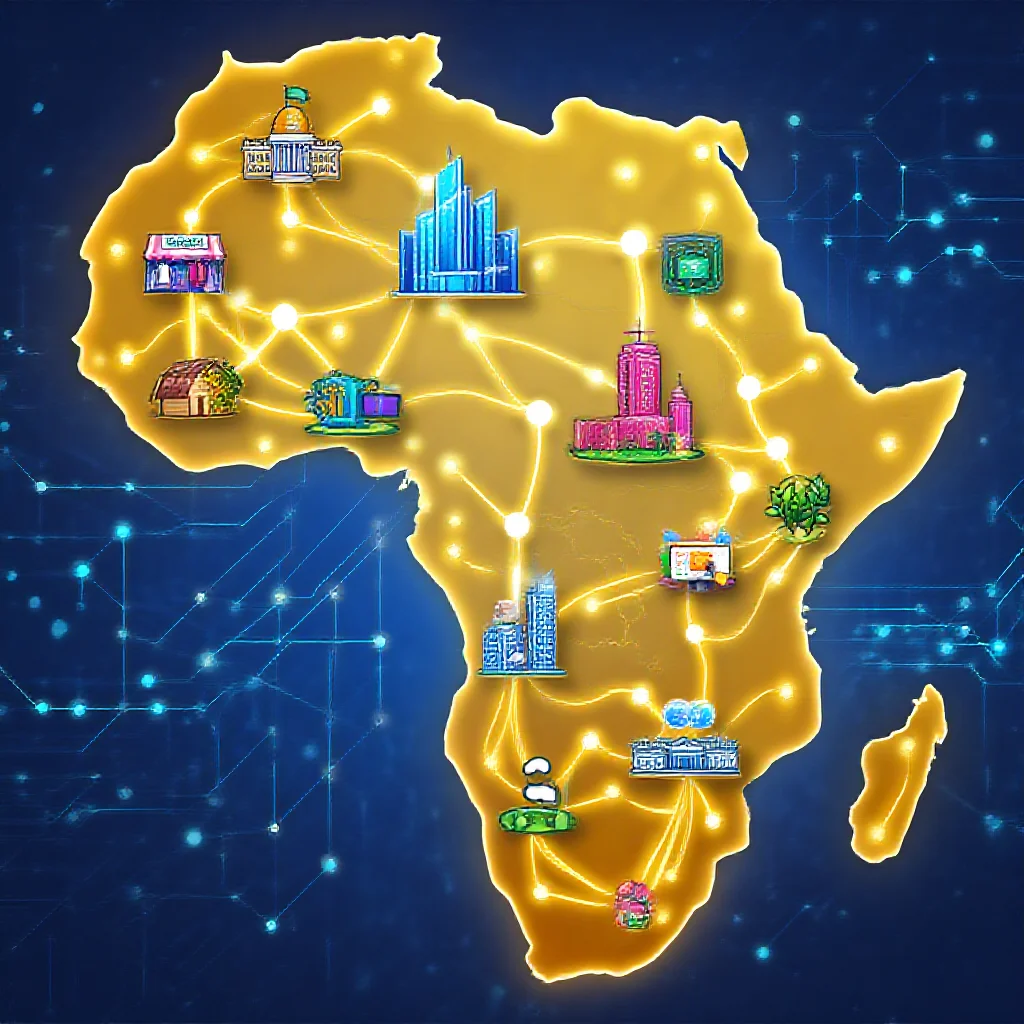
Innobid, a Kenyan company, operates a digital platform connecting African
Beyond Matching: How Innobid's Platform Could Reshape Africa's MSME Procurement Ecosystem
Introduction: The Procurement Gap and the Platform Promise
Micro, Small, and Medium Enterprises (MSMEs) constitute the backbone of most African economies, accounting for a significant majority of employment and business activity. Despite their numerical dominance, these enterprises have historically been excluded from formal procurement channels, which represent a substantial portion of economic expenditure by governments and large corporations. The barriers are systemic: a pervasive lack of accessible information on tender opportunities, complex and opaque bidding processes, and prohibitive costs of compliance and participation.
Innobid, a Kenyan company, has launched a digital platform designed to address these specific barriers by aggregating and matching MSMEs with formal procurement opportunities. The immediate value proposition is clear: reducing information asymmetry and simplifying access. However, a deeper analysis positions Innobid not merely as a transactional listings service, but as a potential catalyst for structural change within the informal and semi-formal MSME sector. The platform’s significance may lie in its capacity to act as foundational infrastructure for economic formalization.
Deconstructing the Model: More Than a Matching Algorithm
At its operational core, Innobid functions as an aggregation and matching engine. It consolidates procurement notices from institutional buyers and connects them with relevant MSME suppliers. This differs from a simple job board through its inherent structuring of data and the application of matching logic, which reduces search and vetting costs for both parties.
The economic logic underpinning this model is the monetization of trust and the reduction of transaction costs in a high-friction market. By creating a centralized, standardized marketplace, the platform lowers the cost for buyers to discover qualified suppliers and for suppliers to find legitimate opportunities. The critical, often under-analyzed, asset generated is data. The platform inherently collects granular information on MSME capabilities, sectoral specializations, bid success rates, and real-time market demand—a resource that has been largely absent at scale in many African markets. This data asset forms the basis for potential secondary value creation beyond basic matching.
The Deep Audit: From Transaction Tool to Ecosystem Infrastructure
This development represents a slow-burn institutional innovation rather than a fast-breaking news event. Its long-term impact warrants a deep audit of its potential evolutionary path from a tool to an ecosystem.
The Financial Inclusion Gateway: A platform like Innobid can generate verified, digital records of a business’s procurement history and performance. This data is a powerful tool for de-risking MSMEs in the eyes of financial institutions. In emerging markets, alternative data for credit scoring has proven effective in expanding access to finance (Source 1: [Studies on Alternative Credit Scoring in Emerging Markets]). A documented track record of bidding for and fulfilling formal contracts could unlock credit lines, invoice financing, and insurance products previously inaccessible to informal enterprises.
Supply Chain Democratization: For large buyers, including governments prioritizing local content, the platform enables efficient discovery and vetting of smaller, local suppliers. This can shorten and strengthen regional supply chains, reduce import dependencies, and improve economic resilience. It transforms procurement from a closed, relationship-driven process to a more transparent, competency-based one.
The Formalization Engine: The platform provides a guided, lower-friction pathway for informal businesses to enter the formal economy. By navigating the platform’s requirements to participate in tenders, businesses implicitly adopt more formal practices. This has downstream implications for tax revenue collection, regulatory oversight, and the ability of governments to design evidence-based MSME support policies informed by platform data.
Uncharted Challenges: The Viewpoint Beyond the Hype
The transformative potential is contingent on overcoming significant, non-technical challenges. The critical entry point remains the buyer side. The long-term viability of the platform depends on securing a consistent, high-volume flow of quality procurement opportunities from governments and large corporations, entities often resistant to changing entrenched procurement practices.
Network effects are a double-edged sword. While essential for liquidity and value, initial growth may be slow until a critical mass of both buyers and suppliers is achieved. Furthermore, the risk of platform capture exists. If the model succeeds, it could attract dominant global platforms, altering the competitive landscape and potentially extracting disproportionate value from the ecosystem.
The most substantial challenge is data governance and trust. MSMEs must trust the platform with sensitive business data. The ownership, security, and ethical use of the accumulated data asset—particularly if used for credit scoring or sold to third parties—will be a defining factor for the platform’s legitimacy and sustainability. Poor governance could replicate existing power asymmetries in digital form.
Conclusion: Neutral Market and Industry Predictions
The development of platforms like Innobid indicates a maturation in Africa’s tech ecosystem, moving beyond consumer-facing applications to address complex, institutional business-to-business and business-to-government challenges. The market logic of reducing procurement friction is sound.
Prediction analysis suggests two probable trajectories. In the first, such platforms become specialized utilities, successfully integrating with government e-procurement portals and corporate supply chain management systems to become a standard layer of business infrastructure. Their business model may evolve from subscription fees to taking a margin on facilitated transactions or licensing data analytics to financial institutions.
The second, less certain trajectory is their evolution into full-stack ecosystem architects. This would involve leveraging their unique data position to directly offer integrated financial services, logistics support, and capacity-building tools, thereby capturing more value but also incurring significantly higher operational complexity and regulatory scrutiny.
The ultimate determinant of impact will not be the sophistication of the matching algorithm, but the platform’s ability to navigate the institutional, regulatory, and trust-based realities of the markets it seeks to serve. Its success or failure will provide a critical case study on the digitization of formalization in emerging economies.