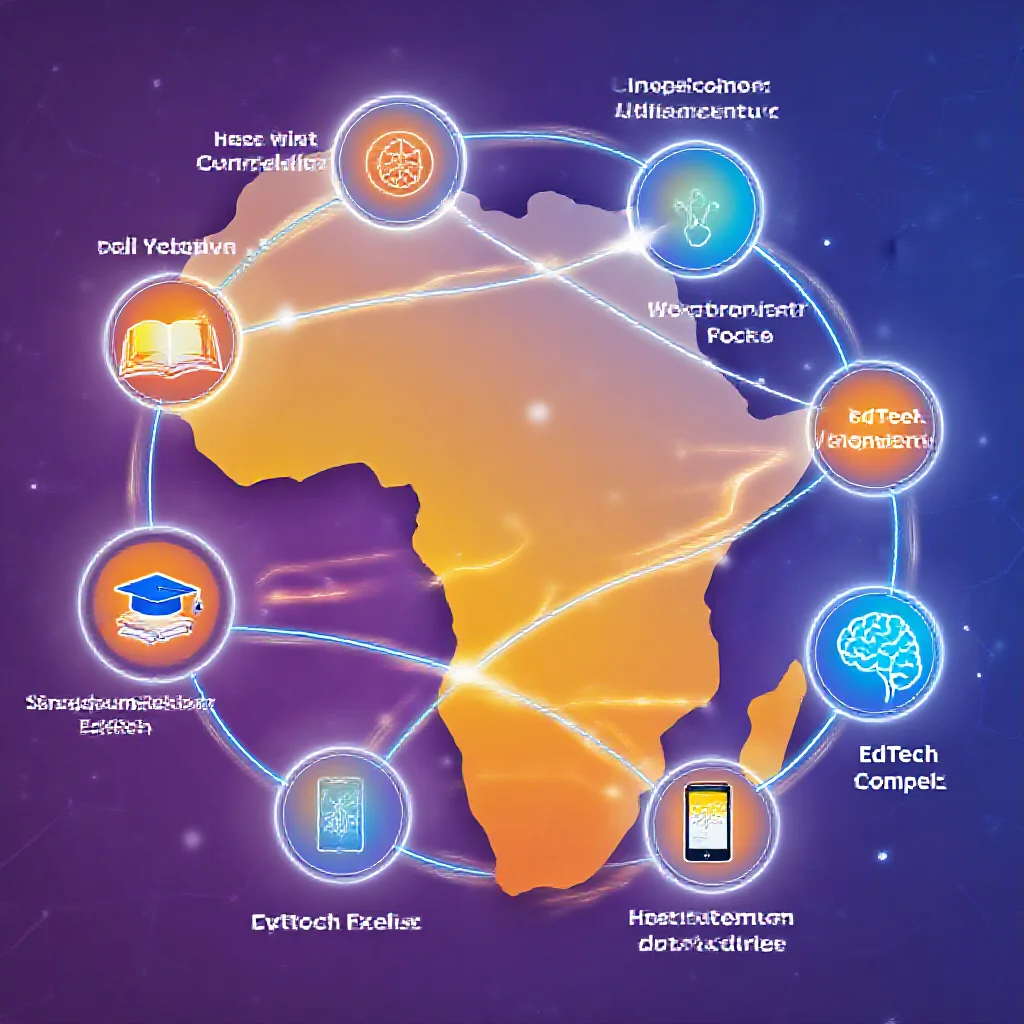
Injini's announcement of its fourth Mastercard Foundation EdTech Fellowship
Beyond the Grant: How Injini's Fourth EdTech Cohort Signals a Strategic Shift in African Education Investment
The Announcement: A Milestone in Sustained Ecosystem Building
On April 21, 2026, Injini announced the selection of ten startups for the fourth cohort of the Mastercard Foundation EdTech Fellowship (Source 1: [Primary Data]). The announcement represents more than a singular funding event. It signifies the institutionalization of a multi-year partnership model between Injini, an Africa-focused EdTech incubator, and the Mastercard Foundation, a philanthropic organization. The progression to a fourth cohort indicates a transition from a pilot initiative to a mature, recurring support mechanism within the continent's digital education landscape.
The strategic curation of ten startups per cohort is a deliberate operational choice. It suggests a model optimized for diversity of solutions and the facilitation of intra-cohort collaboration, rather than merely scaling the number of beneficiaries. This approach treats the cohort as a micro-ecosystem, where peer learning and potential synergies between complementary solutions—addressing, for instance, foundational literacy, teacher training, and employability—are engineered into the program's design. The sustained execution of this model across multiple cycles provides a longitudinal dataset for analyzing effective scaling pathways for African EdTech.
Deconstructing the Fellowship Model: The Non-Equity Grant as a Strategic Tool
The fellowship's structure reveals a calculated departure from conventional venture capital investment. The provision of a $100,000 non-equity grant per startup (Source 1: [Primary Data]) is a strategic tool with distinct economic logic. It prioritizes mission-aligned growth and founder autonomy over investor equity returns and board-level influence. This model reduces immediate financial pressure on startups to pivot towards revenue models that may compromise educational impact, allowing for a focus on product-market fit and user acquisition within complex educational systems.
The six-month duration of the program functions as a targeted sprint (Source 1: [Primary Data]). This period is calibrated to achieve specific, high-leverage scaling milestones—such as market entry into a new country, product localization, or key partnership development—rather than offering open-ended incubation. The integrated provision of mentorship and networking constitutes critical "soft infrastructure." This component is designed to mitigate systemic barriers in fragmented African markets, such as navigating regulatory variances across borders and accessing decision-makers within public and private education sectors.
The Hidden Pattern: What Cohort Four Reveals About Africa's EdTech Priorities
While the specific startups in the fourth cohort are not detailed in the announcement, the fellowship's explicit aim to "support EdTech startups in scaling their solutions across Africa" (Source 1: [Primary Data]) reveals underlying market and funder priorities. The selection criteria inherently favor ventures that have moved beyond proof-of-concept in a single market and demonstrate a replicable, pan-African business model. This indicates a strategic shift in investment focus from innovation validation to scalable deployment.
The emphasis on cross-border scaling addresses a fundamental challenge in the African technology sector: achieving sustainable growth across a continent of 54 distinct markets. The fellowship model, by design, invests in startups that can navigate this complexity, suggesting investor confidence is growing in pan-African EdTech platforms. This pattern aligns with broader sector analyses that identify foundational skills, STEM education, teacher professional development, and youth employability as persistent, continent-wide gaps demanding scalable technological solutions. The program acts as a filter and an accelerator for ventures positioned to address these systemic priorities at scale.
Conclusion: Positioning the Fellowship as Ecosystem Infrastructure
The Mastercard Foundation EdTech Fellowship, through its fourth cohort, has evolved into a key piece of infrastructure for Africa's digital education ecosystem. Its non-dilutive funding, structured sprint model, and network-building focus represent a systems-level intervention. The program's continuity demonstrates a long-term commitment to building not just individual companies, but a interconnected network of solutions capable of addressing educational challenges across multiple geographies and domains.
The logical trajectory of this model points towards an increasing emphasis on measurable learning outcomes and sustainable unit economics among fellow alumni. Future cohorts will likely be evaluated not only on their scaling success but also on their contribution to a collaborative ecosystem where data, insights, and best practices are shared to accelerate sector-wide maturity. The fellowship’s enduring impact will be quantified by the density and resilience of the pan-African EdTech network it helps to construct and the resultant improvement in educational access and quality at scale.