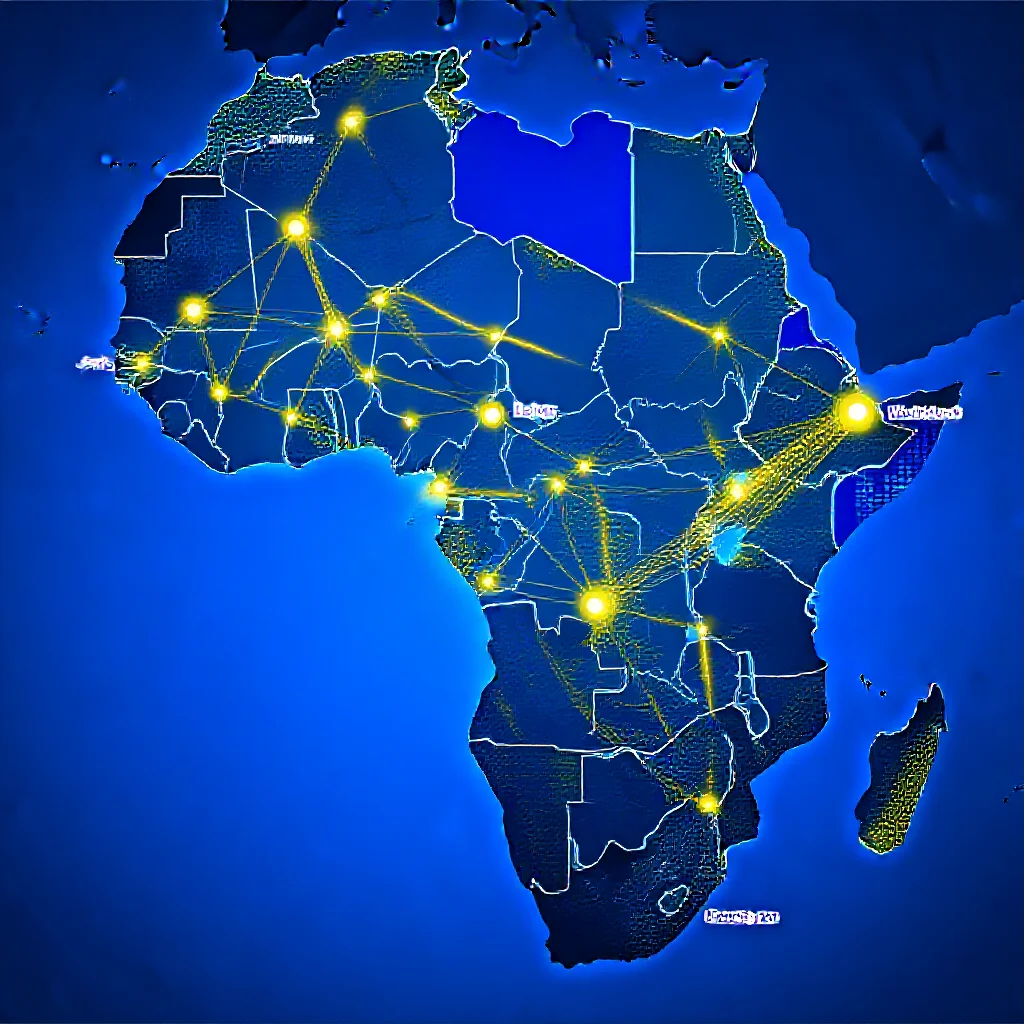
Paris-based fintech Hub2, launched in 2023, is positioning itself as the
Hub2's €1.5B Gateway: How a Paris Startup is Building Francophone Africa's Financial Spine
Opening Summary
Hub2, a Paris-based financial technology firm launched in 2023, has processed over €1.5 billion in transactions by operating as a payment infrastructure provider for Francophone Africa’s financial sector (Source 1: [Primary Data]). The company, which maintains operational offices in Dakar and Abidjan, connects banks, fintechs, and mobile money operators across 15 African nations. A €8 million seed funding round secured in 2024 underscores investor interest in this model (Source 1: [Primary Data]). This operational profile positions Hub2 not merely as another fintech application but as a foundational layer for regional financial activity.
Beyond the Transaction Volume: Hub2 as a Strategic Infrastructure Play
The €1.5 billion transaction volume is a quantitative indicator of systemic integration rather than simple commercial traction. This figure signals that Hub2’s platform has achieved critical adoption among key financial institutions shortly after its 2023 launch (Source 1: [Primary Data]). The company’s self-description as an “infrastructure provider” is a deliberate market positioning, distinguishing it from consumer-facing fintechs. This role involves providing the underlying transactional rails—the core plumbing—upon which other financial services are built. The strategic implication is one of centrality; by handling the flow of value between disparate entities, the infrastructure provider becomes embedded within the operational fabric of its clients’ businesses.The Core Axis: The Quiet Shift from Sovereign Systems to Platformed Finance
Hub2’s model capitalizes on a broader economic logic: the outsourcing of complex, capital-intensive payment system development. For banks and mobile network operators (MNOs) across 15 countries, integrating with a single API-driven platform like Hub2 offers immediate cost efficiency and interoperability benefits compared to maintaining or building numerous bilateral connections (Source 1: [Primary Data]). This represents a long-term structural shift from fragmented, often nationally-oriented, in-house systems toward a unified, third-party architectural layer. The consequential audit question concerns financial sovereignty and systemic resilience. The concentration of critical financial messaging and settlement functions within a single private entity introduces a potential single point of failure or leverage within the region’s financial system. The control of financial rails migrates from sovereign or consortium-led projects to a platform whose operational and strategic decisions are made externally.Dual-Track Analysis: Fast Growth vs. Slow-Burn Structural Change
A dual-analysis framework is required to separate temporal milestones from deeper structural trends. * Fast Analysis (Market Validation): The €8 million seed funding round in 2024 provides a clear, timely signal of investor confidence in the scalability of the infrastructure-as-a-service model for the African market (Source 1: [Primary Data]). It validates the thesis that financial institutions are willing to pay for reliable, modern connectivity. * Slow Analysis (Inclusion & Depth): A deeper audit must assess whether this model primarily optimizes existing formal financial flows between urban centers and banks, or if it tangibly accelerates broad-based financial inclusion. The platform’s efficacy in lowering the cost and complexity for smaller fintechs and rural-focused MNOs to participate in the formal economy is a more significant, longer-term metric of impact than transaction volume alone.Geopolitics of a Paris-Dakar-Abidjan Triangle
The corporate structure—headquartered in Paris with operational hubs in Dakar and Abidjan—presents a modern configuration of capital and market access (Source 1: [Primary Data]). Analytically, a European base likely facilitates fundraising from global venture capital and provides a layer of regulatory credibility for international partners and investors. This structure efficiently channels foreign investment into African financial digitization. The critical examination lies in whether this operational triangle fosters a partnership of equitable technological co-development or establishes a dependency where core financial infrastructure is designed, owned, and governed from a former colonial metropole. The outcome hinges on the localization of decision-making, data governance, and technical capacity within the African offices.The Road Ahead: Scenarios for Africa's Financial Architecture
The evolution of Hub2’s model will influence the region’s financial architecture. Two divergent scenarios are plausible based on current trajectories.- Scenario 1 – De Facto Standard: Hub2 achieves such widespread adoption that it becomes the de facto payment utility for Francophone Africa. This could enable a seamlessly integrated regional digital economy, reducing friction for cross-border trade and remittances, and setting a technical standard for others to follow.
- Scenario 2 – Fragmented Competition: Success invites competition. National payment switches, other pan-African platforms, or large global payments firms may develop rival infrastructures. This could lead to a period of fragmentation before potential consolidation, or it could foster a healthier, competitive market for financial infrastructure services, mitigating sovereignty concerns.
Neutral Market Prediction
The demand for interoperable, efficient digital payment infrastructure in Francophone Africa is substantiated and growing. Hub2’s early-mover advantage and transaction volume provide significant momentum. The predictable industry trend is increased activity in this sector, with more entrants likely emerging. The long-term stability and governance of such critical financial platforms will become a focal point for regulators and institutional clients, potentially leading to new forms of public-private oversight or consortium models to address sovereignty and resilience imperatives. The market will ultimately judge the model not on volume processed, but on its reliability, cost structure, and role in enabling a more inclusive and robust digital financial ecosystem.