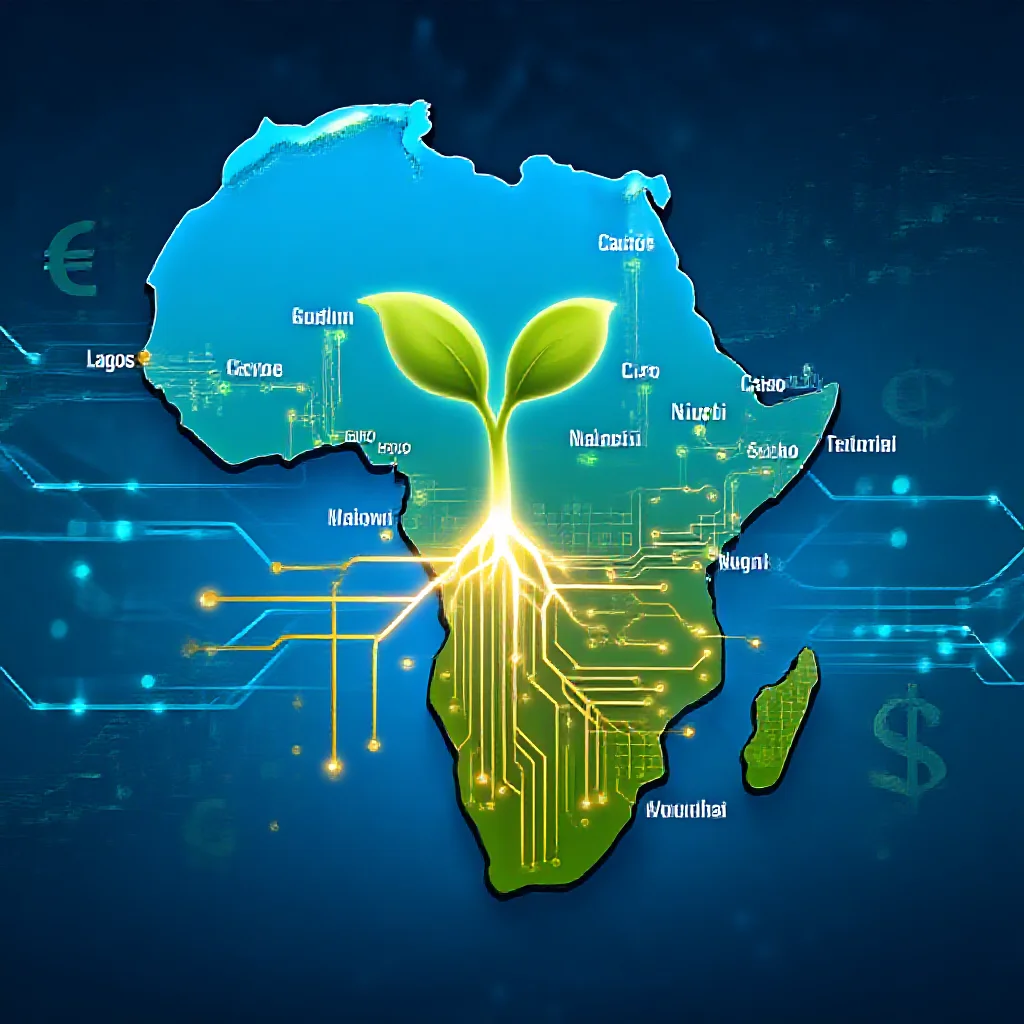
An analysis of the deep tech market trends, highlighting how advancements in AI, robotics, and sustainable technologies present strategic investment opportunities and policy challenges for Africa's long-term industrial transformation.
The global deep tech market is experiencing a period of accelerated growth, driven by breakthroughs in areas such as artificial intelligence, quantum computing, robotics, synthetic biology, and advanced materials. The market size is projected to expand significantly, indicating a strong global appetite for research-intensive solutions that address complex scientific and engineering challenges. Understanding these global deep tech dynamics is crucial for assessing the potential for similar technological shifts within emerging markets like Africa.
Main Analysis: Key Deep Tech Drivers and Opportunities
The primary driver for deep tech market growth is the rising adoption of advanced artificial intelligence and automation technologies. Enterprises worldwide are integrating AI for process optimization, predictive analytics, and operational efficiency, with over 67% of global enterprises prioritizing AI integration for these purposes. This trend is not confined to developed economies; the potential for AI and automation to enhance productivity across various sectors—from manufacturing to agriculture—is a significant factor.
Another critical trend involves the expansion of sustainable innovation. There is a clear pivot toward technologies focused on renewable energy storage, carbon capture systems, and synthetic biology applications. As nearly 52% of industrial organizations prioritize sustainability-focused deep tech adoption, this signals a strategic shift towards long-term environmental resilience and resource optimization. This focus aligns with global imperatives for energy transition and climate mitigation.
Business Impact and Investment Significance
The business implications center on the need for robust computational infrastructure and specialized talent. The demand for high-performance computing to support deep tech solutions necessitates strategic investment in digital infrastructure, including data centers and advanced telecommunications. For corporations, the integration of AI and robotics into supply chains promises improvements in operational resilience and quality control. However, the high research costs and extended commercialization timelines remain significant restraints, particularly for Small and Medium Enterprises (SMEs), which often struggle to secure the necessary funding for long-term, research-intensive innovation programs.
Policy Relevance and Regional Perspective
From a policy standpoint, governments are increasingly supporting research-driven startups and investing in national technological competitiveness through funding programs in areas like semiconductor development and national security technologies. This necessitates careful policy interpretation regarding intellectual property management and regulatory frameworks to foster innovation while managing risk.
For the African context, the deep tech landscape presents both significant opportunities and substantial challenges. The focus on sustainable technologies and precision agriculture, driven by deep tech solutions, directly intersects with critical African development priorities such as food security and climate-smart agriculture. Leveraging AI and robotics in these sectors can significantly enhance agricultural value chains and improve operational resilience against climate variability.
Future Outlook (3-5 Years)
Over the next three to five years, the deep tech market is expected to intensify its focus on practical, scalable applications. We anticipate a continued acceleration in the commercialization of generative AI platforms, moving beyond proof-of-concept to widespread enterprise integration. Investment will increasingly flow toward deep tech solutions that offer tangible returns in efficiency and sustainability, particularly in sectors like renewable energy and advanced manufacturing. For Africa, the strategic imperative will be to build the necessary ecosystems—including talent development, specialized infrastructure, and supportive policy—to capture these emerging deep tech opportunities. Success will hinge on fostering cross-border research collaborations and developing localized solutions that address specific regional economic needs, moving beyond mere consumption of global deep tech to active creation and industrial application.