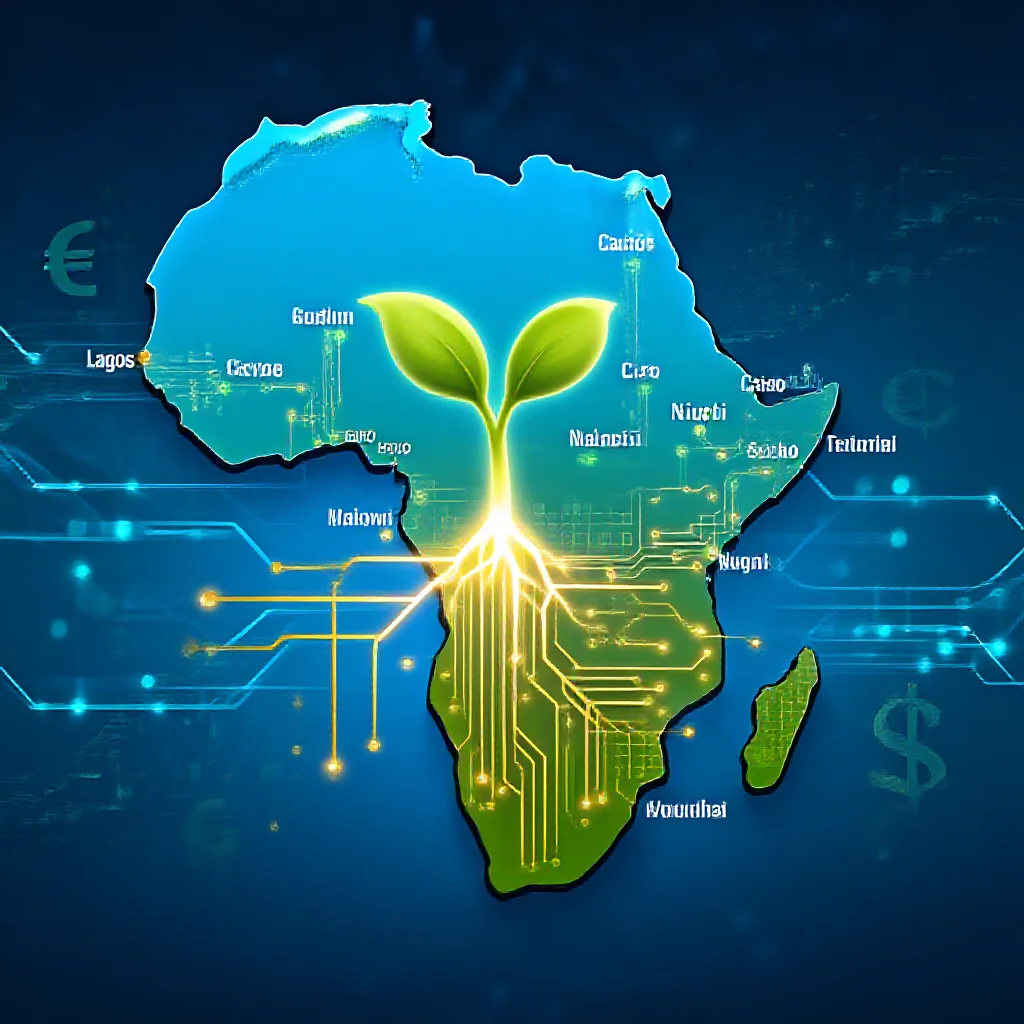
The African Development Bank's €7.5 million investment in the Breega Africa
Beyond the Headline: How AfDB's €7.5M Bet on Breega's Africa Seed Fund Signals a New Era for Tech Venture Capital
The African Development Bank (AfDB) Group has approved a €7.5 million (US$8.6 million) investment in the Breega Africa Seed I Fund (Source 1: [Primary Data]). This capital injection targets early-stage technology startups across key African markets, including Nigeria, South Africa, Kenya, Egypt, and Francophone Africa (Source 2: [Primary Data]). While the transaction aligns with the broader Boost Africa Initiative, a deeper analysis reveals a strategic evolution in how institutional capital engages with Africa’s entrepreneurial ecosystem, moving beyond traditional development finance toward a venture-scale model predicated on market returns and systemic impact.
Deconstructing the Deal: A Hybrid Financial Instrument for a New Market
The financial architecture of the AfDB’s commitment is a critical indicator of its strategic intent. The investment is bifurcated: €5 million (US$5.8 million) is allocated as direct equity capital, while €2.5 million (US$2.8 million) is structured as a junior tranche deployed on behalf of the European Commission (Source 3: [Primary Data]). This dual-tranche mechanism is not a standard venture capital play but a calibrated financial instrument designed for a nascent, high-potential market.
The junior tranche functions as catalytic capital. By positioning this portion of the capital to absorb first losses, the structure de-risks the investment proposition for subsequent private investors. This mitigates perceived market entry risks for the European Commission and provides the fund manager, Breega, with a more flexible capital base to support portfolio companies through early, volatile growth stages. The structure demonstrates a hybrid approach, blending development finance’s risk-tolerant capital with venture capital’s return-seeking discipline.
The Hidden Logic: Why AfDB is Betting on Venture-Scale Returns
This transaction signifies a paradigm shift from development aid to development finance. The AfDB’s move is a calculated bet on achieving market-rate financial returns while concurrently addressing continental challenges. The fund’s sector focus—fintech, insurtech, agri-tech, e-health, logistics, and climate-tech—serves as a diagnostic tool for this strategy (Source 4: [Primary Data]). Each target sector corresponds to a systemic pressure point: financial inclusion, food security, healthcare access, supply chain efficiency, and climate resilience. The underlying thesis is that scalable, for-profit business models represent the most sustainable vector for driving broad-based development outcomes.
The selection of Breega as the vehicle is equally strategic. Founded in 2015, Breega manages €700 million (US$806 million) in assets and maintains a portfolio of over 110 companies (Source 5: [Primary Data]). This partnership imports more than capital; it facilitates the transfer of operational expertise, global network access, and established pathways to later-stage funding and exits. The AfDB is leveraging Breega’s established European track record and institutional processes to professionalize early-stage investing in Africa, aiming to generate a demonstration effect for other global institutional limited partners.
Geopolitics of Capital: The EU-AfDB Nexus and Francophone Africa's Rise
The deal’s structure, involving capital from the European Commission, underscores a strategic European alignment to cultivate influence within Africa’s digital economy. It establishes a structured conduit for European institutional capital, positioning it alongside significant American and Chinese investments in the continent’s tech landscape. This nexus represents a deliberate, finance-driven strategy to shape market development and build long-term economic partnerships.
The geographic target markets reveal a deliberate blueprint to bridge historically siloed ecosystems. The inclusion of Francophone Africa alongside the established hubs of Nigeria, Kenya, Egypt, and South Africa is particularly notable (Source 2: [Primary Data]). Breega’s operational footprint, with offices in Paris and Lagos, provides a unique structural advantage to execute this pan-continental strategy (Source 5: [Primary Data]). This approach aims to unlock capital and talent flows across linguistic divides, potentially integrating Francophone startups into broader Pan-African and global investment networks from which they have been relatively excluded.
Neutral Market Prediction: Catalyzing a Tiered Funding Ecosystem
The AfDB’s investment in Breega Africa Seed I Fund is projected to have several downstream effects on the market. First, it will increase the availability of institutional-quality seed capital in the target sectors and regions, potentially raising valuation benchmarks and funding round sizes. Second, the hybrid capital structure may serve as a replicable model for other development finance institutions, leading to more sophisticated, risk-mitigated co-investment vehicles.
The most significant long-term impact may be the acceleration of a tiered funding ladder in Africa. By providing validated, early-stage companies with a clear path to follow-on capital from a manager with European institutional connections, the fund addresses a critical "Series A gap." This could increase the survival and scale rate of startups, leading to a more robust pipeline of later-stage opportunities. Consequently, the transaction signals a maturation point where Africa’s tech ecosystem is increasingly evaluated not through the lens of aid, but through the rigorous metrics of global venture capital: scalability, addressable market, and exit potential.