Turner Mining Group's recent $150 million capital partnership with Trinity
Beyond the Fleet: How Turner Mining's $150M Deal Signals a Shift in Mining's Financial Infrastructure
The Deal Decoded: More Than Just New Machinery
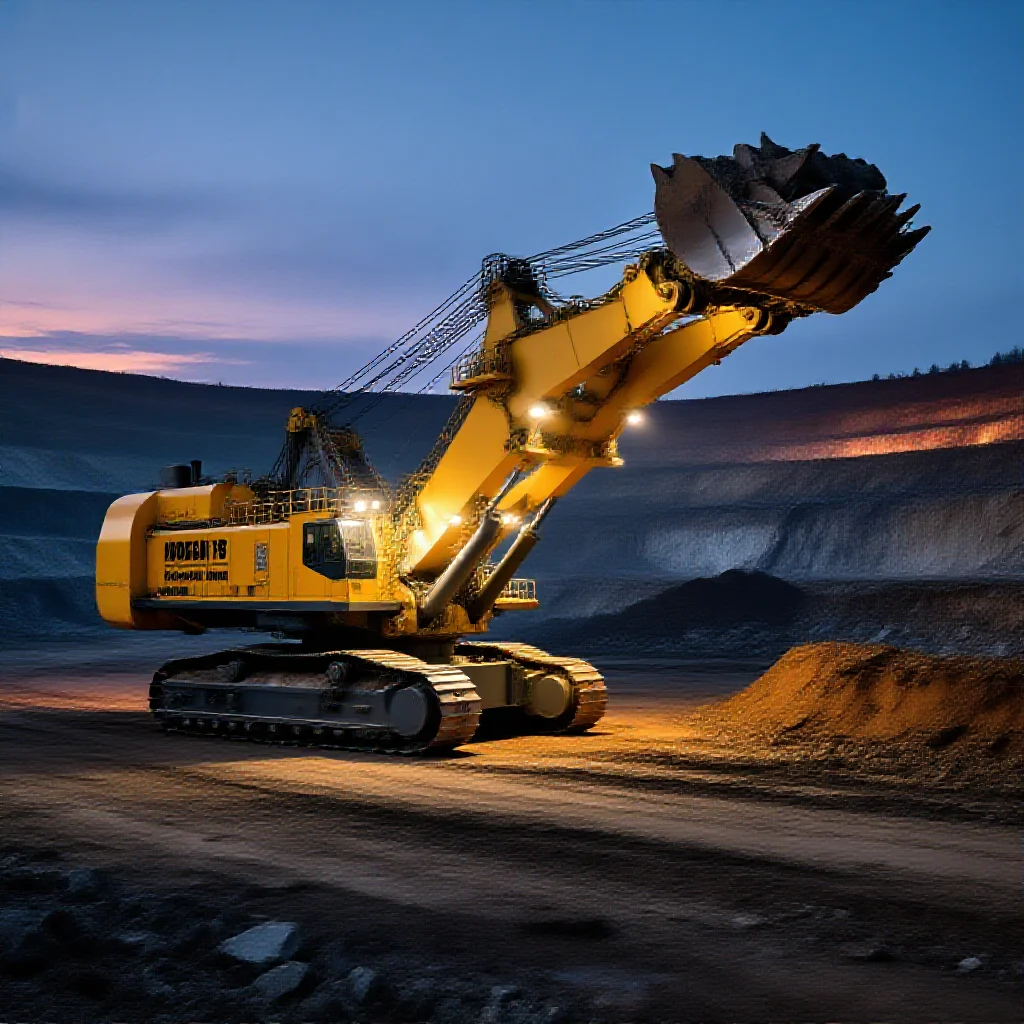
Turner Mining Group has secured $150 million in capital through a partnership with Trinity Capital Inc. (Source 1: [Primary Data]). The stated purpose of the funding is the acquisition of new mining equipment to expand the company's operational fleet. This transaction, however, represents more than a simple procurement exercise. It is a strategic maneuver within the evolving financial infrastructure of the heavy industry sector. The deal underscores a deliberate shift from asset-heavy ownership to asset-light service provision, repositioning capital expenditure within the mining value chain.

The Rise of the Asset-Light Contractor: A New Industry Blueprint
Turner Mining Group operates as a provider of contract mining and equipment rental services. This model is inherently scalable; expanding the fleet directly correlates to increased revenue potential without the necessity of owning mineral deposits or mines. This contrasts sharply with the traditional integrated mining company, which must allocate massive capital expenditure (CapEx) to both resource acquisition and the equipment required to exploit it.
The strategic advantage of this asset-light model is its flexibility. It allows mining companies to access specialized equipment and operational expertise without bearing the full burden of ownership, maintenance, and depreciation. This financial structure enables both the service provider and its clients to exhibit greater agility in response to volatile commodity price cycles. Capital is deployed specifically for production capacity rather than being locked into long-term, site-specific asset bases.
Trinity Capital's Bet: Why Finance Equipment, Not Mines?
Trinity Capital Inc.'s involvement provides critical insight into the financial rationale underpinning this trend. As a provider of debt financing to growth-stage companies, Trinity's $150 million commitment to Turner Mining Group is a calculated bet on tangible, movable assets. Financing a fleet of standardized mining equipment presents a different risk profile compared to financing a single mine project, which is exposed to geological, permitting, and commodity-specific risks.
The equipment itself serves as collateral, is redeployable across multiple projects and geographies, and has a transparent secondary market. This asset-backed security is a compelling proposition for institutional investors. The model finds validation in adjacent industries like construction and energy, where equipment leasing and fleet financing have long been established practices. Its migration into mining indicates a maturation of the sector's financial toolkit and a growing appetite among capital providers for infrastructure-like returns derived from industrial assets rather than pure resource extraction.
The Ripple Effect: Reshaping Supply Chains and Competition
The implications of this funding model extend beyond Turner Mining Group and Trinity Capital. For Original Equipment Manufacturers (OEMs) such as Caterpillar or Komatsu, large-scale, pre-arranged fleet financing facilitates bulk transactions and provides greater visibility into future demand. It may also shift negotiation dynamics, as well-capitalized service providers like Turner can place larger, more strategic orders.
Within the competitive landscape, this financial model lowers the barrier to scaling operations for contract miners, potentially accelerating industry consolidation. Smaller operators without access to similar institutional partnerships may face heightened competitive pressure. In the long term, the supply chain may adapt to support a more fluid, service-oriented equipment ecosystem, with standardized maintenance and telematics packages becoming as critical as the machinery itself.
Concurrently, this trend reinforces the emergence of "mining-as-a-service" models, where production is purchased on a contractual basis. This could lead to a more modular project development approach, where financing, equipment, and operational expertise are secured through separate, specialized channels rather than a single corporate entity.
Neutral Market Projections
The transaction between Turner Mining Group and Trinity Capital Inc. is indicative of a broader structural evolution. The logical progression points toward an increasingly bifurcated industry: one segment focused on resource ownership and exploration, and another on the provision of capital-intensive production services. This specialization promises greater capital efficiency across the sector.
Future trends will likely see a proliferation of similar financial partnerships, drawing more non-traditional investors into the mining ecosystem. The success of this model will be measured by its ability to sustainably reduce project development timelines and lower overall cost of production for miners. Market adoption will be contingent on demonstrating that the flexibility and off-balance-sheet advantages for mining companies outweigh the long-term costs of leasing versus owning. The deal is not merely a fleet expansion; it is a test case for the next generation of mining finance.