NielsenIQ's archive of 1,227 industry insights from June-July 2026 offers
Decoding the Future: Key Industry Trends from NielsenIQ's Latest Insights (June-July 2026)
Introduction: The NielsenIQ Archive as a Strategic Compass
In the span of just two months — June and July 2026 — NielsenIQ’s repository of industry insights swelled to 1,227 individual entries. Filtered by region, industry, topic, format, and date range, this archive offers a rare, real-time window into the forces reshaping global markets. For strategists and decision-makers, the value lies not in any single report but in the patterns that emerge when you connect data points across sectors: beverage alcohol, snacking, travel, foodservice, automotive, and beyond.
These signals reveal a new kind of consumer complexity. Shoppers are simultaneously chasing value, demanding novelty, and insisting on sustainability — a triad that creates both tension and opportunity. As NielsenIQ notes: “Stay ahead of the curve with our in-depth insights on Industry Trends, where we analyze the latest developments and shifts across various sectors.” The June–July 2026 archive serves precisely that function, enabling cross-sector foresight and actionable intelligence for businesses navigating an identity-driven consumption era.
[IMAGE: Abstract visualization of data streams flowing into a central hub labeled 'NIQ Insights']
Pattern 1: Gen Z – The New Engine of Beverage Alcohol and Snacking
Perhaps the most influential consumer cohort in 2026, Gen Z is rewriting the rules for two adjacent categories: beverage alcohol and snacking. A deep dive into the archive reveals a cohort that defies easy generalization.
Authenticity and Health in Beverage Alcohol
An article titled “Gen Z and BevAl: How Brands Can Meet the Needs of Today’s Generation” (07 July 2026) lays out the core demand: authenticity, immersive experiences, and health-conscious options. Gen Z drinkers are not simply trading up or down; they are demanding that every brand tell a coherent story. This has fueled a premiumization wave in Asian spirits, with soju and sake brands gaining shelf space in markets far beyond East Asia. Yet the same cohort is also driving an explosion in non-alcoholic alternatives.
An infographic published on 23 June 2026 — “NIQ Perspective: How Functional Beverages Are Driving Growth in Non-Alcoholic Drinks” — demonstrates the parallel trend. Functional drinks — enhanced with adaptogens, nootropics, or probiotics — are capturing Gen Z wallets precisely because they deliver utility without intoxication. The paradox is clear: the same generation that seeks the authentic craft of a premium soju also reaches for a can of sparkling matcha with L-theanine.
Social Commerce and Impulse Snacking
Snacking, the other pillar of Gen Z consumption, is undergoing a transformation driven by social commerce. The infographic “NIQ Perspective: How Social Commerce Is Transforming Snacking Trends” (23 June 2026) highlights how platforms like TikTok Shop and Instagram Reels have become primary discovery engines for impulsive snack purchases. Limited-edition flavors, visually striking packaging, and influencer endorsements create a sense of urgency that traditional retail cannot replicate.
For brands, the strategic implication is a portfolio balancing act. They must cater to the premium end — authentic craft spirits and artisanal snacks — while also investing in the health-functional axis. The middle ground of generic, low-engagement products is shrinking. Companies that can simultaneously master both extremes will capture Gen Z loyalty.
[IMAGE: Split visual of a Gen Z consumer holding a smartphone displaying a social commerce snack ad alongside a shelf of functional beverages and craft spirits]
Pattern 2: The Experience Economy – Travel, Events, and Foodservice
The second major pattern emerging from the archive is the resurgence of the experience economy, but with a twist. Consumers in mid-2026 are spending on travel, events, and dining with renewed vigor, yet their preferences have shifted toward authenticity and local immersion.
Capturing the Travel Dollar
The report “How to earn the travel dollar: Insights from NIQ’s Hotel Beverage Study” (26 June 2026) reveals that hotel operators are rethinking their beverage offerings to capture a more discerning traveler. Gone are the days of generic mini-bars. Travelers now seek local craft beers, regional spirits, and curated wine lists that tell a story about the destination. The travel dollar is no longer about convenience; it is about discovery.
This aligns with findings from a separate commentary — “Universal stories, international voices: translated fiction in the UK” (01 July 2026) — which shows a surge in cultural curiosity. Consumers are not just traveling to new places; they are consuming content from other cultures, indicating a broader appetite for authentic global experiences even when at home.
Foodservice Pricing and Menu Innovation
The experience economy extends to dining out. The “Foodservice Price Index May 2026” (02 July 2026) documents ongoing pricing pressures. Menu prices have risen, but operators are countering with innovation: limited-time offerings, globally inspired fusion dishes, and plant-forward options. The index shows that consumers are willing to pay more if they perceive genuine value — not just in portion size but in creativity and story.
BevAl and Major Sporting Events
Major sporting events remain a powerful catalyst for beverage alcohol sales. The analysis “How BevAl Brands Can Win During the World Cup” (02 July 2026) provides a playbook for brands looking to leverage the 2026 World Cup. The key insights: pre-game social media engagement, stadium partnerships, and limited-edition packaging tied to national teams. But the deeper takeaway is that the World Cup represents a moment when experience-seeking consumers are easiest to reach — they are already in a celebratory, discovery-ready mindset.
[IMAGE: A World Cup fan zone with beverage branding, overlapping a graph showing beverage sales spikes during the tournament]
Synthesis: Cross-Cutting Themes and Strategic Implications
While Gen Z behavior and the experience economy appear as distinct patterns, the NielsenIQ archive reveals they are deeply intertwined. Gen Z is the driving force behind many of the experience economy shifts — they are the ones seeking translated fiction, authentic hotel bar curation, and World Cup-themed beverage launches. At the same time, older cohorts are adopting these preferences, creating a convergence.
The Importance of Data-Driven Strategy
For businesses, the lesson is clear: siloed analysis no longer suffices. A beverage alcohol brand that studies only its own category will miss the signal from social commerce snacking trends or foodservice pricing dynamics. The archive’s strength lies in its cross-sector nature, enabling companies to detect early signals — like the rise of functional beverages — before they become mainstream.
Seasonal and Cultural Moments
Another thread running through the archive is the power of seasonal and cultural moments. From fireworks-centric FMCG promotions in July to holiday-specific snacking patterns, consumer behavior is increasingly tied to shared cultural calendars. NielsenIQ’s seasonal insights offer granular data on when and why these moments create spikes, allowing brands to align inventory, marketing, and innovation cycles.
[IMAGE: A calendar heatmap showing consumption peaks around cultural events like World Cup, Independence Day fireworks, and summer travel months]
Conclusion: Navigating a Complex Consumer Landscape
The 1,227 insights from June–July 2026 paint a picture of a market driven by identity and experience. Consumers are no longer passive recipients of marketing; they are active participants curating their own consumption narratives. Gen Z demands both authenticity and functionality. Travelers seek local immersion over generic luxury. Diners reward creativity with loyalty.
For companies, the path forward requires a dual investment: deep data literacy to spot emerging patterns, and operational agility to act on them. NielsenIQ’s archive provides the raw intelligence; the strategic challenge — and opportunity — lies in decoding the signals and translating them into winning offerings. The future belongs to those who can see the connections between a Korean soju bottle, a social commerce snack ad, and a hotel lobby bar in São Paulo. The data is there. The question is who will read it first.
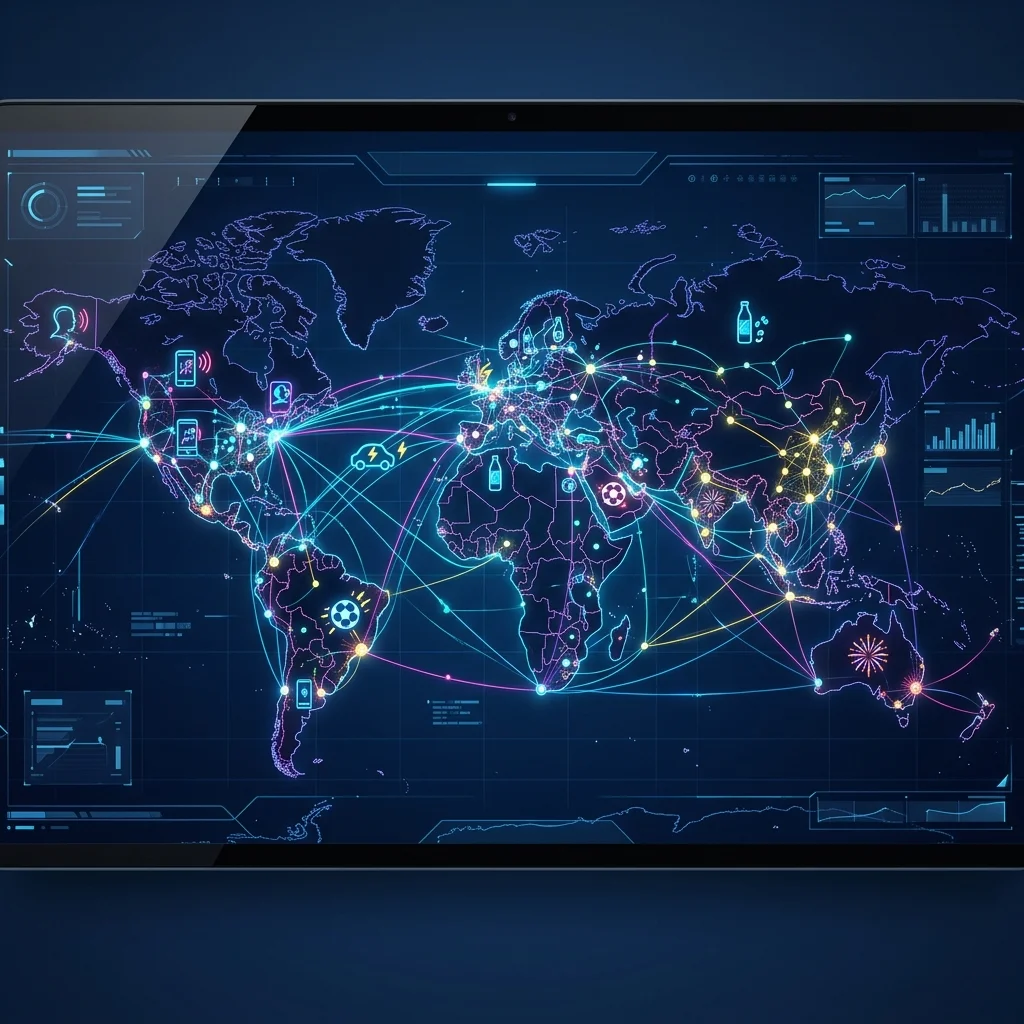
[IMAGE: A futuristic data visualization dashboard showing interconnected trend nodes across a global map — identical to the cover image prompt]