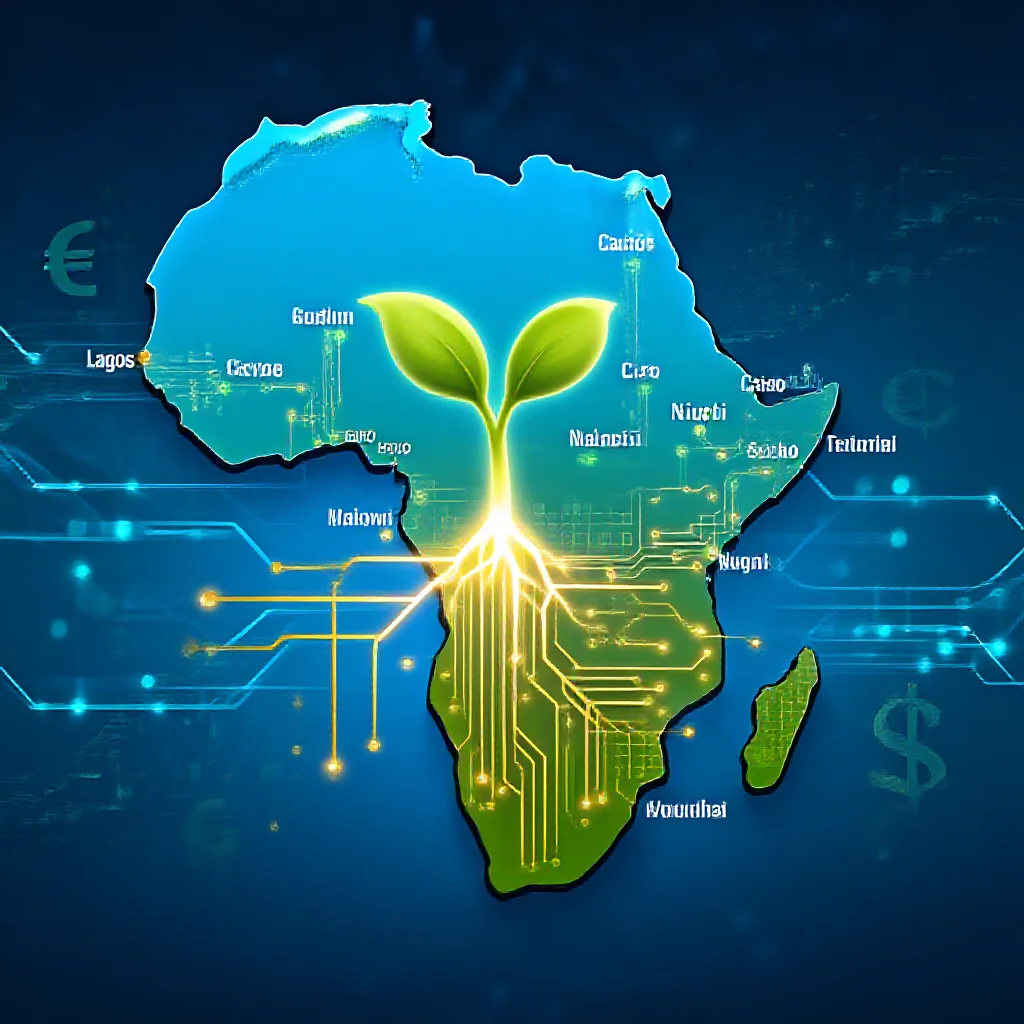
Global research shows a growing convergence between the digital economy and sustainability. For Africa, this means aligning digital transformation with green initiatives is becoming a strategic imperative, shaping investment, policy, and regional cooperation.
Why Sustainable Development Is Becoming Central to Africa's Digital Economy Agenda
Aligning Africa's Digital Transformation with Global Research Trends
Executive Summary
A new bibliometric study published in Humanities and Social Sciences Communications maps the evolution of research on sustainable development in the global digital economy. It finds that the field has surged in recent years, with a distinctive research cluster emerging around environmental governance, carbon emissions, and energy consumption. For Africa, this global intellectual shift offers a valuable lens for shaping its own digital economy strategy. As African nations accelerate digital adoption—from mobile money to e-government—the integration of sustainability principles is becoming a key determinant of long-term economic transformation, investment attractiveness, and regional competitiveness. This article unpacks the study's implications and outlines how African stakeholders can turn the digital-sustainability nexus into a strategic advantage.
Introduction
The digital economy has become a defining force in global economic development, reshaping industries, labor markets, and trade patterns. In Africa, the digital sector is expanding rapidly, driven by young populations, mobile connectivity, and innovative fintech solutions. However, as digital infrastructure grows, so does its environmental footprint—data centers consume significant energy, and e-waste is mounting. The new bibliometric analysis highlights that academic research increasingly connects digital economy growth with sustainable development, focusing on reducing carbon emissions and improving energy efficiency. This alignment presents both a challenge and an opportunity for Africa: the continent can leapfrog to green digital infrastructure, avoiding the carbon-intensive pathways of older economies, while attracting investment that prioritizes environmental, social, and governance (ESG) criteria.
Main Analysis
The bibliometric study, which analyzed thousands of scholarly articles, identifies three phases in digital economy research: initial stability, gradual acceleration, and a recent surge peaking in the last two years. Geographically, China, the United States, and the United Kingdom lead in research output, with significant collaboration between China and the U.S. Core research themes include "digital economy," "digital transformation," and "sustainable development," with an emerging emphasis on environmental governance.
For Africa, these findings align with observable trends. The continent's digital economy is no longer a niche; it is central to national development plans, the African Continental Free Trade Area (AfCFTA) protocols, and continental strategies like the Digital Transformation Strategy for Africa (2020–2030). Yet, sustainability remains a peripheral concern in many African digital initiatives. The global research shift implies that African policymakers and business leaders must now connect these dots. For example, off-grid solar companies using digital payment platforms are simultaneously advancing energy access and digital inclusion—a model that resonates with the study's emphasis on energy consumption and digital innovation.
The study's five-phase evolutionary trajectory of digital economy research points toward future integration of green initiatives, innovation, and robust digital ecosystems. Africa can anticipate this evolution by embedding sustainability into its digital agenda from the outset. This includes investing in renewable energy to power data centers, promoting e-waste recycling, and leveraging digital tools for climate adaptation in agriculture and urban planning.
Business Impact
The convergence of digital economy and sustainability carries significant implications for business competitiveness and corporate strategy in Africa. Companies that adopt green digital practices—such as using energy-efficient cloud infrastructure, implementing circular economy models for devices, and tracking carbon footprints via digital platforms—will be better positioned to attract international investors and meet ESG standards. In fact, global capital flows are increasingly redirected toward emerging markets with strong sustainability credentials. For African tech startups, this means incorporating sustainability metrics into their business models can unlock access to green venture capital and development finance.
Moreover, the integration of sustainability into digital business operations can reduce costs through energy efficiency and waste reduction, enhancing operational resilience. For instance, mobile network operators across Africa are beginning to power base stations with solar and hybrid systems, cutting both fuel costs and emissions. Similarly, fintech companies that enable carbon credit trading or support climate-smart agriculture are tapping into new revenue streams while addressing pressing environmental challenges. These developments signal that sustainability is not merely a compliance burden but a source of competitive advantage in Africa's evolving digital marketplace.
Regional Perspective
From a regional standpoint, the AfCFTA provides a framework for harmonizing digital trade rules while promoting sustainable practices. As African countries implement the protocol on digital trade, they can incorporate provisions that encourage green data management, cross-border e-waste treaties, and shared standards for energy-efficient digital infrastructure. The study's emphasis on international collaboration suggests that Africa can benefit from research partnerships with leading nations like China, the U.S., and the U.K., adapting global insights to local contexts.
East Africa, led by Kenya's vibrant tech ecosystem, is already a hub for green fintech innovations, including mobile-based micro-insurance for climate risks. West Africa, with Nigeria's large consumer market, is increasingly attracted to solar-powered digital infrastructure to address unreliable grid supply. Southern Africa, where mining and energy are dominant, can leverage digital solutions to reduce emissions in extractive industries. North Africa's proximity to Europe makes it a potential zone for digital services powered by renewable energy, attracting foreign investors seeking sustainable outsourcing destinations. Central Africa, while less advanced digitally, has an opportunity to leapfrog by integrating sustainability from scratch. Regional economic communities can facilitate knowledge sharing and joint projects, enhancing Africa's collective digital-sustainability footprint.
Future Outlook
Over the next 3–5 years, the relationship between Africa's digital economy and sustainable development will deepen. The study anticipates that future research will focus on green digital initiatives, digital economy ecosystems, and innovation. In practice, this translates to:
- Green Data Centers: As cloud adoption grows, African data centers will increasingly be powered by solar, wind, and geothermal energy, making the continent a model for low-carbon digital growth.
- E-waste Management: With rising device penetration, circular economy models for electronics will become standardized, with African startups playing a key role in recycling and refurbishment.
- AI for Climate Action: Artificial intelligence will be harnessed to optimize energy use, forecast climate impacts, and support precision agriculture, enhancing resilience across the continent.
- Digital Finance for Green Investment: Fintech platforms will channel capital toward renewable energy projects, green bonds, and carbon credits, democratizing participation in sustainable finance.
- Policy Integration: African governments will integrate sustainability criteria into digital development plans, aligning with global ESG expectations and tapping into climate finance mechanisms.
These developments will not only enhance Africa's global competitiveness but also ensure that the continent's digital leapfrogging contributes to, rather than undermines, its environmental goals.
Conclusion
The global digital economy is entering a phase where sustainable development is an integral driver of research, investment, and policy. For Africa, the insights from the bibliometric analysis offer a roadmap for aligning digital transformation with green growth. By prioritizing energy-efficient infrastructure, fostering e-waste solutions, and leveraging digital tools for climate resilience, African stakeholders can build a digital economy that is both economically vibrant and environmentally sustainable. The window of opportunity is now—businesses, investors, and governments must act decisively to embed sustainability at the core of Africa's digital future.
Key Takeaways
- Global research on the digital economy increasingly focuses on sustainability, with a strong emerging cluster on environmental governance and carbon emissions.
- Africa's digital economy must integrate sustainability to attract international investment and meet ESG standards.
- Green digital infrastructure (renewable energy-powered data centers, e-waste recycling) offers significant business opportunities.
- The AfCFTA can align digital trade rules with sustainability objectives.
- Over the next 3–5 years, green data centers, AI for climate action, and digital green finance will reshape Africa's digital landscape.
SEO Keywords
Africa digital economy, sustainable development, digital transformation, green data centers, AfCFTA digital trade, environmental governance, renewable energy, climate action, fintech sustainability, AI climate, e-waste Africa.
Suggested URL Slug
africa-digital-economy-sustainable-development-trends
Sources
Mei, Y., Liu, M., Gao, Z., & Chen, H. (2026). New insights into the frontiers and trends of sustainable development in the global digital economy: a bibliometric analysis. Humanities and Social Sciences Communications, 13, 571. https://www.nature.com/articles/s41599-026-06780-5