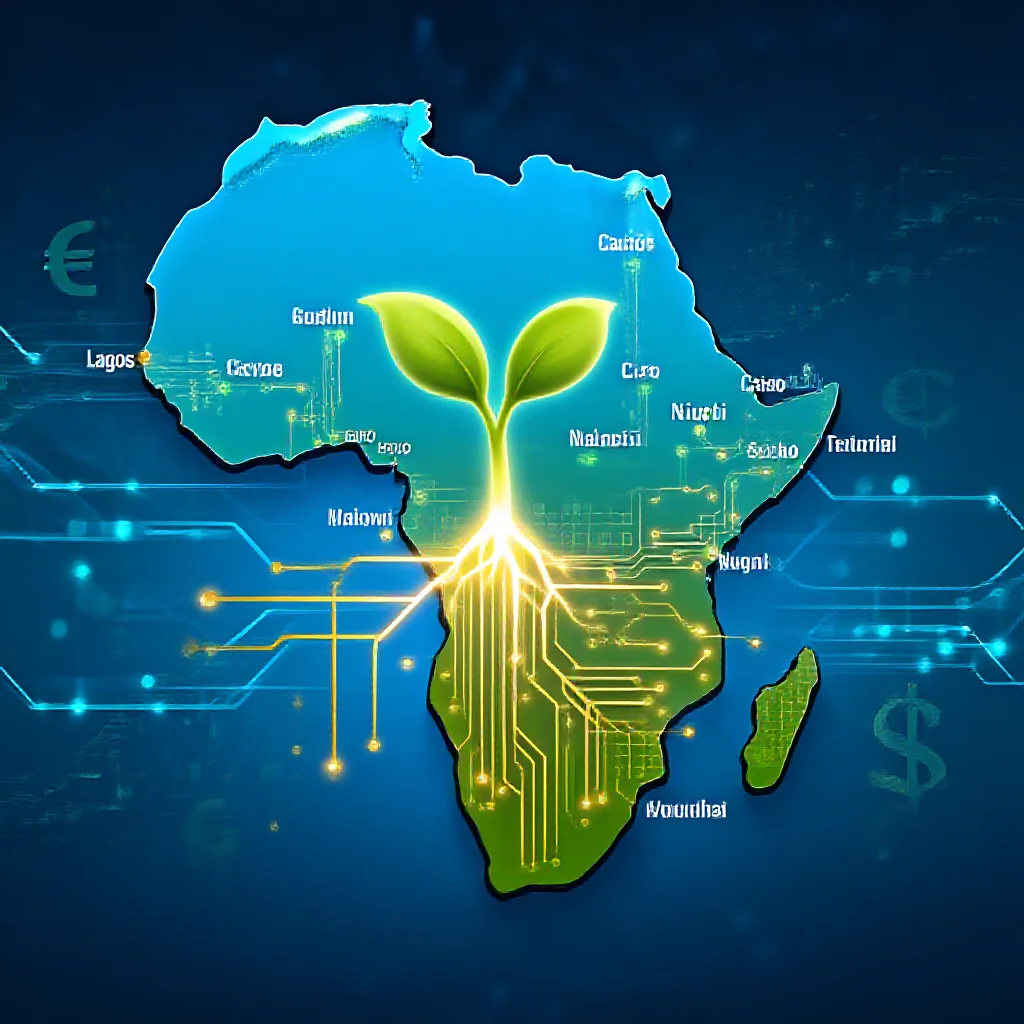
Analyzing the role of venture capital in driving green technology adoption, exploring investment opportunities, policy relevance, and the long-term strategic importance for Africa's industrialization and energy transition.
Venture Capital and Green Innovation: Strategic Implications for Africa's Industrialization
Executive Summary
This analysis investigates the mechanism through which venture capital (VC) investment in green technologies acts as a catalyst for innovation, linking resource utilization patterns to long-term economic growth trajectories. While the study referenced in OECD economies highlights the U-shaped relationship between VC and green innovation, the implications for Africa—a continent rich in natural resources and facing significant climate challenges—are profound. The core finding is that strategic VC deployment in green sectors can enhance industrial competitiveness, foster technological capacity, and mitigate climate risks, provided that supportive public policy focuses on technology transfer and de-risking early-stage investments. This signals a critical investment opportunity for private capital and development finance institutions in Africa.
Introduction
Green technology innovation (GTI) is no longer purely an environmental concern; it represents a fundamental driver of economic transformation. It encompasses breakthroughs in energy efficiency, renewable resource promotion, and emission reduction, aligning with global sustainability goals and creating new avenues for industrial development. For Africa, where energy security and resource management are paramount, GTI is intrinsically linked to industrialization and economic diversification. The convergence of climate imperatives and technological advancement necessitates a strategic approach to capital allocation, particularly concerning venture capital.
Main Analysis
The relationship between venture capital and green innovation is characterized by nuanced dynamics. Research indicates that VC investments generate increases in green innovation, but the magnitude of this effect varies across the innovation distribution. In the context of Africa, where early-stage and seed-stage investments often face higher risk, understanding these diminishing marginal returns is vital for investors. The analysis suggests that the most significant impact on green innovation often occurs within specific segments of the innovation pipeline, demanding tailored investment strategies.
Business Impact
Business Competitiveness and Corporate Strategy: For African enterprises, adopting green technologies is increasingly becoming a matter of operational resilience. Investment in areas like renewable energy solutions, sustainable agriculture, and green manufacturing processes can reduce operational costs, enhance resource efficiency, and improve access to international markets demanding lower-carbon products. Corporate strategy must shift towards integrating sustainability metrics not as a compliance burden, but as a source of competitive advantage and access to favorable financing.
Investment Decisions and FDI: The deployment of venture capital into green technology startups signals where future Foreign Direct Investment (FDI) is likely to materialize. Sectors such as FinTech, renewable energy infrastructure, and climate-smart agribusiness present fertile ground for capital deployment. Strategic investment in these areas can attract international partners interested in sustainable growth models, shifting the investment narrative from extraction-focused to innovation-focused.
Industrialization and Supply Chain Resilience: Green industrialization—focused on low-carbon production and circular economies—is essential for building resilient supply chains. By fostering local manufacturing capabilities in sustainable sectors, African economies can reduce dependency on volatile fossil fuel markets and enhance their position in global value chains. This localized, green industrialization builds a more robust and diversified manufacturing base.
Regional Perspective
AfCFTA and Cross-Border Commerce: The African Continental Free Trade Area (AfCFTA) provides a massive market potential, but realizing its benefits requires addressing infrastructural bottlenecks and ensuring that cross-border trade corridors are sustainable. Green infrastructure investments—in transport, energy, and digital connectivity—are crucial enablers for maximizing trade flows under the AfCFTA framework. Regional cooperation must prioritize shared investments in green energy grids and sustainable agricultural practices to ensure that integration translates into equitable economic development across East, West, Southern, and North Africa.
Energy Transition and Resource Management: The imperative for a green energy transition places African nations at a critical juncture. Opportunities exist in harnessing abundant renewable resources, such as solar and wind energy, to achieve energy security while managing the environmental risks associated with resource exploitation. Policy must focus on developing robust regulatory frameworks that incentivize the transition away from carbon-intensive models while ensuring equitable access to clean energy solutions for rural and underserved populations.
Future Outlook
Over the next three to five years, the trajectory of African economic development will be increasingly defined by the pace of green innovation adoption and the effectiveness of public-private partnerships. The focus will likely intensify on scaling successful green technologies, particularly in areas addressing food security through agricultural technology, and building out digital infrastructure to support FinTech and climate monitoring. The success of the African economy will depend on its capacity to attract and manage patient capital, ensuring that investment flows into sectors that yield both high growth and demonstrable environmental benefits. The synergy between technological innovation, supportive policy, and sustained regional cooperation will determine the speed and sustainability of this long-term economic transformation.
Conclusion
The integration of venture capital strategies with the imperative for green innovation offers a clear pathway for Africa to pursue an industrialized and diversified economic model. Success hinges on strategic investment, evidence-based policy interpretation, and deep regional cooperation to build resilient ecosystems capable of navigating the challenges of the 21st century.