Uber's $950 million cash acquisition of Delivery Hero's foodpanda business
Beyond the $950M Price Tag: Uber's Taiwan Grab and the Consolidation Calculus of Global Food Delivery
Summary: Uber's $950 million cash acquisition of Delivery Hero's foodpanda business in Taiwan is more than a simple market entry. This analysis explores the strategic calculus behind the deal, positioning it as a pivotal move in the global food delivery industry's shift from hyper-growth to consolidation. We examine why Taiwan, a mature and competitive market, became a $1 billion battleground, the implications for Uber's broader Asia-Pacific ambitions, and what Delivery Hero's retreat signals about the sector's evolving priorities. The transaction, expected to close in H1 2025, reveals a new phase where scale, operational efficiency, and path to profitability trump aggressive, loss-leading expansion.
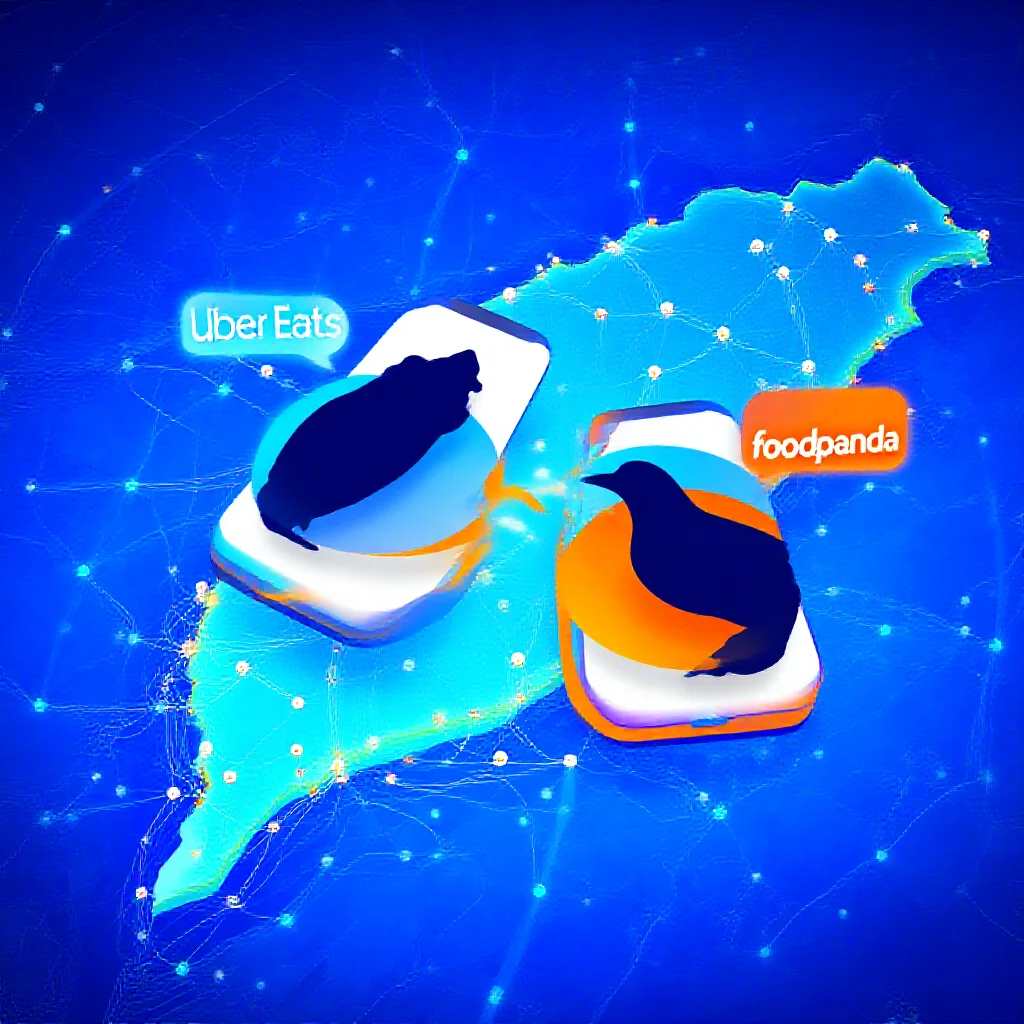
![A dynamic, abstract visual representing market consolidation. Silhouettes of two dominant app icons (Uber Eats and foodpanda) on a smartphone screen are merging into one, against a backdrop of a detailed map of Taiwan lit up with delivery route networks. The style is modern, tech-focused, with a color scheme of blues and oranges, conveying movement and integration.]
The Deal Decoded: Not an Entry, but a Domination Play
Uber Technologies Inc. is acquiring Delivery Hero SE’s food delivery operations in Taiwan for $950 million in cash (Source 1: [Primary Data]). The transaction, expected to close in the first half of 2025 pending regulatory approval, will result in Delivery Hero’s exit from the Taiwan market (Source 1: [Primary Data]).
The $950 million valuation is a function of market control, not mere entry. Taiwan represents a mature, densely populated, and highly competitive food delivery landscape. Acquiring the incumbent foodpanda business provides an immediate and decisive shift in market structure, moving the industry from a competitive duopoly to a dominant, consolidated position for the combined entity. This brownfield strategy bypasses the prolonged and capital-intensive customer acquisition wars typical of organic growth. The regulatory review process for the H1 2025 closure will likely focus on antitrust concerns, potentially leading to conditions aimed at preserving some level of market contestability.
![Infographic comparing market share of food delivery platforms in Taiwan pre- and post-acquisition.]
The Hidden Axis: The Global Food Delivery Pivot from Growth to Efficiency
This transaction is a clear signal of a sector-wide strategic pivot. The era of "growth at all costs," characterized by deep subsidies and aggressive geographic expansion, is being supplanted by a focus on operational efficiency and unit economics. Investor pressure for profitability has forced a global rationalization of portfolios.
Delivery Hero’s decision to divest its Taiwanese operations, stating the transaction will allow it to "focus on other regions," is a portfolio optimization move (Source 1: [Primary Data]). It indicates a strategic retreat from markets where achieving a leading, profitable position is deemed too costly or uncertain, allowing for resource reallocation to core or more promising territories. Conversely, Uber’s stated goal of accelerating "growth ambitions in the region" under its "profitable growth" mantra demonstrates that acquiring an incumbent’s scale and revenue base is now viewed as a faster, more capital-efficient route to regional profitability than protracted competition (Source 1: [Primary Data]).
![A chart showing the stock price trends of major global delivery players over the past 3 years, highlighting key consolidation events.]
Taiwan as a Strategic Microcosm: Why This Market Matters
Taiwan is not an isolated acquisition target but a strategic microcosm of mature Asia-Pacific markets. Its high urbanization rate, advanced digital payment adoption, and competitive saturation make it an ideal laboratory for testing the economics of a consolidated delivery model. The island’s geography and population density offer near-optimal conditions for maximizing delivery fleet utilization and minimizing logistical costs, providing a clear path to improved unit economics.
The acquisition’s significance extends beyond Taiwan’s borders. It strengthens Uber’s operational footprint and bargaining power within the broader North Asia corridor. Control over a major, profitable market hub can enhance leverage with global restaurant chains, improve economies of scale in technology and marketing spend, and provide a stable revenue base to support ambitions in adjacent, less mature markets.
![Map of Asia Pacific highlighting Taiwan, with icons showing Uber's and Delivery Hero's core market strengths across the region.]
The Ripple Effects: Riders, Restaurants, and the Gig Workforce
Market consolidation generates multidimensional ripple effects. For consumers and merchants, the reduction from a duopoly to a dominant player presents a double-edged sword. The potential for decreased competition may lead to higher commission fees for restaurants and delivery charges for consumers over the long term. Conversely, platform stability and reduced marketing warfare could allow for increased investment in service innovation, such as faster delivery technology or enhanced merchant tools.
The calculus for the gig workforce is equally complex. In a consolidated market, delivery partners may face reduced platform choice, potentially impacting bargaining power over incentive structures. However, increased order density and operational efficiency could lead to more consistent demand and optimized wait times. The long-term supply chain impact is significant; platform consolidation increases buyer power over restaurant suppliers, influences the viability and location of cloud kitchen investments, and can accelerate the standardization of packaging and operational protocols across a larger merchant base.
![A split-image showing a delivery rider and a restaurant owner from a first-person perspective, with thought bubbles showing their potential concerns and benefits.]
The Road to H1 2025 and the New Industry Paradigm
The path to the deal’s expected closure in the first half of 2025 will be defined by regulatory scrutiny and integration planning (Source 1: [Primary Data]). The approval process will serve as a key indicator of regulatory tolerance for consolidation in digital platform markets.
The transaction crystallizes a new paradigm for the global food delivery industry. The primary strategic metric is shifting from Gross Merchandise Value (GMV) and market-share-at-any-cost to contribution profit and sustainable margin. Future competitive moves are likely to follow this template: strategic retreats from non-core markets, targeted acquisitions to achieve regional scale, and a relentless focus on logistics efficiency over brand marketing spend. Uber’s $950 million bet on Taiwan is less about conquering a new territory and more about mastering the economics of the post-hypergrowth era, setting a precedent for the next phase of global industry rationalization.