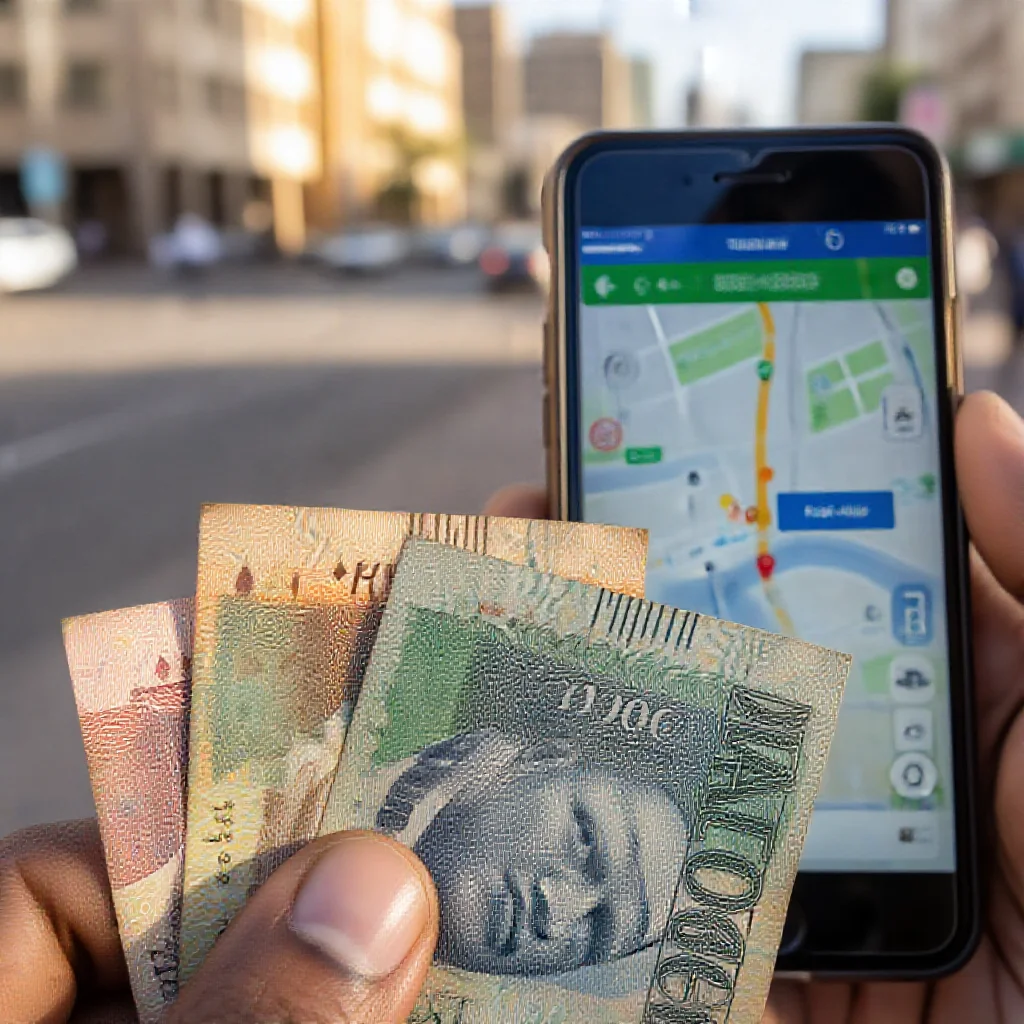
A 2026 report from Bolt reveals a surprising fact: over 80% of ride-hailing
Beyond the App: Why Cash Still Rules South Africa's Ride-Hailing Economy
A 2026 mobility report from European ride-hailing platform Bolt presents a counterintuitive finding for a digital service: over 80% of ride-hailing trips in South Africa are settled in physical cash (Source 1: [Bolt Report, April 17, 2026]). This data point persists despite the full integration of credit, debit, and mobile money options within the application. The prevalence of cash transactions within a technologically mediated platform reveals a fundamental disconnect between global digital business models and localized socio-economic realities. This analysis examines the structural drivers of this preference, its operational implications for platforms, and the long-term signals it sends about market evolution.
The Data Point: Unpacking Bolt's 2026 Cash Revelation
The core statistic establishes a clear market characteristic. The report, published in April 2026, indicates that the vast majority of transactions completed via the Bolt application in South Africa conclude with a physical exchange of banknotes. This creates an immediate paradox. The service requires a smartphone for access, indicating user comfort with digital interfaces and connectivity. Yet, the final transaction reverts to an analog format. This is not merely a payment choice but a significant market signal. It demonstrates that the availability of a technology does not guarantee its adoption, and that deeper forces—economic utility, trust, and systemic integration—dictate transactional behavior. The figure provides a quantitative baseline against which the penetration of digital financial services can be measured, revealing a substantial gap between technical possibility and practical use.
The Logic of Cash: Uncovering South Africa's Socio-Economic Drivers
Multiple interlocking factors explain the resilience of cash in South Africa's ride-hailing ecosystem.
Financial Inclusion & Trust: While South Africa has a relatively advanced banking sector, a gap exists between being banked and being digitally financially included. Cash remains a tangible, universally accepted, and trusted medium. It provides immediate settlement finality, unlike digital transactions which may involve perceived delays, potential reversals, or technical failures. For a segment of users and drivers, cash eliminates concerns over data costs for transaction processing or the complexities of linking financial accounts to a platform.
The Informal Economy Bridge: The South African economy features a large informal sector operating predominantly on cash. For drivers, cash fares provide immediate liquidity to cover fuel, vehicle maintenance, and personal expenses without waiting for platform payout cycles. This liquidity is crucial for managing cash flow. For riders, paying in cash allows for seamless movement between the formal ride-hailing service and other cash-based daily transactions, from street food to small retail, without requiring digital balance management.
Cost and Control: From a user perspective, cash can be a tool for budgeting, providing a hard limit on transportation spend. For drivers, cash payments ensure immediate access to earnings, mitigating risks associated with platform payment delays or potential account holds. This direct control over income is a critical factor in a gig economy characterized by income volatility.
Cultural and Behavioral Inertia: Transportation, particularly minibus taxis, has a long history of cash payment in South Africa. The behavioral pattern is deeply entrenched. The ride-hailing service, while technologically novel, often substitutes for these traditional modes, inheriting the established payment habit. Shifting this behavior requires a value proposition that significantly outweighs the convenience and familiarity of cash.
Platform Paradox: The Hidden Costs and Benefits for Bolt and Competitors
The dominance of cash presents a complex calculus for ride-hailing platforms.
The Operational Burden: Cash transactions introduce significant inefficiencies and risks. Platforms and drivers must manage cash handling, security concerns, and reconciliation. Disputes over payment become interpersonal rather than platform-mediated. The safety risk for drivers carrying cash is a non-trivial liability.
Market Penetration vs. Profitability: Accepting cash was likely a strategic necessity for user acquisition in a price-sensitive and habit-driven market. Removing the cash option would potentially exclude a majority of the current user base. Thus, cash can be viewed as a customer acquisition cost, enabling scale despite its operational friction. The marginal cost of serving a cash customer is higher, but the alternative may be no customer at all.
Data Blind Spot: Cash transactions create a opacity in the user data ecosystem. Digital payments provide platforms with rich data on spending habits, travel patterns, and financial reliability, which can be leveraged for personalized marketing, dynamic pricing, and cross-selling financial products like insurance or credit. Cash transactions limit this data capture, constraining the platform's ability to monetize user relationships beyond the ride itself.
Competitive Landscape: The uniformity of this cash preference across competitors remains a key question. If universal, it defines the market's structure. If some platforms demonstrate success with digital-first incentives, it may indicate a path toward gradual migration. The strategic response—whether to optimize the cash experience or aggressively incentivize digital migration—will define platform positioning.
Long-Term Ripples: Implications for Fintech, Policy, and Market Evolution
The persistence of cash in a digital platform has broader implications.
Fintech's Real Test: South Africa possesses a mature fintech sector. The failure of digital payments to capture this high-frequency use case indicates a product-market fit gap. It suggests that success requires solutions that address specific pain points: instant, fee-free settlement for drivers; ultra-low data usage; or hybrid models that blend app-based hailing with cash settlement without friction. This is a more profound challenge than simply providing a technical payment rail.
Policy and Formalization: High cash usage in a tracked platform creates a transparency paradox. While the ride is digitally recorded, the payment remains informal. This could attract regulatory attention concerning taxation, anti-money laundering, and driver welfare. Policy measures aimed at formalizing the gig economy may inadvertently push for digital payment adoption to improve traceability.
Market Evolution Trajectory: The central question is whether cash dominance represents a permanent market feature or a transitional phase. Analysis suggests it will be durable in the medium term. A shift will likely not be driven by platform preference alone, but by broader macroeconomic changes: a significant reduction in data costs, ubiquitous acceptance of mobile money in the informal economy, or the development of compelling value-added services exclusively tied to digital in-app wallets. The coexistence of digital platforms and analog payment is likely a defining, stable characteristic of South Africa's ride-hailing market for the foreseeable future, serving as a case study in the adaptation of global technology to local economic bedrock.