A startup founded by two Francophone entrepreneurs is building more than
Beyond Refurbishment: The Circular Economy Engine Powering Francophone Africa's iPhone Revolution
Introduction: More Than Just Used Phones
A business venture established by two Francophone entrepreneurs is operationalizing a model centered on the sourcing, refurbishment, and resale of second-hand Apple iPhones. This operational framework extends beyond mere commerce, functioning as a case study for a larger macroeconomic and technological shift within emerging markets. The model presents a strategic, tripartite response to persistent market conditions: the affordability gap for premium technology, the escalating global challenge of electronic waste, and the sustained demand for high-performance, brand-recognized devices in growth economies.
!A portrait of the two founders in their workshop, surrounded by iPhones in various states of repair.
Deconstructing the Model: The Three-Pillar Engine
The enterprise's architecture rests on three interdependent operational pillars, each addressing a critical node in the circular electronics value chain.
Pillar 1: Sourcing - Global Networks and Local Inputs. The initial phase involves navigating the complex global secondary electronics market, primarily sourcing decommissioned devices from North America and Europe. A parallel stream involves developing local trade-in programs. The primary logistical challenge is securing consistent volume and quality, requiring sophisticated grading systems (A, B, C) to categorize device condition upon arrival.
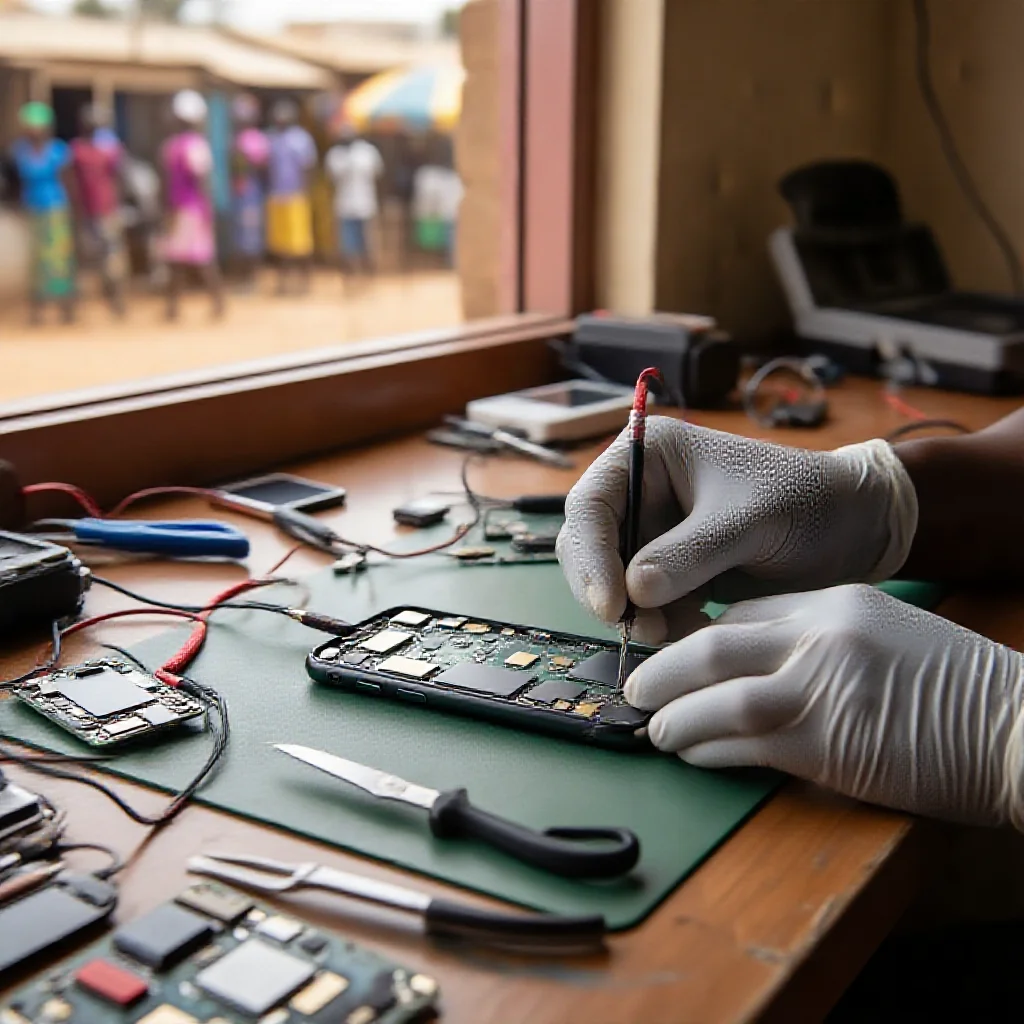
Pillar 2: Refurbishment - The Value-Addition Center. This pillar transforms the operation from a trading entity into a technical enterprise. The process involves data sanitization, component-level diagnostics, part replacement, and cosmetic restoration. This stage drives local skills development in micro-soldering and hardware repair while instituting quality control standards that directly combat the market perception of 'second-hand' as synonymous with unreliable.
Pillar 3: Reselling - Trust as a Product. In markets historically challenged by counterfeit goods, trust is a primary differentiator. This is engineered through transparent grading, certified refurbishment processes, and the provision of structured warranties. Customer education on device history and specifications is a critical component of the sales process, formalizing a transaction that often occurs informally.
The Deep Logic: Why This Works in Francophone Africa Now
The model's viability is not serendipitous but a function of specific economic and technological conditions converging in the Francophone African region.
The Affordability Equation. The model directly bridges the chasm between high aspiration for globally recognized premium brands like Apple and constrained local purchasing power. A refurbished iPhone typically sells at a significant discount to its new counterpart, placing it within reach of a growing professional and entrepreneurial class.
Currency and Trade Dynamics. From a macroeconomic perspective, the import of refurbished high-value electronics can function as a trade efficiency. It allows for the fulfillment of consumer demand for advanced technology without incurring the full foreign exchange cost of new-unit imports, a consideration for economies managing currency reserves.
Digital Inclusion 2.0. The transaction provides access beyond mere connectivity. It offers entry into a robust, secure, and application-rich ecosystem (iOS). For entrepreneurs and professionals, this access can translate into productivity, security, and global interoperability advantages over entry-level smartphones.
E-Waste as a Pre-emptive Narrative. The business model inherently positions itself as a mitigator of a future environmental crisis. By extending the functional lifespan of devices, it reduces the volume of immediate e-waste generation. This narrative aligns with global Environmental, Social, and Governance (ESG) criteria, potentially attracting impact-aware investors and partners.
The Unseen Supply Chain: From Global Graveyards to Local Hubs
The upstream supply chain is a complex, globalized network. The typical journey begins with device collection in developed markets (EU/US), often through carrier trade-in programs or wholesale buyback companies. These devices are aggregated, graded, and sold in bulk to international wholesalers who specialize in secondary market distribution.
The devices then flow to the Francophone refurbishment hub, where the most critical logistical and regulatory challenges emerge. Efficient logistics and mastery of customs clearance protocols are paramount in a region characterized by diverse and often complex import regimes for electronics. Duties and tariffs significantly impact final cost structures (Source 1: [World Bank data on import duties for electronics in Sub-Saharan Africa]). The long-term operational risk includes dependency on the upgrade cycles and disposal policies of consumers in developed nations.
This flow pattern mirrors broader trends identified in global e-waste tracking. Reports indicate a significant movement of used electronics from high-income to middle- and low-income countries, with a portion being functionally reused (Source 2: [UN International Telecommunication Union (ITU) reports on global e-waste flows]).
Market Implications and Neutral Predictions
The formalization of this circular model carries implications for multiple stakeholders. For global technology manufacturers, the thriving secondary market for their flagship products in emerging regions presents a complex scenario: it extends brand reach and ecosystem adoption but may apply downward pressure on the market for new, lower-tier devices.
For local economies, the model stimulates the creation of technical service sectors, fosters entrepreneurship, and enhances digital capabilities. The critical predictive variable for scalability is the regulatory environment. Governments in the region may increasingly recognize such models as tools for digital advancement and waste management, potentially leading to tailored import policies that distinguish between waste and refurbishable assets.
The trajectory suggests a movement towards greater sophistication within the refurbishment sector, including potential standardization of certification across regions. Market success will likely precipitate increased competition, driving further improvements in quality assurance, warranty offerings, and after-sales service, thereby accelerating the formalization of the circular electronics economy in Francophone Africa and beyond.