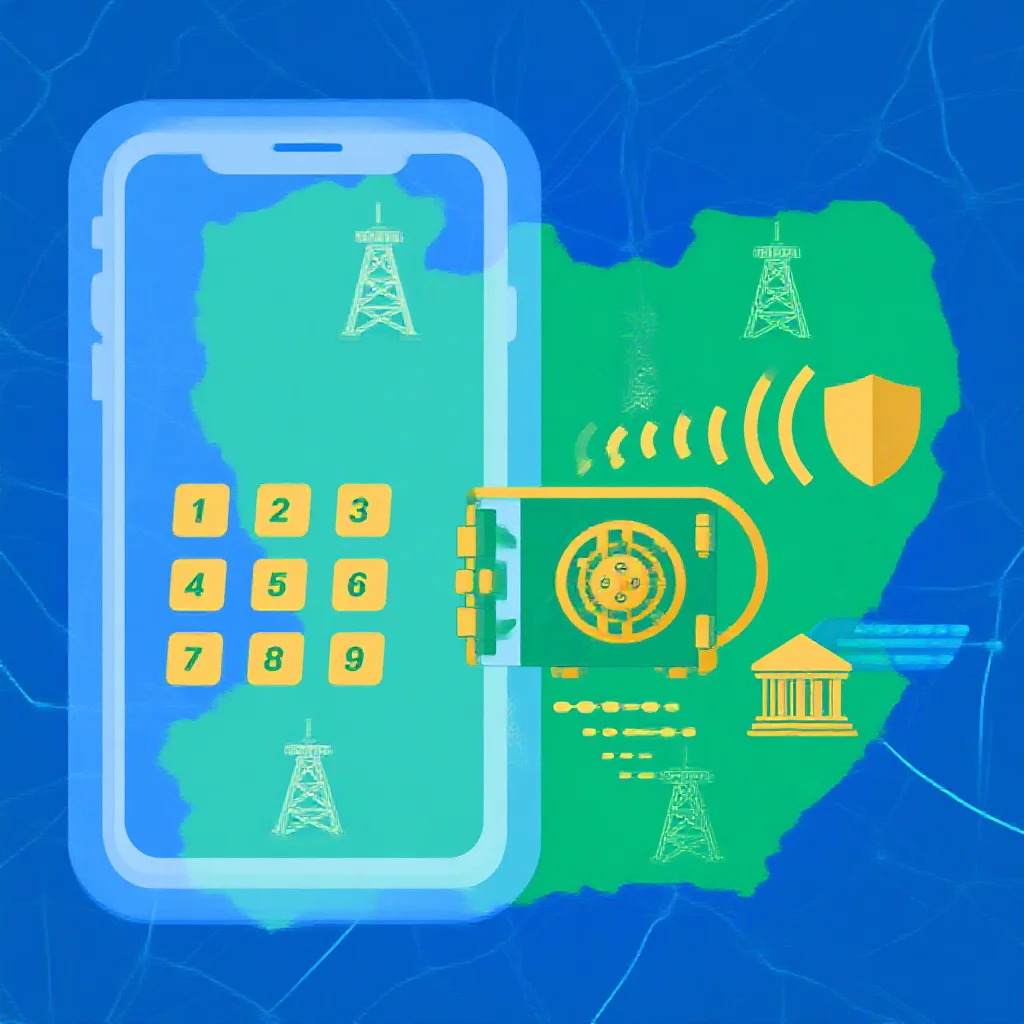
A new agreement between the Central Bank of Nigeria (CBN) and the Nigerian
Nigeria’s CBN–NCC Pact: How Telecom Data Verification Reshapes Banking Security and the Fight Against Fraud
Introduction: A Regulatory Bridge Between Telecoms and Banking
On April 21, 2026, the Central Bank of Nigeria (CBN) and the Nigerian Communications Commission (NCC) executed an agreement establishing the first institutional framework permitting banks to query telecom subscriber databases for mobile numbers linked to fraudulent activities (Source: TechCabal, April 21, 2026). This arrangement moves beyond standard compliance updates, representing a structural convergence of two previously siloed sectors—finance and telecommunications—under a formal data-sharing mandate.
The core operational insight: by integrating telecom metadata into banking fraud detection models, Nigeria advances toward real-time identity verification at scale. Banks now possess the legal authority to cross-reference mobile numbers flagged in transaction alerts against the NCC’s subscriber registration database, a repository containing biometric and personal data of over 200 million subscribers.
The Hidden Economic Logic: Curbing Synthetic Identity Fraud
Synthetic identity fraud—where perpetrators combine real and fabricated data points to create phantom customers—constitutes a significant financial drain on Nigerian banking institutions. Industry estimates indicate annual losses running into billions of naira, though exact figures remain undisclosed due to reputational concerns among lenders.
Mobile numbers function as the only stable identifier for substantial segments of Nigeria’s rural and underbanked population. This singularity makes phone numbers a prime vector for fraud. The CBN–NCC agreement directly attacks synthetic identity creation at its structural root by linking telecom SIM registration data—name, address, biometrics—with bank account records. When a fraudster constructs a synthetic identity using a legitimate mobile number with falsified banking details, the telecom database provides the authoritative reference point for disambiguation.
This mechanism reduces two specific cost categories for banks. First, it lowers loan default risks originating from fake accounts that cannot be traced after disbursement. Second, it decreases customer due diligence expenditures by providing a pre-verified identity layer that banks can query without conducting independent field verification.
Data Governance and Privacy: The Unspoken Challenge
The NCC’s subscriber database contains biometric fingerprints, national identity numbers, and address information for every registered mobile user in Nigeria. Banks will now access portions of this data under the agreement’s provisions. However, three governance questions remain unresolved.
The legal basis for data sharing beyond confirmed fraud cases requires clarification. The NCC’s enabling legislation—the Nigerian Communications Act of 2003—grants the commission authority to maintain subscriber registration data but does not explicitly contemplate third-party banking access. The CBN’s regulatory instruments under the Banks and Other Financial Institutions Act (BOFIA) similarly lack provisions for telecom data integration. This agreement may operate under an executive mandate rather than specific legislative authorization, creating potential legal exposure for participating institutions.
Customer consent protocols present a second concern. The agreement does not specify whether consent obtained during initial SIM registration suffices for ongoing banking queries, or whether banks must obtain re-consent per transaction verification request. The Nigeria Data Protection Regulation (NDPR) 2019 requires specific, informed consent for data processing—a standard that blanket SIM registration consent may not satisfy.
Third, this agreement establishes a regulatory precedent for other African nations. Ghana’s Bank of Ghana and National Communications Authority, as well as Kenya’s Central Bank and Communications Authority, face similar fraud patterns in their financial systems. Nigeria’s implementation will serve as either a template or a cautionary case study, depending on how data protection guidelines are operationalized. As of the agreement’s announcement date, neither the CBN nor the NCC had published complementary data protection guidelines—a critical governance gap.
Real-World Impact: From Fraud Detection to Financial Inclusion
The operational change manifests in near-real-time transaction monitoring. When a bank’s fraud detection engine flags a transaction involving a suspicious mobile number, the system now queries the NCC database to verify whether the number’s registered owner matches the account holder. Previously, banks relied on internal records or third-party verification services with limited scope and longer response times.
This capability reduces false positives in fraud engines. Research on African banking systems indicates that overly sensitive fraud detection algorithms disproportionately block transactions from low-income and newly banked users, who lack transaction histories that satisfy risk models. By providing rapid identity verification, the telecom data integration allows legitimate transactions to proceed without disruption—particularly for users with thin credit histories.
The structural effect extends to credit scoring. Telecom data—call patterns, airtime recharge frequency, SIM card age—becomes a trusted identity layer. Banks can use this verified identity foundation to develop credit products for individuals who lack formal financial histories but maintain consistent mobile phone usage. This mechanism potentially lowers barriers for financial inclusion while maintaining risk controls.
Technical Implementation and Operational Challenges
The agreement’s technical architecture requires banks to establish secure API connections to the NCC’s subscriber database. Real-time query capabilities demand high system availability—the NCC must maintain 99.9% uptime to avoid disrupting banking operations. Latency thresholds remain unspecified, though transaction verification typically requires sub-second response times to maintain customer experience standards.
Operational risks include database corruption or unauthorized access. If the NCC’s subscriber database experiences a breach, the impact multiplies across the entire banking sector through the shared API connections. Conversely, if individual banks maintain inadequate cybersecurity protocols, they become entry points for unauthorized access to the centralized telecom database.
The cost allocation for infrastructure development and maintenance remains unaddressed. Banks will likely bear implementation costs for API integration and compliance systems, while the NCC faces increased operational expenses for database management and security upgrades. These costs may ultimately transfer to customers through banking fees or telecom tariffs.
Market and Industry Predictions
Three outcomes are predictable based on the agreement’s structural design.
First, synthetic identity fraud rates will decline measurably within 12–18 months of full implementation. The direct linkage between telecom and banking databases removes the information asymmetry that enables synthetic identity creation. Banks will report lower fraud losses, though public disclosure of specific figures depends on regulatory reporting requirements.
Second, the agreement will accelerate consolidation in Nigeria’s fintech sector. Smaller fintech companies lacking the technical infrastructure for NCC database integration will face competitive disadvantages. Larger banks and established fintech platforms with existing API capabilities will capture market share, potentially reducing market diversity.
Third, data privacy litigation will increase. Nigerian civil society organizations and consumer protection groups will test the agreement’s legal basis through court challenges. The outcome will determine whether this data-sharing model expands to other sectors—insurance, healthcare, government services—or remains confined to banking fraud prevention.
The CBN–NCC agreement represents a structural shift in Nigeria’s approach to financial crime prevention. By integrating telecommunications intelligence directly into banking Know Your Customer (KYC) frameworks, regulators have constructed a verification infrastructure that addresses synthetic identity fraud at its root. Success depends on resolving data governance questions that remain unanswered: consent protocols, legal authorization, security standards, and cost allocation. These factors will determine whether this agreement becomes a model for African financial regulation or a lesson in the risks of inter-sectoral data integration without comprehensive governance frameworks.