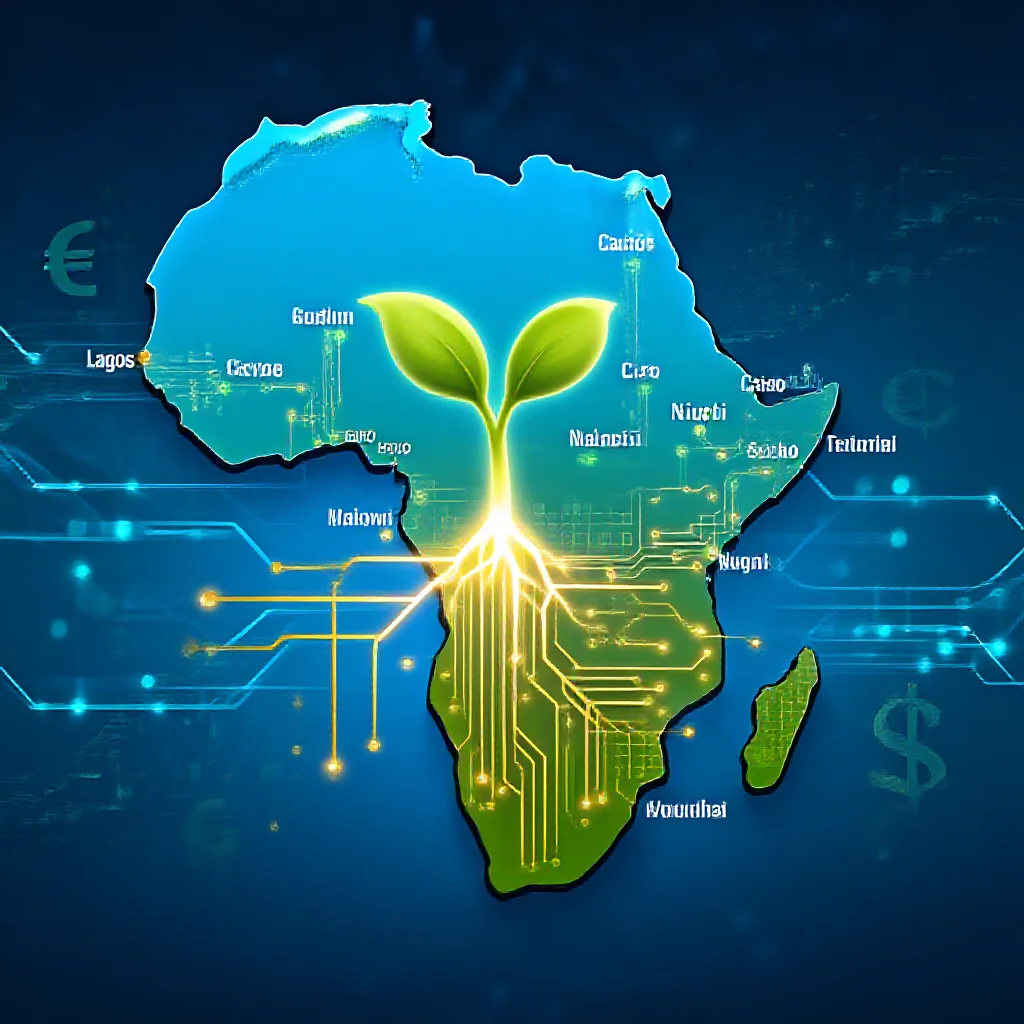
A new bibliometric study maps the global research landscape of digital economy and sustainable development, offering critical insights for Africa's digital transformation, green growth, and investment strategy.
Executive Summary
A comprehensive bibliometric analysis of global research on the digital economy and sustainable development, published in Humanities and Social Sciences Communications, maps the field's evolution from 1996 to 2026. The study identifies three phases—initial stability, accelerated growth, and recent surges—and notes China, the United States, and the United Kingdom as leading research hubs. Crucially, an emerging cluster focuses on environmental governance, particularly carbon emissions and energy consumption. For Africa, these insights offer a strategic roadmap: the continent must integrate green principles into its digital transformation, build innovation ecosystems, and create investment conditions that attract sustainable digital enterprises.
Introduction
The digital economy has evolved from a theoretical concept into the foundation of modern economic growth. Globally, governments have adopted strategies such as the EU's Digital Compass 2030, while academic research has proliferated. However, for Africa—a continent with immense digital potential but significant infrastructure gaps—understanding the trajectory of digital economy research is not merely academic. It provides the evidence base for policy, investment, and regional integration.
A new bibliometric study published in Humanities and Social Sciences Communications offers precisely this insight. By analyzing the literature, it delineates how research priorities have shifted over time, culminating in a current emphasis on environmental sustainability, carbon reduction, and energy efficiency. This article translates those global findings into actionable intelligence for African businesses, investors, and policymakers.
Main Analysis
The study reveals three distinct phases in digital economy research. The first phase (1996–2010) established foundational concepts; the second (2011–2019) witnessed acceleration as digital technologies became pervasive; and the third (2020–2026) has seen explosive growth, with a marked surge in the last two years. This pattern mirrors actual digital adoption—and Africa is now entering its own acceleration phase.
Geographically, China, the US, and the UK dominate the research landscape, with strong collaboration between China and the US. For Africa, this has two implications. First, African scholars and institutions are largely absent from this global knowledge production, creating a risk of policy importation without local contextualization. Second, collaboration opportunities exist—African universities and think tanks can partner with these established research ecosystems to adapt global frameworks to local realities.
The most significant thematic finding is the emergence of environmental governance as a core research cluster. Keywords such as 'carbon emissions' and 'energy consumption' now appear alongside 'digital economy' and 'digital transformation'. This reflects a worldwide recognition that digital growth must be sustainable. For Africa, this is particularly urgent. The continent is already experiencing the effects of climate change, and its digital infrastructure—data centers, telecom networks, e-waste management—will have a growing environmental and energy footprint.
The study predicts that the next frontier will be the integration of the digital economy with green initiatives, innovation, and the development of robust digital ecosystems. This aligns with Africa's own priorities. The African Union's Digital Transformation Strategy (2020–2030) and the Agenda 2063 both emphasize sustainable and inclusive growth. However, implementation lags. The bibliometric evidence suggests that green digital development is not an optional extra but a core competitive requirement.
Business Impact
For businesses operating in African markets, the research underscores the importance of environmental, social, and governance (ESG) metrics in digital ventures. Investors increasingly allocate capital to enterprises that demonstrate measurable sustainability outcomes. African tech startups that integrate carbon tracking, energy efficiency, or circular economy principles into their business models will be better positioned to attract venture capital and development finance.
Multinational corporations expanding into Africa should treat the digital economy as an avenue for contributing to net-zero goals, not merely as a commercial opportunity. Green digital infrastructure—such as solar-powered data centers, energy-efficient mobile networks, and e-waste recycling facilities—will become a differentiating factor in procurement and partnership decisions.
For African SMEs, the implication is clear: digital tools must be adopted not just for productivity gains but also for sustainability reporting. Cloud computing, IoT sensors, and AI analytics can help SMEs monitor energy use and supply chain emissions, enabling them to participate in global value chains that require environmental compliance.
Regional Perspective
The research highlights the role of national strategies and cross-border cooperation. In Africa, regional economic communities—ECOWAS, SADC, EAC, and others—should coordinate their digital policies to create economies of scale and harmonized standards. The African Continental Free Trade Area (AfCFTA) provides a framework for digital trade rules and data governance. A joint approach to sustainable digital economy research and deployment could accelerate learning and lower costs.
East Africa's strong FinTech ecosystem, West Africa's growing tech hubs, and Southern Africa's advanced energy infrastructure each offer comparative advantages. North Africa's connectivity with Europe and Central Africa's untapped markets create opportunities for cross-border digital green corridors. But regional integration requires investment in cross-border digital infrastructure, which the bibliometric evidence suggests should be designed with energy efficiency and environmental resilience from the outset.
The collaboration observed between China and the US in digital economy research also holds a lesson for Africa. Rather than aligning solely with one global power, African countries can act as neutral brokers, adapting best practices from multiple partners. South-South cooperation, especially with China and India, is already significant; the study's findings on sustainable digital growth could deepen those partnerships.
Future Outlook
Over the next 3–5 years, we expect the following trends to shape Africa's sustainable digital economy:
- Green Digital Infrastructure: Solar-powered data centers and energy-efficient telecom networks will become standard, driven by both cost savings and climate commitments.
- Policy and Regulation: African governments will introduce carbon disclosure requirements for tech companies and incentives for green digital innovation.
- Investment Flows: Development finance institutions will prioritize digital projects with measurable ESG impacts. Private equity will follow.
- Innovation Ecosystems: University-industry partnerships will produce locally relevant research on digital sustainability, reducing reliance on imported knowledge.
- Regional Trade: The AfCFTA will facilitate digital services trade, with sustainability criteria embedded in future protocols.
- Talent and Skills: Demand will surge for professionals who understand both digital technology and environmental science, creating new educational programs and employment opportunities.
The bibliometric forecast points to a future where digital economy ecosystems are inherently green and innovative. Africa has a unique opportunity to leapfrog carbon-intensive digital development and build a model that is both competitive and sustainable. This will require sustained investment in research, infrastructure, and human capital—but the potential payoff is a resilient digital economy capable of driving industrialization and job creation for decades.
Key Takeaways
- Digital economy research is increasingly converging on environmental sustainability, carbon emissions, and energy efficiency.
- Africa can use these insights to shape a green digital transformation that attracts investment and builds industrial competitiveness.
- Policy coordination across regional blocs and alignment with AfCFTA will be critical for scaling sustainable digital infrastructure.
- Businesses that integrate ESG metrics into digital ventures will outperform peers in attracting capital and market access.
- African universities and think tanks should engage in global research networks to ensure locally adapted solutions.
Conclusion
The global frontier of digital economy research has moved toward sustainability and green innovation. Africa must not treat this as a foreign agenda but as a strategic imperative for its own long-term transformation. The evidence is clear: digital growth and environmental governance are inseparable. By embracing this integration, Africa can build a digital economy that is not only a driver of economic growth but also a cornerstone of sustainable development. The next five years will determine whether the continent becomes an active participant in this evolving global model—or an importer of outdated, unsustainable technologies. The choice, as with all major economic decisions, lies with Africa's leaders, investors, and innovators.