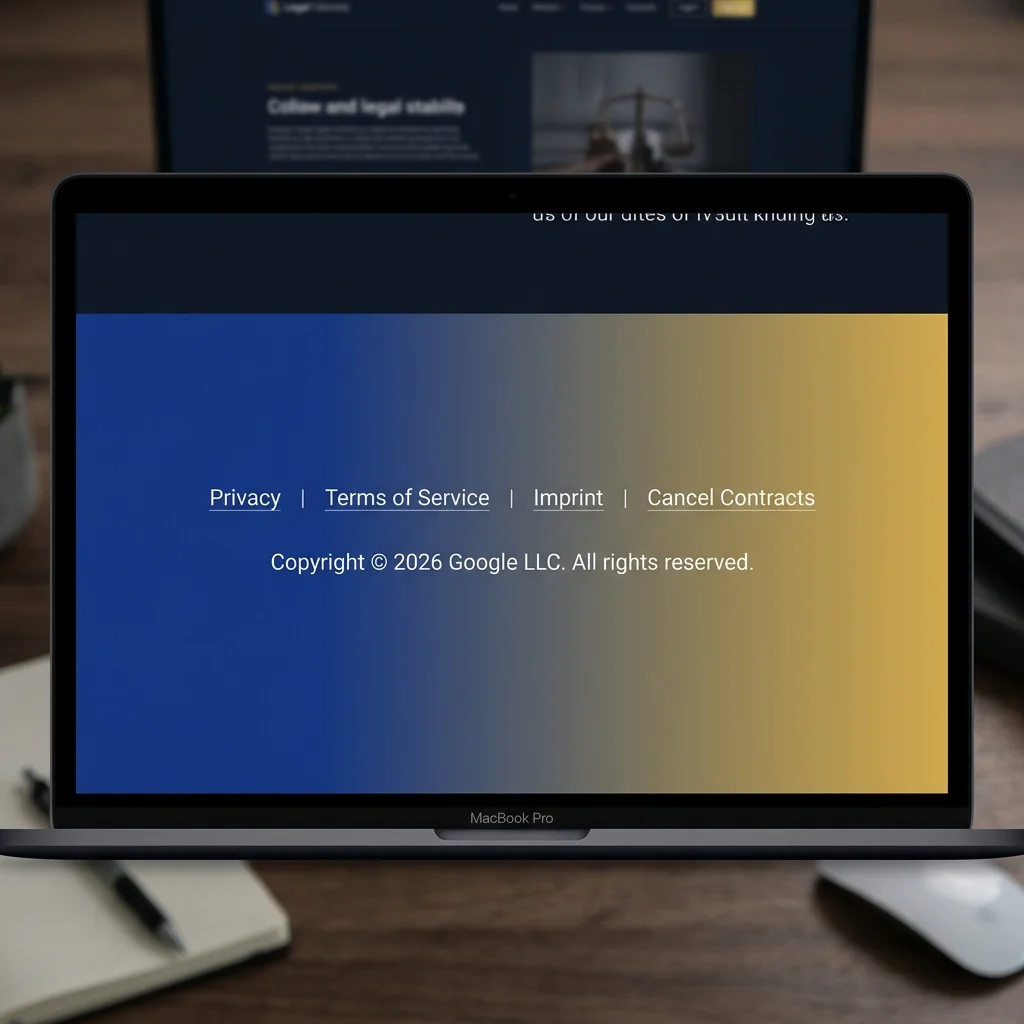
YouTube's footer is more than a collection of links—it's a strategic window
Decoding YouTube’s Footer: How Platform Governance Signals the Future of Digital Policy
Introduction: The Unseen Strategy in YouTube’s Footer
Scrolling to the bottom of YouTube’s homepage, most users barely register the dense cluster of links crammed into the dark gray bar. Terms of Service, Privacy, Copyright, an Imprint link, Cancel contracts—fourteen or more lines of text that appear as an afterthought. But in the world of platform governance, a footer is never just a footer. It is a deliberate architectural statement, a public ledger of legal obligations, and a forward-looking bet on how regulatory winds will blow.
YouTube’s footer today contains more than the usual boilerplate. A careful reading reveals three layers of strategic intent: first, the standard links (Info, Press, Copyright) that establish baseline corporate communication; second, jurisdiction-specific obligations such as the German “Imprint” and “Cancel contracts” links, which signal compliance with national and EU-level consumer protection laws; and third, transparency tools including “How YouTube works” and “Test new features,” which go beyond legal minimums to preempt user and regulator demands.
Most striking is the copyright notice at the bottom: “Copyright © 2026 Google LLC.” At the time of writing, it is 2025—so why does YouTube display a year that has not yet arrived? This single detail encapsulates the entire thesis of this article: the footer is not a passive record of the present, but an active signal of how platforms are positioning themselves for the regulatory future. From the EU Digital Services Act to creator economy accountability, every link in YouTube’s footer is a small but telling data point in the larger story of digital policy evolution.
[IMAGE: Screenshot of YouTube's footer with key links highlighted, annotated with icons for legal, policy, and creator tools.]
The 2026 Copyright Notice: A Signal of Long-Term Confidence or Preemptive Compliance?
The copyright line “© 2026 Google LLC” is puzzling at first glance. Standard practice for most websites is to display the current year as a dynamic variable, updating automatically. YouTube chose to hardcode a future year. This is not a bug. It is a calculated move.
One plausible explanation ties directly to the European Union’s evolving copyright framework. The EU Copyright Directive (2019/790), which member states were required to implement by June 2021, includes controversial provisions such as Article 17, requiring platforms to obtain licenses for user-uploaded content or face liability for copyright infringement. The implementation timeline for various provisions has stretched into the mid-2020s, with key court cases and national transposition laws still settling. YouTube, by committing to a 2026 copyright notice, signals that it expects the current legal regime to remain stable—or that it has already built the compliance infrastructure to handle whatever comes next.
Another reading is more cynical: the 2026 date functions as a placeholder, a way to avoid the administrative cost of updating the year annually. But for a company of Google’s engineering sophistication, that argument falls flat. The intentionality is the point. YouTube is telling its users, creators, and regulators: we are planning for the medium term, and we expect to operate under these rules for at least another few years.
This matters for the creator economy in a direct way. Content creators who rely on YouTube’s Content ID system, monetization policies, and copyright dispute mechanisms need to know that the legal framework under which they operate is stable. A forward-looking copyright notice reduces uncertainty—it signals that the platform is not expecting a sudden regulatory rupture that would upend licensing agreements. For advertisers, the signal is similar: the platform’s legal exposure is manageable, and ad revenue will not be disrupted by unanticipated copyright litigation.
[IMAGE: Infographic timeline of major copyright regulations (e.g., EU Copyright Directive 2019, US CASE Act potential updates) leading to 2026.]
Jurisdiction-Specific Links: The EU’s Digital Agenda in Action
Scroll a little further down YouTube’s footer, and two links stand out for their geographic specificity: “Imprint” and “Cancel contracts.” These are not generic terms; they are legal requirements under German law, enforced by the Telemediengesetz (TMG) and the EU’s consumer rights directive.
The “Imprint” link (Impressum) is mandatory for any commercial website accessible in Germany. It requires the platform to disclose the legal entity behind the service, its address, contact information, and in some cases, a responsible person for content. YouTube—like all major platforms—provides a dedicated page listing Google Ireland Limited as the service provider, with a registered address in Dublin. This is not just a box-checking exercise. It fulfills a core transparency requirement that has become a template for other jurisdictions exploring platform accountability.
Similarly, the “Cancel contracts” link (Widerrufsrecht) is a consumer protection measure rooted in EU law. It informs German users of their right to withdraw from contracts concluded online—such as YouTube Premium subscriptions or purchase agreements—within a 14-day cooling-off period. The inclusion of this link is a direct implementation of the EU Consumer Rights Directive (2011/83/EU). But its deeper significance lies in what it reveals about YouTube’s compliance architecture: the platform must maintain separate legal pages for different jurisdictions, each reflecting local laws, while also ensuring a consistent global user experience.
These jurisdiction-specific links have become more prominent under the EU Digital Services Act (DSA), which came into full effect in February 2024. The DSA imposes a sweeping set of obligations on “very large online platforms” (VLOPs)—a category that includes YouTube, which has over 400 million active users in the EU alone. Among its requirements: platforms must provide a single point of contact for users and authorities, publish transparency reports every six months, and allow users to flag illegal content easily. The “Imprint” link effectively serves as that point of contact, while the “Cancel contracts” link operationalizes consumer rights that the DSA reinforces.
[IMAGE: Map of Europe with YouTube’s legal obligations per country highlighted, including Germany’s Impressumspflicht.]
Transparency as a Trust Lever: “How YouTube Works” and “Test New Features”
Beyond mandatory compliance, YouTube’s footer includes two links that represent a voluntary bet on transparency: “How YouTube works” and “Test new features.” Neither is required by any current law in most jurisdictions, yet both are strategically essential for the platform’s long-term health.
“How YouTube works” leads to a dedicated hub explaining the platform’s algorithms, recommendation systems, content moderation policies, and community guidelines. Launched in 2021, this hub was a direct response to mounting pressure from creators, academics, and regulators demanding greater algorithmic accountability. The EU AI Act, which entered into force in August 2024, now mandates that high-risk AI systems—including recommendation algorithms used by VLOPs—must be transparent and explainable. YouTube’s proactive creation of this hub positions the platform ahead of the compliance curve, reducing the risk of future enforcement actions.
“Test new features” is even more forward-leaning. It invites users to opt into experimental features before they roll out globally—a tool that serves both as a focus group and a trust-building exercise. By giving users a voice in product development, YouTube signals that it is not imposing changes unilaterally. This is particularly important in the creator economy, where platform updates (such as changes to the monetization algorithm or community guidelines) can have immediate revenue consequences for millions of independent creators. When creators feel they have been consulted, they are less likely to churn to competing platforms like Twitch, Vimeo, or TikTok.
The economic logic is clear: transparency reduces friction. A creator who understands why a video was demonetized is less likely to blame the platform unfairly. An advertiser who sees a detailed explanation of content moderation policies is more likely to trust that their brand will not appear alongside harmful content. Both factors directly support YouTube’s primary revenue model—advertising—which generated over $31 billion for Alphabet in 2023. By investing in transparency features that are visible in the footer, YouTube is protecting its most valuable asset: the trust of its dual-sided market.
[IMAGE: Illustration of a magnifying glass over a website footer, with icons for 'How YouTube works' popping up, symbolizing transparency and user education.]
The Hidden Business Logic: Footer as a Risk Management Dashboard
Viewed holistically, YouTube’s footer is a dashboard of risk management priorities. Each link corresponds to a specific regulatory, legal, or reputational exposure that the platform must address to operate globally.
Consider the economic cost of non-compliance. Failing to provide a mandatory “Imprint” link in Germany could result in fines of up to €50,000 per violation, plus the risk of being blocked by German internet providers. Failing to comply with the DSA’s transparency reporting requirements could trigger fines of up to 6% of global annual turnover—potentially billions of dollars for Alphabet. Failing to address creator trust through features like “How YouTube works” could accelerate a talent drain to rival platforms, undermining the network effects that make YouTube the dominant video platform.
The footer, then, is not merely a legal afterthought but a strategic investment. By publishing these links prominently, YouTube sends a signal to regulators, investors, and users that it takes governance seriously. This proactive posture can yield tangible competitive advantages: smoother regulatory approvals for new markets, faster partnerships with advertisers who value compliance, and stronger retention of creators who feel their interests are protected.
Conclusion: What the Footer Tells Us About the Future of Digital Policy
YouTube’s footer is a microcosm of the broader transformation underway in platform governance. The days when a simple “Terms of Service” link sufficed are over. Today, platforms must navigate a dense web of national laws (Germany’s Impressumspflicht), supranational regimes (EU DSA, AI Act), consumer rights (the 14-day cancellation period), copyright regimes (the 2026 placeholder), and voluntary transparency measures.
The picture that emerges is one of regulatory layering. YouTube does not have a single global footer; it serves different versions to different users based on their location. A user in Germany sees “Imprint” and “Cancel contracts”; a user in the United States might see “Privacy” and “Security”; a user in Brazil might see links related to the Marco Civil da Internet. This geographic fragmentation is the new normal for platform governance, and it demands significant engineering and legal resources.
For creators, the footer offers a checklist of their own rights and protections. For regulators, it provides a snapshot of compliance gaps. For competitors, it reveals strategic priorities. And for users, it is a reminder that the platforms we use every day are not neutral utilities but governed entities shaped by law, politics, and economics.
As we move toward 2026, the year YouTube has chosen to inscribe in its copyright notice, the footer will continue to evolve. Expect new links for AI transparency (following the EU AI Act), more detailed consumer rights disclosures, and perhaps even jurisdiction-specific content moderation appeals. The footer is never finished—it is a living document of platform governance. And for anyone trying to understand the future of digital policy, it is the best place to start looking.
[IMAGE: Split-screen showing a YouTube footer on the left and a timeline of regulatory milestones on the right, connecting specific links to specific laws.]