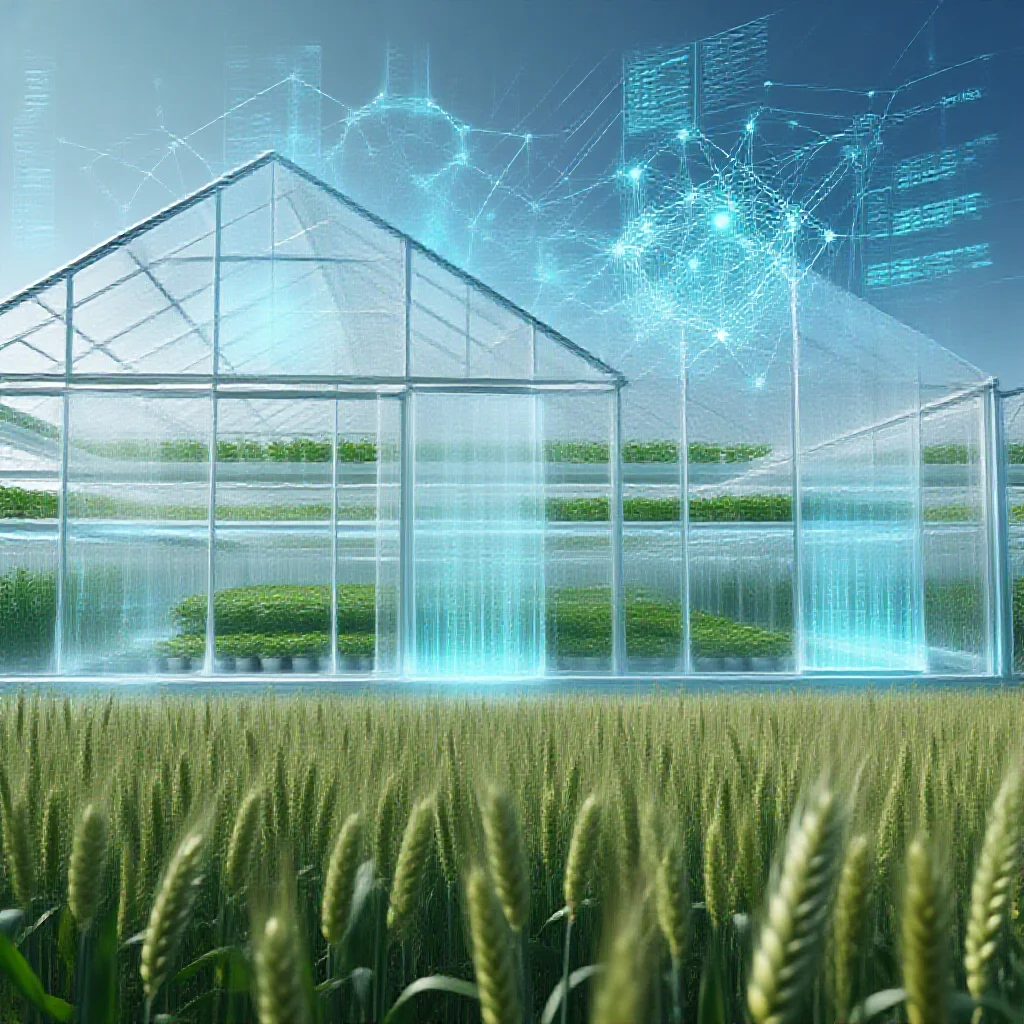
Syngenta's announcement of a new 'world-leading' agricultural bioscience
Beyond the Lab: Syngenta's UK Bioscience Center and the AI-Driven Future of Global Food Security
Syngenta Group has announced the establishment of a new agricultural bioscience research center in the United Kingdom. The company describes the planned facility as "world-leading" and states it will utilize advanced technology and artificial intelligence. (Source 1: [Primary Data])
The Strategic Calculus: Why the UK and Why Now?
The location and timing of Syngenta's investment are not incidental. The announcement aligns precisely with the UK government's post-Brexit "Life Sciences Vision," which aims to cement the nation's status as a science superpower through targeted R&D investment and regulatory modernization. This move positions the UK in direct competition with established European agriscience hubs, such as Wageningen in the Netherlands. The strategic calculus extends beyond financial incentives to include access to a concentrated talent pool in genomics, bioinformatics, and data science from UK academic institutions. Furthermore, the UK's evolving regulatory stance on precision-bred crops, following the Genetic Technology (Precision Breeding) Act, presents a more permissive environment for commercializing gene-edited traits compared to the European Union's stricter framework under the EU Green Deal. The facility serves as a tangible asset in the geopolitical contest for leadership in next-generation food innovation.
From Chemicals to Code: The AI & Bioscience Nexus as a Game Changer
Syngenta's emphasis on "agricultural bioscience" signifies a strategic pivot from a legacy focus on chemical inputs toward predictive, data-driven biology. The core of this shift is the integration of AI with high-throughput phenotyping and gene-editing tools like CRISPR. This nexus enables a silent revolution in crop breeding. Where traditional methods require years of field trials to select for complex traits like drought tolerance or nitrogen efficiency, AI models can analyze genomic, phenotypic, and environmental datasets to predict gene function and optimal genetic combinations. This process, referenced in studies from journals such as Nature Plants, can compress R&D cycles from years to months. Syngenta's own patent filings in computational biology and machine learning for trait discovery provide evidence of this operational transition. The research center is engineered to be a physical manifestation of this new R&D paradigm, where computational power is the primary catalyst for biological discovery.
The Unseen Impact: Supply Chains, Sovereignty, and Market Concentration
The long-term implications of this research direction extend far beyond laboratory walls. The development of proprietary, climate-adaptive seeds through accelerated AI-driven pipelines could significantly alter global agricultural input supply chains. Farmers in climate-vulnerable regions may become increasingly dependent on a narrow set of high-performance, patented varieties. This raises questions of food sovereignty and resilience. Concurrently, the intellectual property landscape is being redefined. The data used to train AI models, and the predictive algorithms themselves, are becoming a new form of agricultural IP, potentially more valuable and defensible than the physical seed. This trend may accelerate market concentration, a concern highlighted in analyses by the International Panel of Experts on Sustainable Food Systems (IPES-Food). The center's output will not merely be new crop varieties but also proprietary data architectures that could shape global food production for decades.
The Verification Lens: Scrutinizing Promises vs. Future Deliverables
A critical analysis of this announcement requires a long-term verification framework. The true measure of the center's impact will be determined over a 5-10 year horizon based on commercialized products, independently verified yield data under stress conditions, and contributions to regional food security metrics. Key performance indicators for future assessment will include the volume and quality of peer-reviewed publications from the facility, the formation of strategic partnerships with UK research institutes, and the subsequent rate of regulatory submissions for new traits in key markets. While the technological promise is significant, the eventual outcomes will depend on complex factors including global adoption rates, farmer affordability, and the management of intellectual property to avoid stifling broader innovation. The narrative will be balanced by observable, measurable deliverables in the coming years.
Market/Industry Prediction: The establishment of this center is a bellwether for the agricultural input sector, signaling a consolidated shift toward AI-integrated bioscience as the core competitive differentiator. It is anticipated that other major agriscience firms will accelerate similar investments in computational biology infrastructure and talent acquisition. The UK is likely to attract further agritech R&D investment, reinforcing its niche in this field. However, this will also intensify the global race for biological data acquisition and algorithmic supremacy, potentially leading to increased consolidation of technological capabilities among a few dominant firms. The success of such ventures will ultimately be quantified by their ability to translate accelerated discovery into tangible, scalable solutions for a food system under unprecedented climatic and demographic pressure.