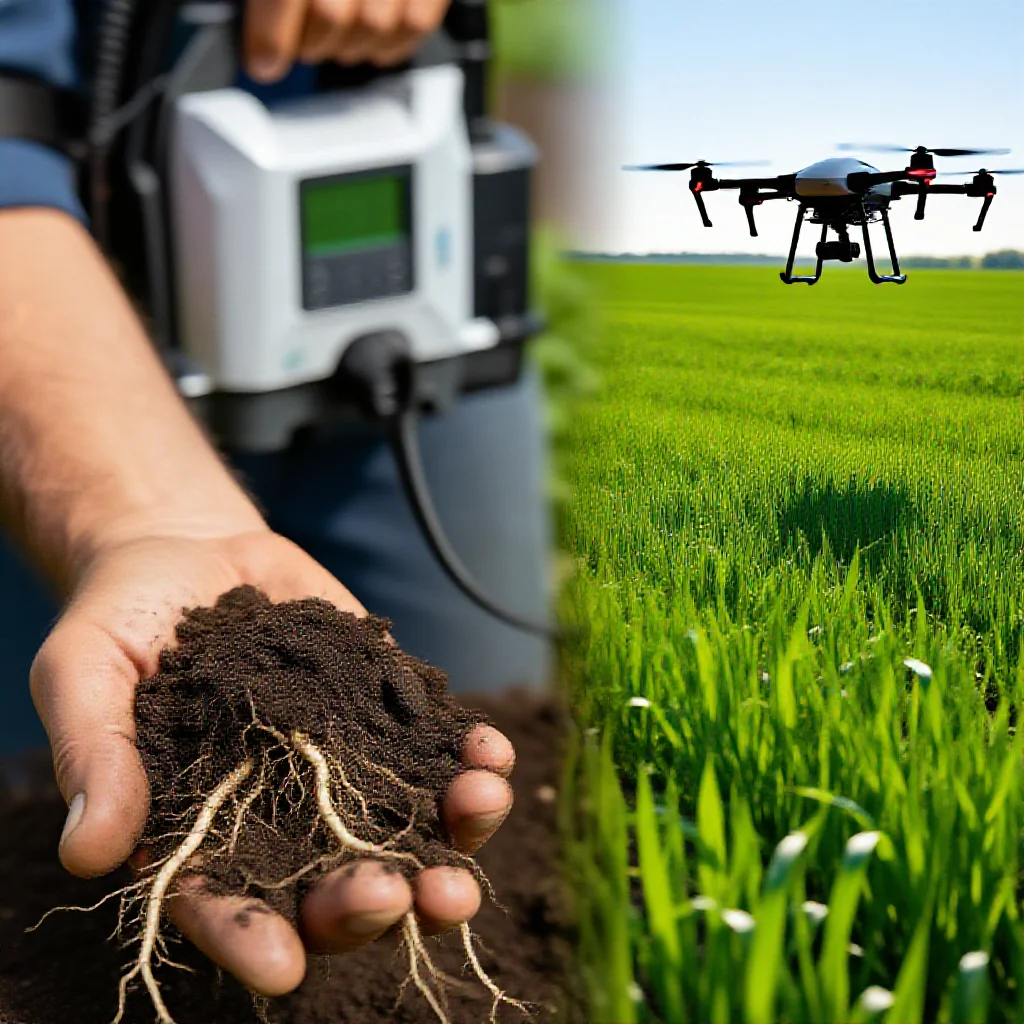
Rovensa Next, a global biosolutions leader within the Rovensa Group, is pioneering
Beyond Agrochemicals: How Rovensa Next's Integration Strategy is Redefining the $30B Biosolutions Market
Introduction: The Integration Imperative in a $30 Billion Market
The global biosolutions market, projected to reach $30 billion by 2030 (Source 1: [Primary Data]), represents one of the most significant structural shifts in modern agriculture. Within this landscape, Rovensa Next, the biosolutions arm of the Rovensa Group, has emerged as a pivotal entity. The company’s strategic posture is defined not by advocating for the wholesale replacement of conventional agrochemicals, but by a deliberate and targeted integration of biological products into existing farming systems. This analysis examines the operational and economic logic behind this integration-first approach, which is designed to navigate adoption barriers and capitalize on the sector's double-digit growth rate (Source 2: [Primary Data]). The strategy leverages a portfolio spanning biostimulants, biocontrols, and biofertilizers, deployed through a global infrastructure of 14 production sites and 10 R&D centers across more than 80 countries (Source 3: [Primary Data]).Deconstructing the Strategy: Why Integration Trumps Replacement
The strategic directive, articulated as “integrating biosolutions into conventional agriculture, not replacing it” (Source 4: [Primary Data]), is a calculated response to market realities. The economic and practical barriers for conventional farmers to adopt a purely biological regime are substantial, involving perceived risk, cost of transition, and potential yield volatility. Rovensa Next’s model mitigates these barriers by focusing on two specific, low-friction entry points: biological seed treatment and foliar applications.Biological seed treatment functions as a foundational intervention. It allows farmers to introduce beneficial microorganisms or compounds at the very start of the crop cycle, enhancing germination, early root development, and stress resilience without altering established planting protocols. This method represents a minimal deviation from standard practice while offering a clear, measurable return on investment. Concurrently, foliar applications are positioned as complementary in-season tools. These products are formulated to fit seamlessly into existing spray routines, providing solutions for nutrient supplementation, stress mitigation, or pest suppression alongside conventional crop protection programs. This dual-track approach reduces adoption risk by allowing incremental integration, thereby accelerating market penetration more effectively than a paradigm-shift narrative could achieve.
The Hidden Architecture: Global Scale as a Competitive Moat
The scale of Rovensa Next’s operational footprint is a critical, yet often under-analyzed, component of its strategy. Possessing 14 production sites and 10 dedicated R&D centers globally (Source 5: [Primary Data]) constitutes a significant competitive moat. This infrastructure enables localized product development and formulation, ensuring that biosolutions are tailored to specific regional agronomic challenges, soil types, and prevalent crops. This localization capability is a distinct advantage over smaller, niche biosolution startups that may lack the capital and logistical network for such adaptation.Furthermore, a commercial presence in over 80 countries (Source 6: [Primary Data]) serves a dual purpose. It provides a vast, distributed network for gathering agronomic data, fueling iterative product innovation. Simultaneously, it builds a resilient and diversified supply chain, mitigating regional production or regulatory disruptions. This physical and commercial scale transforms the company from a mere product supplier into an integrated platform capable of rapid scaling and responsive innovation, creating a defensive barrier against competitors and establishing a foundation for long-term market leadership.
Beyond Biocontrol: The Underestimated Rise of Biostimulants and Biofertilizers
While biocontrol products—which manage pests and diseases—often dominate the biosolutions narrative, the strategic portfolio of Rovensa Next highlights the concurrent and substantial growth in biostimulants and biofertilizers. Biostimulants, which enhance plant nutrition efficiency, abiotic stress tolerance, and crop quality, address pervasive challenges like climate volatility and resource scarcity. Biofertilizers, which facilitate nutrient cycling and availability, directly engage with the global imperative to improve nitrogen use efficiency and soil health.The focus on these categories indicates a market evolution. The initial driver for biosolutions was often residue management and organic production. The current growth is increasingly fueled by performance optimization within conventional systems. Farmers are adopting biostimulants to protect yield potential under stress and biofertilizers to optimize input costs, making them complementary rather than antagonistic to synthetic inputs. This expands the addressable market beyond niche segments to the entirety of productive agriculture, underpinning the robust $30 billion projection.
Conclusion: The Convergent Future of Agricultural Inputs
The trajectory outlined by Rovensa Next’s integration strategy points toward a future of convergent, rather than competing, agricultural input systems. The objective is not a binary choice between biological and conventional chemistry, but the development of synergistic protocols where each modality addresses specific weaknesses of the other. Biologicals may enhance soil biology and plant resilience, while conventional products provide reliable, high-efficacy knockdown of established pest or disease pressures.The companies positioned to dominate this convergent market will be those that master the science of compatibility and sequencing, and that possess the global infrastructure to deliver tailored, reliable solutions at scale. Rovensa Next’s early emphasis on integration over replacement, backed by its extensive production and R&D network, provides a template for this transition. The logical endpoint is an agricultural input industry where “biosolutions” are not a separate category, but a standard, integrated component of holistic crop management programs worldwide.