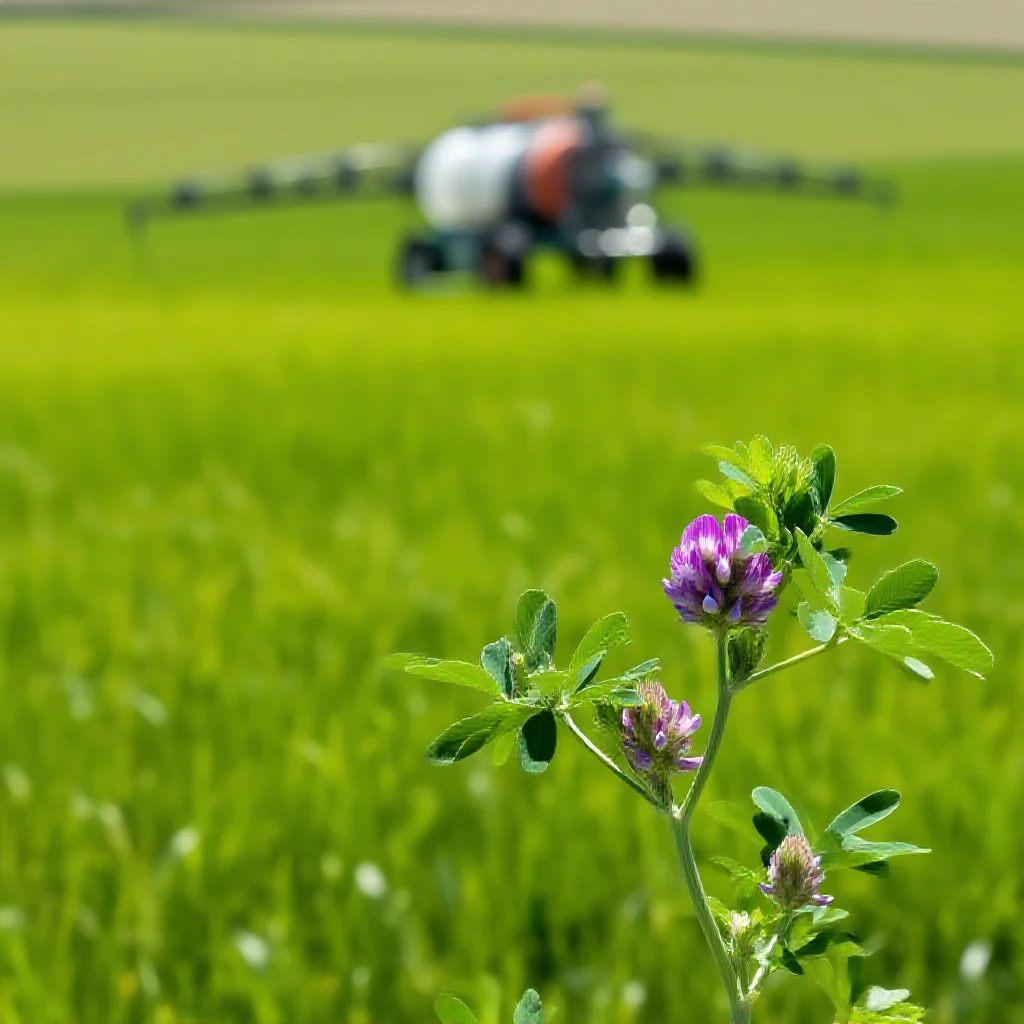
The EPA's approval of Linex herbicide for alfalfa, effective in 2026, is
Beyond the Label: How Linex's 2026 Alfalfa Expansion Signals a Shift in U.S. Crop Protection Strategy
The U.S. Environmental Protection Agency (EPA) has approved a label expansion for Linex herbicide, authorizing its use in alfalfa with availability scheduled for the 2026 growing season (Source 1: [Primary Data]). This regulatory action extends the utility of an established herbicide into a critical forage crop. The decision is not merely a procedural update but a strategic development with implications for herbicide resistance management, economic stability in forage production, and the evolving focus of crop protection strategies.
The Announcement Decoded: More Than a New Use Pattern
The EPA's approval addresses a specific and growing agronomic challenge: weed management in perennial alfalfa stands. Alfalfa, a high-value forage crop foundational to dairy and livestock industries, presents unique control difficulties due to its multi-year lifespan and sensitivity to competition during establishment and in thinning stands. The 2026 implementation timeline is a strategic interval. It provides a multi-year window for developing comprehensive stewardship programs, ensuring supply chain readiness, and integrating the new use pattern into existing crop management frameworks. This phased approach indicates a deliberate move to maximize the tool's effective and sustainable adoption from its introduction.
The Hidden Economic Logic: Filling a Portfolio and Market Gap
From a portfolio perspective, the expansion of Linex into alfalfa strategically positions the herbicide in a market segment with defined needs. It introduces a chemistry with a distinct mode of action (linuron) into a crop where reliance on ALS-inhibitors like Pursuit (imazethapyr) or Raptor (imazamox) has contributed to weed resistance pressures. Economically, even marginal improvements in weed control can significantly impact yield and forage quality, directly influencing feed costs for multi-billion-dollar livestock sectors. Furthermore, this label expansion represents a long-term commercial strategy to sustain the relevance and market stability of the Linex brand, mitigating against patent expiries and generic competition in its traditional crop markets.
The Deep Industry Impact: Resistance Management and Regulatory Trends
The core technical impetus for this expansion is herbicide resistance management. Alfalfa weed control options are limited, and resistance to ALS-inhibiting herbicides in weeds like common ragweed and lambsquarters is a documented and expanding problem (Source 2: [University Extension Reports]). The introduction of Linex provides growers with a critically needed, alternative mode of action to rotate or sequence with existing chemistries, a cornerstone of integrated resistance management programs. Regulatorily, this approval signals a pragmatic trend within the EPA: facilitating solutions for high-value, though not major-acreage row crops, where pest management challenges are acute and have broad economic ripple effects.
Looking to 2026: Implementation Challenges and Strategic Advantages
The success of this label expansion hinges on execution between now and 2026. Supply chains must be calibrated to meet anticipated demand within the specialized forage sector. Significant adoption hurdles exist, primarily in educating growers and applicators on optimal application timing—particularly in relation to alfalfa’s establishment phases and harvest schedules—to maximize efficacy and crop safety. This strategic move by the registrant may also reshape the competitive landscape, potentially accelerating research and regulatory efforts by other agrochemical firms to secure similar label expansions for niche, high-value crops, intensifying focus on precision crop protection.
Conclusion: A Bellwether for Precision Crop Protection
The EPA's approval of Linex for alfalfa use in 2026 is a bellwether for contemporary crop protection strategy. It demonstrates a targeted response to specific agronomic and economic pressures, prioritizing resistance management and portfolio diversification over broad-acreage applications. The deliberate timeline underscores an industry shift toward planned stewardship and integrated solution deployment. This decision reflects an evolving model where regulatory actions, economic imperatives, and sustainability goals converge to address discrete challenges within the complex system of modern agriculture.