Integrated Crop Management (ICM) is transitioning from a niche sustainable
Beyond Pesticides: How Integrated Crop Management is Reshaping Latin America's Agricultural Economy
Introduction: The Quiet Revolution in Latin American Fields
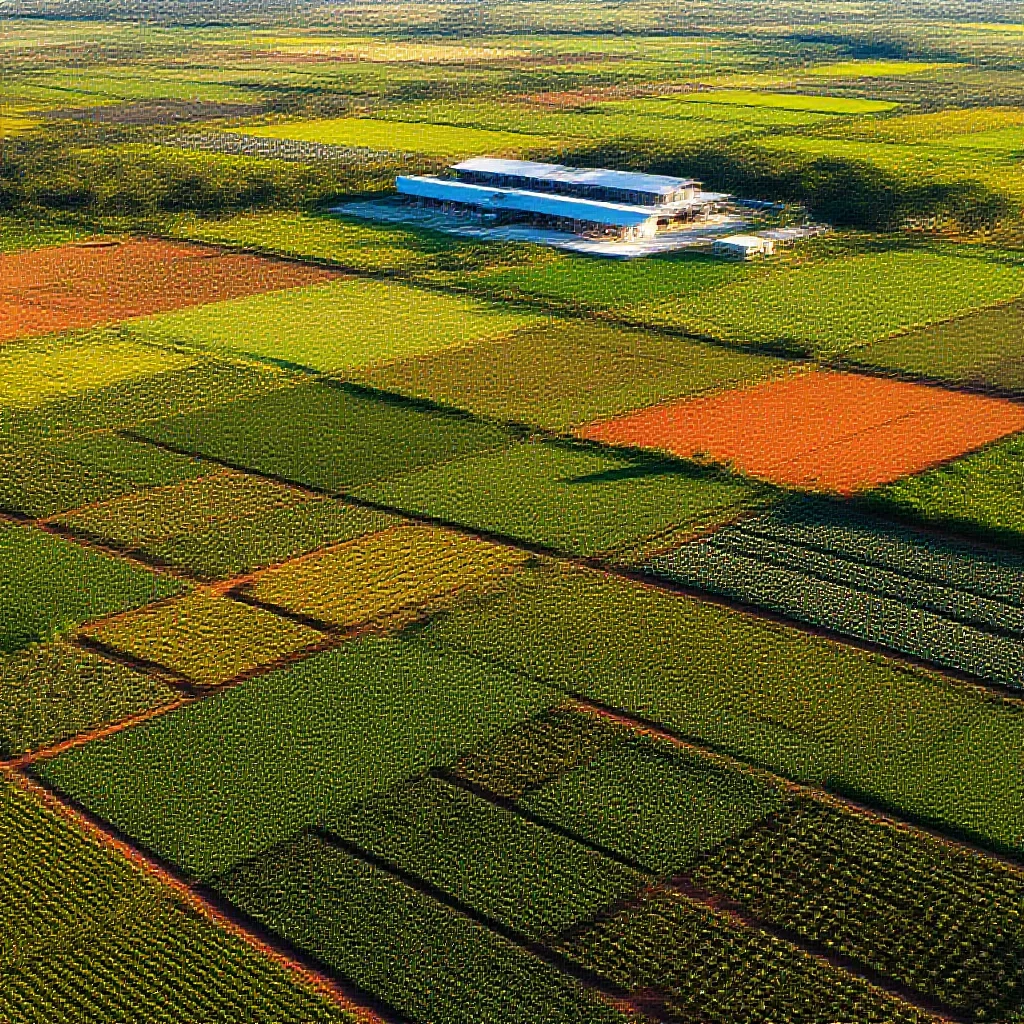
The archetypal image of Latin American agriculture—vast, uniform expanses of soy, coffee, or bananas—is undergoing a fundamental recalibration. Alongside these monocultures, a more complex agricultural model is gaining ground. Integrated Crop Management (ICM), a systematic approach combining pest management, soil health, water conservation, and biodiversity strategies, is transitioning from a niche sustainable practice to a core operational framework. This shift is not merely an environmental trend but a strategic response to converging systemic pressures. The emerging thesis is that ICM represents an economic and risk management imperative, fundamentally altering the financial calculus of farming across the continent.Deconstructing the Drivers: Market Forces Over Moral Choice
The adoption of ICM is primarily driven by financial and regulatory calculus, not altruism. Climate change acts as a financial risk multiplier, making investment in resilience an economic necessity. Increased frequency of droughts, floods, and unpredictable growing seasons threatens the stability of single-crop systems, directly impacting revenue and loan repayment capacity for producers.Simultaneously, market demands are evolving into tangible financial incentives. Major export destinations, particularly the European Union and United States, are implementing stricter regulations on pesticide residues and deforestation-linked commodities. These regulations function as precursors to market access barriers. Concurrently, supply chains for global food corporations and retailers now place a premium on traceability and sustainability certifications, which translate directly into price premiums and secured contracts for compliant producers. The driver is the preservation of market share and profitability in a changing global trade landscape.
The Hidden Economic Logic: From Cost Center to Value Engine
The economic argument for ICM pivots from short-term yield maximization to long-term profit and risk stabilization. The core logic involves reallocating expenditure from external inputs to internal system health. Investments in soil organic matter, cover cropping, and beneficial insect habitats reduce long-term dependency on synthetic fertilizers and chemical pesticides, directly lowering variable input costs.This system functions as a form of biological insurance. While a monoculture might achieve higher yields in an optimal year, an integrated system demonstrates greater yield stability during stress events. The economic value lies in mitigating downside risk. The narrative shifts from "yield per hectare" to "profit and stability per hectare" over a multi-year horizon. Case studies from regional bodies like the Inter-American Institute for Cooperation on Agriculture (IICA) often demonstrate that while initial transition may involve a modest yield trade-off, the reduction in input costs and stabilization of output leads to improved net income and resilience (Source 1: [IICA Case Studies]).
Supply Chain Ripples: How ICM Alters the Agricultural Ecosystem
The rise of ICM sends disruptive ripples throughout the agricultural supply chain. Traditional input suppliers, whose business models are based on volume sales of chemical packages, face pressure to evolve. The new demand is for knowledge-intensive service models, including soil diagnostics, biological inputs, and integrated advisory services.For traders and processors, ICM necessitates adaptation. Handling diverse, smaller-batch, and quality-differentiated produce requires more sophisticated logistics and segmentation capabilities. This creates opportunities for value capture but demands new investments in traceability and storage. Furthermore, new alliances are emerging. Partnerships are forming between progressive farmers, biotech firms specializing in bio-inputs, and data analytics companies providing precision agronomy services for complex systems. The agricultural ecosystem is becoming a more interconnected, knowledge-driven network.
The Verification Layer: Evidence and Source Integration
The trend is substantiated by analysis from credible financial and agricultural institutions. The Food and Agriculture Organization of the United Nations (FAO) has documented increasing ICM adoption rates in countries like Brazil, Argentina, and Colombia, linking it to national policies on sustainable intensification (Source 2: [FAO Regional Reports]). Financial analyses from institutions like Rabobank frequently highlight climate risk as a primary concern for the sector's asset base, with integrated practices noted as a key risk mitigation strategy for loan portfolios (Source 3: [Rabobank Agribusiness Outlook]).Market studies indicate that consumer and regulatory pressures in import markets are not a transient phenomenon but a structural shift, reinforcing the economic rationale for ICM adoption among export-oriented producers.
Conclusion: Strategic Repositioning for a Volatile Future
Integrated Crop Management is evolving from an agronomic methodology to a strategic business model in Latin American agriculture. Its adoption is a rational market response to the triad of climate volatility, regulatory change, and shifting consumer preferences. The practice is fundamentally altering farm-level economics by prioritizing long-term system resilience and cost control over short-term output maximization.The future trajectory suggests a deepening of this trend. Producers employing ICM are likely to secure competitive advantages through lower operational risk, preferential access to premium markets, and alignment with incoming sustainability-linked finance instruments. The continent's agricultural economy is being reshaped not by a rejection of productivity, but by a redefinition of productivity to include stability and sustainability as core financial metrics.