The agricultural biologicals market is booming, but its global growth is
The Great Regulatory Divide: How EU-US Frameworks Shape the Global Agricultural Biologicals Market
Summary: The agricultural biologicals market is booming, but its global growth is hampered by a fundamental regulatory schism. The European Union has established a clear, harmonized path for biostimulants under its 2022 Fertilising Products Regulation (FPR), creating a predictable environment for innovation and trade. In stark contrast, the United States operates under a fragmented, state-led system with no federal definition, relying on outdated frameworks for fertilizers and pesticides. This divergence creates significant barriers to international market access, complicates product development for multinational companies, and risks bifurcating global supply chains. Understanding this regulatory landscape is crucial for stakeholders navigating the future of sustainable agriculture.
---
Introduction: The Two Worlds of Agricultural Biologicals
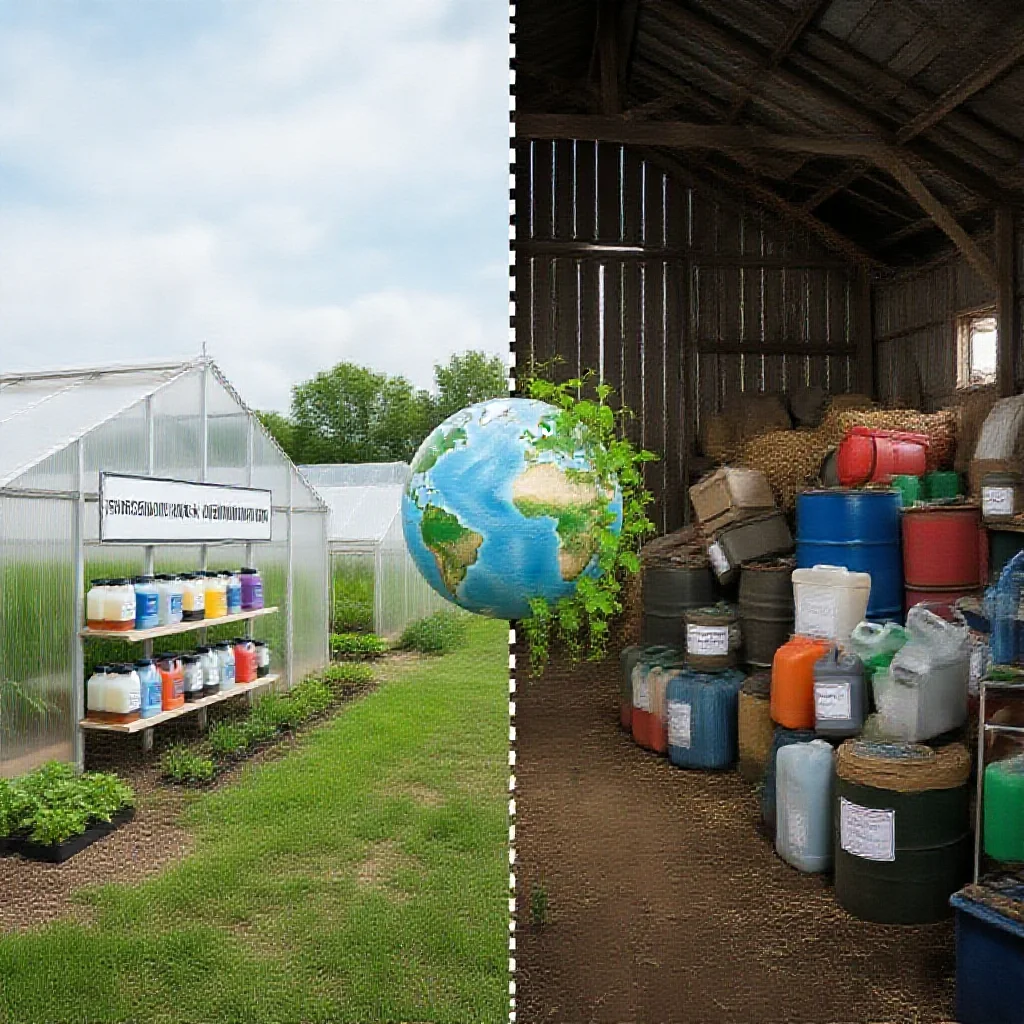
Agricultural biologicals, encompassing biostimulants and microbial products, represent a cornerstone of the transition toward input-efficient and sustainable crop production. Their global market potential, however, is constrained not by science or demand, but by a profound regulatory roadblock. The international landscape is defined by a core dichotomy: the European Union's proactive harmonization of rules versus the United States' reliance on a fragmented, state-led system. This divergence transcends bureaucratic nuance; it actively shapes the trajectory of innovation, dictates international trade flows, and forces strategic recalculations for global supply chains. The regulatory environment is now a primary competitive variable.
The EU Blueprint: Harmonization as a Catalyst for Market Certainty
The European Union has engineered a regulatory framework designed to create market certainty. The cornerstone is the Fertilising Products Regulation (FPR), which came into full force in July 2022 (Source 1: [Primary Data Timeline]). This legislation performs a critical function: it creates a new, harmonized product category for 'plant biostimulants' within EU law.
The FPR's mechanism is built on precise definition and substantiation. It defines a plant biostimulant as "a product stimulating plant nutrition processes independently of the product's nutrient content" (Source 2: [Primary Data Facts]). This legal clarity is coupled with a requirement for manufacturers to substantiate specific claims to achieve an official 'plant biostimulant' designation. This process replaces ambiguity with a predictable pathway to market authorization across all 27 member states.
The economic logic is straightforward. A predictable, unified regulatory environment lowers barriers to entry for innovators, attracts sustained R&D investment by de-risking the commercialization timeline, and eliminates the complexity of navigating 27 different national rules for intra-EU trade. The framework also delineates jurisdiction: microorganisms are regulated under the FPR if claimed for biostimulant effects, or under pesticide regulations if claimed for plant protection (Source 3: [Primary Data Facts]). This clarity has positioned the EU as a first-mover in structuring a mature biologicals market.
The US Patchwork: Innovation in a Regulatory Fog
The United States presents a contrasting model of decentralized complexity. There is no federal definition or dedicated regulatory category for biostimulants. Instead, products are regulated at the state level, primarily under decades-old frameworks designed for conventional fertilizers or pesticides (Source 4: [Primary Data Facts]). The U.S. Environmental Protection Agency (EPA) regulates microorganisms specifically under the Federal Insecticide, Fungicide, and Rodenticide Act (FIFRA) when marketed for pest control purposes (Source 5: [Primary Data Facts]).
This fragmentation imposes a direct cost on the market. Companies must navigate a patchwork of 50 different state regulatory regimes, increasing compliance complexity, legal overhead, and time-to-market. This environment stifles the formation of a coherent national market and disadvantages smaller innovators lacking the resources for multi-state legal navigation.
Incremental progress toward federal clarity has been slow. The 2018 Farm Bill directed the U.S. Department of Agriculture (USDA) to establish a task force on biostimulants, signaling recognition of the issue (Source 6: [Primary Data Timeline]). Subsequently, the Biostimulant Act was introduced in the U.S. Congress in 2023, proposing a federal definition and a voluntary product listing program (Source 7: [Primary Data Timeline]). However, the legislative process remains ongoing, leaving the industry in a state of prolonged uncertainty.
Beyond Bureaucracy: The Hidden Impacts on Global Trade and Supply Chains
The regulatory divergence between the EU and US has tangible, long-term consequences that extend far beyond administrative hassle.
1. Supply Chain Bifurcation: A probable outcome is the development of parallel supply chains. Multinational companies may be compelled to formulate separate product lines—one engineered and documented to meet the precise substantiation requirements of the EU FPR, and another configured for the variable requirements of the U.S. state-level systems. This leads to duplicated R&D efforts, segmented manufacturing runs, and increased operational complexity, ultimately raising costs and reducing economies of scale.
2. Asymmetric Trade Barriers: Differing data requirements and approval processes function as significant non-tariff barriers to trade. A product approved in the EU is not automatically admissible in the U.S., and vice-versa. This asymmetry tends to favor large, established multinational corporations with the capital and legal teams to manage dual regulatory burdens. Smaller, specialized innovators may find their market access geographically constrained, limiting competition and potentially slowing the pace of technological advancement.
3. Quality and Efficacy Risks: The less-defined U.S. framework, reliant on general fertilizer or pesticide statutes not designed for biologicals, carries an inherent risk. Without a federal standard for claims substantiation specific to biostimulant function, the market may experience variability in product quality and efficacy claims. This could undermine grower confidence in the category as a whole, a risk the EU's claim-substantiation model explicitly seeks to mitigate.
Conclusion: Navigating a Bifurcated Future
The regulatory paths of the European Union and the United States are creating two distinct playing fields for the agricultural biologicals industry. The EU's FPR has established a model of harmonized certainty, structuring a market intended to foster innovation through clear rules. The U.S. model, while potentially offering initial flexibility, currently presents a landscape of fragmented complexity that increases costs and creates market access hurdles.
The logical trajectory points toward continued divergence in the near to medium term. Even if U.S. federal legislation is enacted, alignment with the EU's detailed framework is unlikely. Consequently, global market strategies must account for this bifurcation. Product development, clinical trial design, and supply chain logistics will increasingly need to be conceived with dual-regulatory compliance as a core requirement. The companies that succeed will be those that can efficiently navigate both worlds, treating regulatory strategy not as an afterthought, but as a foundational component of product design and global market access. The future of the biologicals market will be written not only in research labs and fields, but equally in the legislative chambers and regulatory agencies of its largest potential markets.