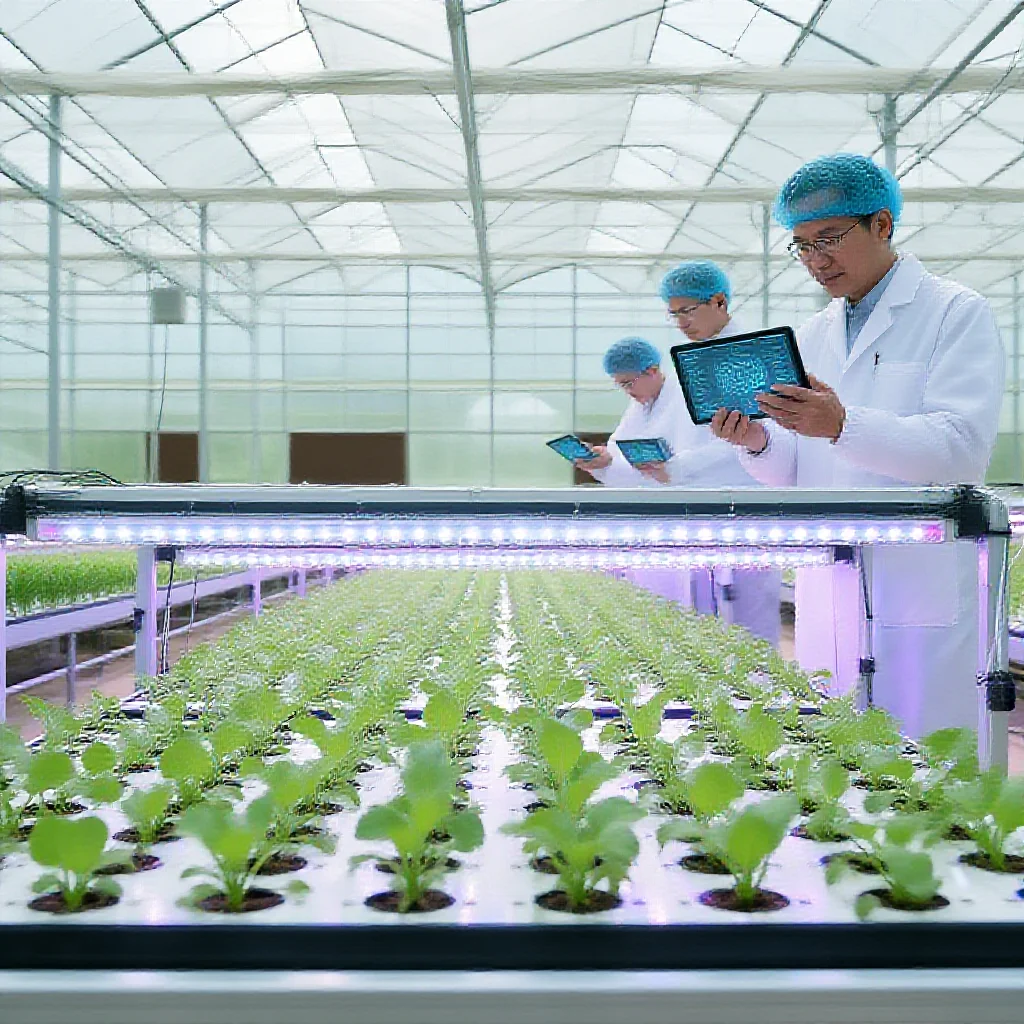
China's agricultural biotechnology sector attracted approximately $1.2 billion
Beyond the $1.2 Billion: Decoding China's Strategic Pivot in Agricultural Biotechnology Investment
Summary: China's agricultural biotechnology sector attracted approximately $1.2 billion in investment in 2023, but the headline figure masks a deeper strategic shift. This analysis reveals a deliberate move by investors and the state towards funding earlier-stage, foundational technologies like gene editing and microbial agriculture, driven by national policy directives. Over 60% of deals are now in Seed and Series A stages, indicating a long-term bet on technological sovereignty and supply chain resilience. We explore how this capital reallocation, coupled with the establishment of provincial industrial parks and new regulatory guidelines, is not merely following a trend but actively constructing a new, secure agricultural innovation ecosystem from the ground up.
---
The $1.2 Billion Mirage: Unpacking the Real Investment Narrative
The aggregate investment of approximately $1.2 billion in China's agricultural biotechnology sector in 2023 serves as a surface-level indicator of market vitality (Source 1: [Investment Report Data]). A more critical analysis of deal flow, however, reveals the definitive strategic narrative. Over 60% of the total deal volume for the year was concentrated in the Seed and Series A funding stages (Source 1: [Investment Report Data]). This distribution signals a pronounced pivot away from primarily funding late-stage commercialization and toward capitalizing foundational, platform technologies.
This pattern contrasts with certain global ag-biotech investment trends, where capital has historically shown a stronger inclination toward later-stage companies with near-term revenue potential and established commercial pathways. The Chinese data indicates a calculated reallocation of risk capital to the earliest phases of technological development.
The State as Architect: Policy Directives Shaping Capital Flow
This reallocation is not a market anomaly but a directed outcome. The 14th Five-Year Plan (2021-2025) functions as a non-negotiable investment roadmap, explicitly identifying agricultural biotechnology and "biological breeding" as strategic priorities for national food security and technological self-reliance.
Concrete policy instruments have followed to de-risk this early-stage bet for private capital. The guidelines for the safety evaluation of gene-edited crops, issued by the Ministry of Agriculture and Rural Affairs in 2022, provide a critical function beyond regulation. They establish a predictable administrative pathway, reducing regulatory uncertainty for investors backing gene-editing startups. Furthermore, the establishment of several provincial-level agricultural biotechnology industrial parks between 2022 and 2023 creates state-capitalized zones. These parks offer infrastructure, tax incentives, and clustering effects, effectively acting as de-risking mechanisms for early-stage ventures.
Strategic Focus Areas: Building Blocks for Agricultural Sovereignty
Capital flow is being channeled into specific technological domains aligned with long-term strategic autonomy.
* Gene Editing as Core Platform: Investment in CRISPR and other gene-editing tools is prioritized as the pathway to seed independence. The objective is to develop proprietary crop varieties with enhanced yield, drought tolerance, and disease resistance, reducing long-term dependency on foreign germplasm.
* The Rise of Microbial Agriculture: There is significant investment in companies engineering soil microbiomes and developing microbial-based biofertilizers and biopesticides. This focus addresses dual goals: improving sustainable farming practices as per green policy directives and substituting for imported synthetic agrochemicals.
* Bio-based Inputs: The development of bio-based alternatives to traditional chemical inputs represents a dual-purpose play. It aligns with environmental policy while simultaneously building domestic capacity in a high-value segment of the agricultural supply chain.
The Long Game: Implications for Global Supply Chains and Competition
The collective movement of policy and capital is directed at a clear, long-term objective: the systematic reduction of dependency on foreign-sourced critical agricultural technologies, including advanced seed genetics and proprietary agrochemicals.
The implication is a potential future recalibration of global supply chains. As domestically developed gene-edited traits and bio-inputs mature over the next decade, China's role may shift from a primary importer to a competitive innovator and exporter in certain segments of the seed and agri-input markets. This raises a structural analysis question: whether the current guided model, which efficiently coordinates resources toward declared national goals, will foster disruptive, paradigm-shifting innovation or highly efficient incrementalism within a defined technological framework.
Verification and Sources: A Data-Driven Lens
* Investment Data: The core investment figure of $1.2 billion and the 60% early-stage deal statistic are derived from aggregated analysis of venture capital and private equity transactions. These figures require reference to dedicated investment reports from financial data firms (e.g., PitchBook, Preqin) or analyses from local Chinese venture capital research groups.
* Policy Analysis: The strategic directives are verifiable through the publicly released 14th Five-Year Plan document. The operational guidelines are contained within the official 2022 announcement from the Ministry of Agriculture and Rural Affairs regarding gene-edited crop safety evaluation.
* Industrial Development: The establishment of provincial industrial parks is documented in local government development plans and state-media announcements from 2022 and 2023.
The available data indicates a coherent, state-guided strategy to build agricultural technological sovereignty from the ground up. The $1.2 billion in annual investment is not an end but a means, with its distribution and focus offering the true insight into China's strategic agricultural priorities.