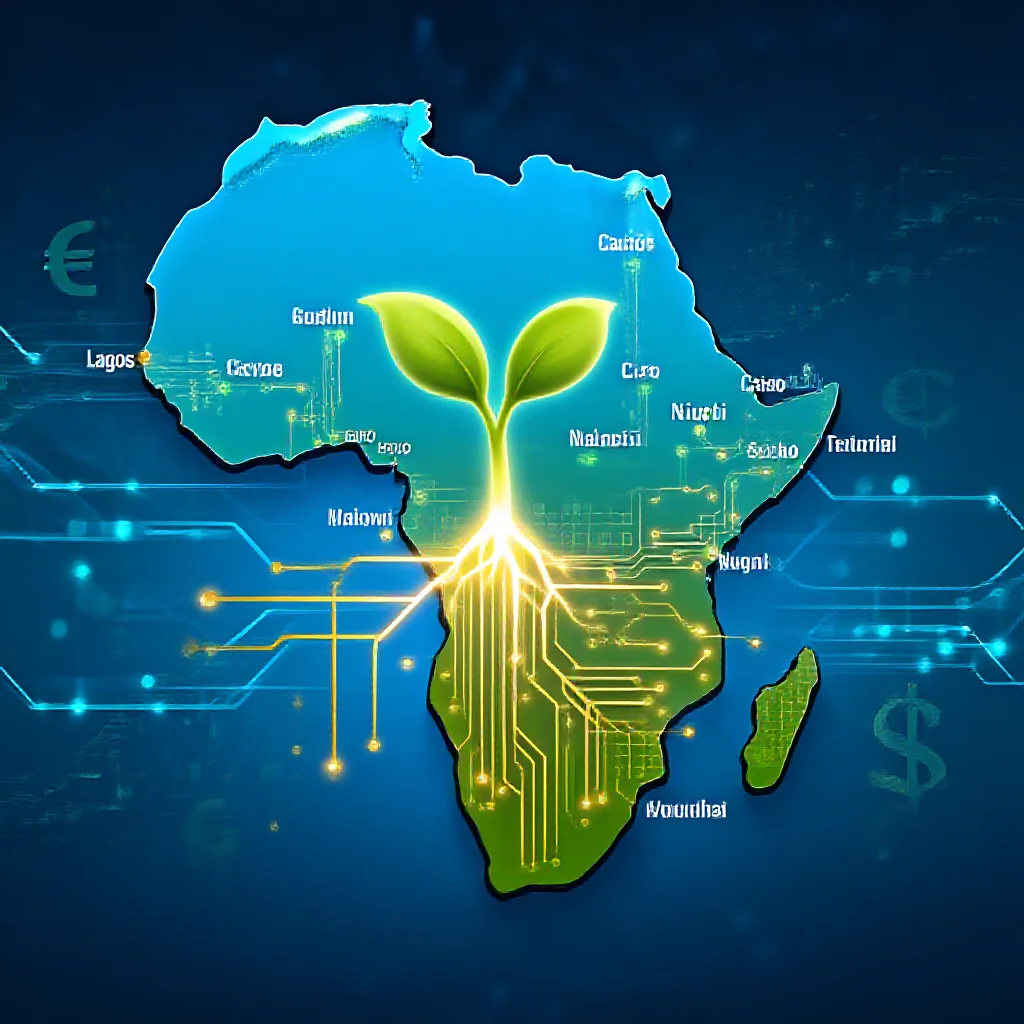
Explore how the global biochar market's rapid growth is creating new opportunities for African agriculture, carbon sequestration, and sustainable waste management.
Subheadline: As the global biochar market expands at 13.83% CAGR, Africa's agricultural value chains, carbon credit mechanisms, and waste-to-energy projects are converging to position the continent as a future growth frontier.
Executive Summary
The global biochar market is entering a phase of rapid commercial expansion. Valued at USD 859.04 million in 2025, the market is projected to reach USD 969.29 million in 2026 and USD 2,731.94 million by 2034, according to a recent report by Fortune Business Insights. Growth is driven by carbon sequestration initiatives, sustainable agriculture practices, waste valorization, and circular economy investments. Although Asia Pacific currently leads with an 82.97% market share, Africa is emerging as a strategic opportunity zone due to its vast agricultural residues, growing energy needs, and increasing participation in voluntary carbon markets. For African businesses and policymakers, biochar represents an intersection of agricultural productivity, climate finance, and industrial development that aligns with the continent's long-term economic transformation agenda.Introduction
Biochar is a carbon-rich material produced by heating biomass in low-oxygen conditions through pyrolysis or gasification. Traditionally used as a soil amendment, biochar is now recognized as a carbon-negative technology that can sequester carbon for extended periods. This dual value—improving soil health while generating verified carbon removal credits—has transformed biochar from a niche agricultural input into a strategic commodity.For Africa, the potential is significant. The continent generates large volumes of agricultural and forestry waste, often burned or left to decompose, releasing greenhouse gases. Converting this waste into biochar offers a pathway to improve soil fertility, enhance food security, and create new revenue streams through carbon credits. As global demand for carbon removal solutions grows, Africa could position itself as a key supplier of high-integrity biochar carbon credits.
Main Analysis
Global Market Dynamics The biochar market's growth trajectory reflects broader shifts in climate policy and corporate sustainability commitments. The Fortune Business Insights report highlights that carbon credits are becoming a major commercial driver. For example, in March 2024, Microsoft agreed to purchase 95,000 tons of carbon capture credits from a Mexican biochar plant operated by The Next 150 and General Biochar Systems. Such deals demonstrate the viability of biochar-based carbon removals in global markets.In July 2023, a consortium of Canadian and French companies—including Groupe Rémabec, SUEZ, and Airex Energy—announced a USD 59–60 million investment to build North America's largest biochar production plant in Port-Cartier, Quebec. These developments indicate that biochar projects are attracting infrastructure-scale investment, driven by climate finance mechanisms and corporate net-zero targets.
Carbon Credits and Climate Finance
Biochar carbon credits are distinct from emissions reduction credits because they represent permanent carbon sequestration. This permanence is highly valued in both voluntary and compliance carbon markets. For African projects, developing credible carbon accounting and verification systems is essential to access international carbon markets. The growing demand for carbon dioxide removal (CDR) credits presents an opportunity for African producers to monetize agricultural waste while contributing to global climate goals.
Sustainable Agriculture and Soil Health
Biochar improves soil structure, water retention, nutrient availability, and crop yields. These benefits are particularly relevant for Africa, where degraded soils and climate variability threaten agricultural productivity. By integrating biochar into farming systems, African countries could enhance resilience and reduce dependence on synthetic fertilizers. Government initiatives and development programs supporting sustainable agriculture are expected to accelerate adoption.
Waste Management and Circular Economy
Biochar production offers a sustainable alternative to open burning and landfilling of agricultural and municipal waste. Africa generates substantial biomass waste, which can be converted into biochar, renewable energy, and other valuable products. This aligns with circular economy principles and can address environmental pollution while creating economic value.
Business Impact
For African businesses, the biochar industry presents opportunities across multiple value chains:- Agribusiness: Farmers and cooperatives can use biochar to improve yields and reduce input costs, while selling carbon credits for additional income.
- Waste Management Companies: Converting organic waste into biochar can generate revenue from tipping fees, biochar sales, and energy co-products.
- Energy Producers: Pyrolysis plants can produce syngas or bio-oil alongside biochar, contributing to decentralized energy generation.
- Carbon Project Developers: Investment in certified biochar projects can access international carbon markets and corporate buyers seeking verified removals.
For investors, the sector offers exposure to climate finance, sustainable agriculture, and circular economy themes. The success of large-scale projects in North America and elsewhere provides a blueprint for African ventures, though local infrastructure, feedstock logistics, and regulatory frameworks will require careful planning.
Regional Perspective
The African Continental Free Trade Area (AfCFTA) could facilitate cross-border trade in biochar and related agricultural products, boosting regional value chains. East Africa, with its strong agricultural base and growing renewable energy sector, is well-positioned to develop biochar production clusters. West Africa, facing significant waste management challenges in urban centers, could leverage biochar for both waste reduction and soil restoration. Southern Africa, with its mining and energy infrastructure, could integrate biochar into mine tailings rehabilitation and industrial applications.International partnerships and development finance will be critical. Multilateral institutions like the African Development Bank and climate funds can support early-stage projects, while technology transfer from established producers can accelerate capacity building. The alignment of biochar with the African Union's Agenda 2063 and national climate commitments under the Paris Agreement makes it a strategic priority.
Future Outlook (3–5 Years)
Over the next three to five years, the global biochar market is expected to grow steadily, with increasing demand for carbon removal credits and sustainable agricultural inputs. Africa's share of the market is likely to rise as governments implement biochar-friendly policies, such as subsidies for waste-to-energy projects and recognition of biochar in carbon markets.Key developments to watch include:
- Establishment of Africa-specific carbon credit standards and verification infrastructure.
- Deployment of modular pyrolysis units that can be localized in rural areas.
- Integration of biochar into national climate adaptation and land restoration strategies.
- Growth of corporate partnerships between African producers and international buyers of carbon credits.
Technology innovation, particularly in low-cost reactor designs and mobile processing units, will reduce entry barriers and make biochar adoption viable for smallholder farmers. Investment in research and development, coupled with knowledge exchange with leading markets in Asia and North America, will help Africa leapfrog into commercial biochar production.
Conclusion
Biochar is no longer a niche agricultural input—it is becoming a strategic industry at the intersection of agriculture, energy, and climate finance. For Africa, the opportunity lies in converting abundant biomass waste into a valuable product that improves soil health, sequesters carbon, and generates new revenue streams. The global market's projected growth to USD 2.7 billion by 2034 signals rising demand, and African businesses and policymakers can position the continent as a competitive supplier.By investing in sustainable biochar value chains, Africa can advance its industrialization goals while contributing to global climate action. The next five years will be critical for building the infrastructure, institutional frameworks, and market linkages needed to unlock this potential.
Key Takeaways
- The global biochar market is projected to reach USD 2,731.94 million by 2034, growing at 13.83% CAGR.
- Carbon credits are a major growth driver, with verified biochar removals gaining traction in international markets.
- Africa's abundant agricultural waste and degraded soils make it a high-potential region for biochar adoption.
- Sustainable agriculture practices and waste management needs will drive regional demand.
- AfCFTA can support regional trade in biochar and agricultural outputs.
- Infrastructure, carbon verification standards, and investment in local technologies are critical for Africa to capture market share.