The Latin American Contract Research Organization (CRO) market is undergoing
Beyond Cost Savings: The Strategic Evolution of Latin America's CRO Market
Introduction: From Cost Center to Strategic Value Hub
The prevailing narrative of Latin America as a low-cost outsourcing destination for clinical research is outdated. While cost advantages persist, they no longer define the region's value proposition. The Latin American Contract Research Organization (CRO) market is undergoing a fundamental maturation, transitioning from a transactional cost center to a strategic hub integral to global pharmaceutical research and development. This evolution is driven by structural advantages that extend far beyond budgetary considerations, positioning the region as a critical node for complex, data-rich clinical studies.
The Economic Logic: Deconstructing LATAM's Competitive Advantage
The economic foundation of Latin America's appeal remains significant, but its role has transformed. Patient recruitment costs, estimated at 30-50% lower than in the United States, serve as an entry ticket rather than the final destination. This cost efficiency provides the fiscal space for sponsors and CROs to invest in higher-value activities and sophisticated trial designs within the region.
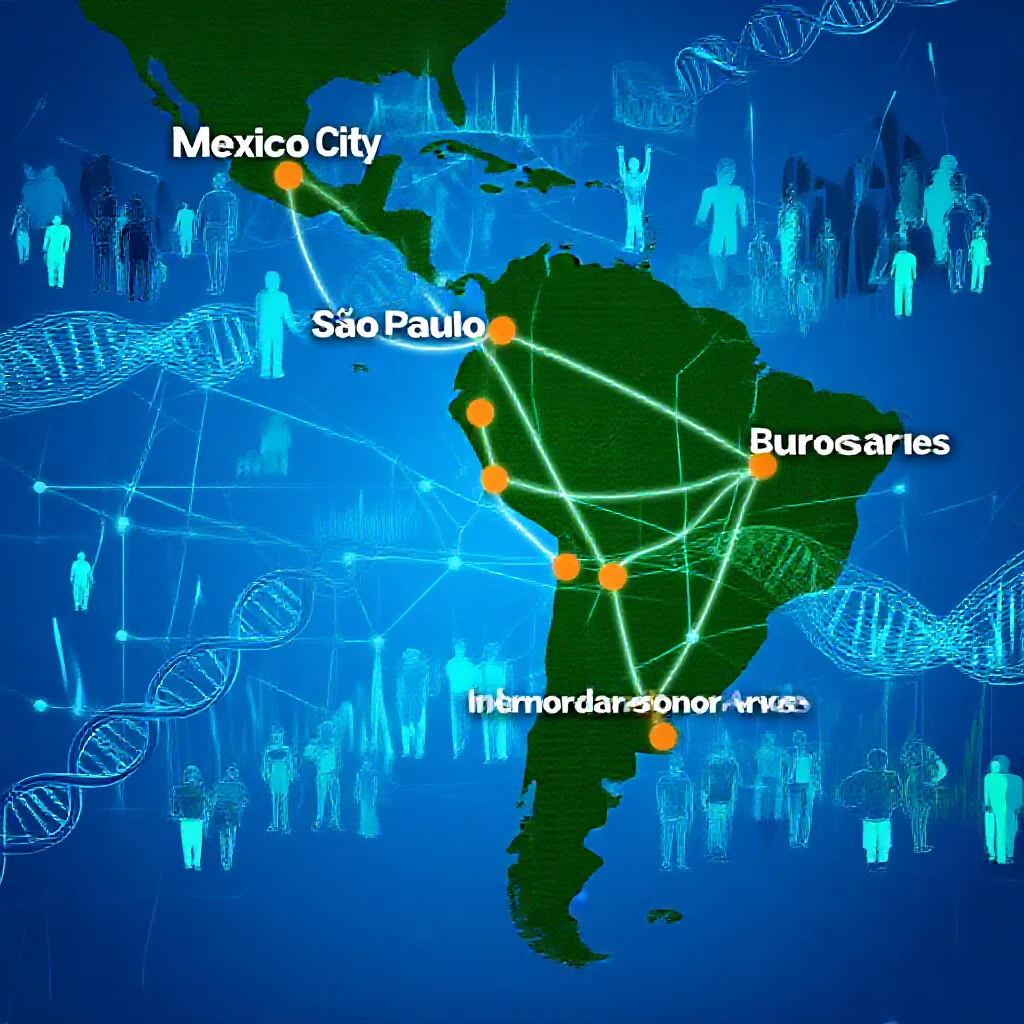
The market's growth, projected at a compound annual growth rate (CAGR) of 7.5% from 2023 to 2030 (Source 1: [Primary Data]), is underpinned by a network of specialized national hubs. Brazil holds the largest market share, leveraging its vast population and established research infrastructure. Mexico follows as the second-largest market, offering scale and proximity to North America. Argentina contributes a deep reservoir of scientific talent, while Chile provides a benchmark for regulatory stability. This complementary specialization creates a de facto regional supply chain, allowing for the strategic placement of trial activities based on specific protocol needs rather than cost alone.
The Demand Shift: Pharma's Quest for Complexity and Real-World Data
A decisive shift in sponsor demand is accelerating the region's strategic evolution. There is increasing demand for complex clinical trials, particularly in oncology and rare diseases. Latin America offers access to large, treatment-naïve patient populations with diverse genetic backgrounds, which is critical for the validity and generalizability of trial data in these challenging therapeutic areas.
Concurrently, the growing importance of Real-World Evidence (RWE) studies aligns perfectly with the region's characteristics. Latin America's heterogeneous healthcare systems—encompassing public, private, and social security models—generate rich, longitudinal patient data that is often unavailable in more homogenized markets. This data diversity provides unparalleled insights into treatment pathways, outcomes, and health economics, making the region a fertile ground for post-approval studies and outcomes research that inform global market access strategies.
Operational Evolution: CROs as Architects, Not Just Implementers
In response to these market demands, leading CROs in the region, including global players like IQVIA, Parexel, and ICON, are evolving from service implementers to strategic architects. The adoption of Decentralized Clinical Trial (DCT) components, such as telemedicine visits and direct-to-patient drug shipment, is a strategic response to geographical and accessibility challenges. These technologies enhance patient recruitment and retention, thereby improving data quality and trial efficiency.
This shift is institutionalized through a clear trend of pharmaceutical companies establishing long-term strategic partnerships with CROs, moving beyond transactional, per-trial contracts. These alliances indicate a deeper integration of CROs into the sponsor's R&D lifecycle, with CROs providing consultative input on protocol feasibility, site selection, and data strategy from the earliest stages.
Persistent Challenges: The Regulatory Frontier
Despite significant progress, the path forward is not without obstacles. The primary challenge remains regulatory harmonization. While efforts at alignment are occurring among national health authorities, the region still lacks a unified framework akin to the European Medicines Agency. Consequently, sponsors must navigate a mosaic of national regulations, and timelines for regulatory approval can be lengthy and unpredictable. This friction continues to be a key variable in the total cost and duration of studies, requiring sophisticated local regulatory expertise from CROs to manage effectively.
Conclusion: A Value-Driven Future in the Global R&D Chain
The trajectory of Latin America's CRO market points toward a future defined by strategic value rather than cost arbitrage. The convergence of a favorable economic baseline, specialized regional hubs, access to complex patient populations, and a growing capability in advanced trial methodologies creates a compelling proposition. The ongoing professionalization of CRO services and the deepening of sponsor partnerships will likely accelerate.
The neutral market prediction is that Latin America will continue to capture a greater share of global late-phase and specialized trials, particularly in oncology, rare diseases, and RWE generation. Success will be contingent on continued regulatory maturation and the ability of CROs to consistently deliver the high-quality, integrated data that global sponsors require. The region is poised not merely to participate in the global clinical research supply chain but to shape it as a critical, value-driven hub.