While expert advice for Latin American expansion in 2026 is timely, the real
Beyond 2026: Decoding the Strategic Imperatives for LATAM Business Expansion
Summary: While expert advice for Latin American expansion in 2026 is timely, the real story lies in the underlying, long-term strategic shifts that will define the region's next decade. This analysis moves beyond generic tips to explore the convergence of nearshoring momentum, digital infrastructure maturation, and evolving consumer demographics that are reshaping the investment landscape. We examine how companies must pivot from viewing LATAM as a monolithic market to engaging with its diverse, innovation-driven ecosystems. The article provides a framework for building resilient, locally-integrated operations that can thrive amidst regional volatility and capitalize on its emerging role in global supply chain reconfiguration.
---
Introduction: The 2026 Pivot Point – More Than Just Tips
The publication of business expansion advice for Latin America in 2026 (Source 1: [AgriBusiness Global, Mon, 23 Mar 2026]) functions as a symbolic marker. It coincides with a period of consolidated post-pandemic economic recalibration and an accelerated global reassessment of supply chain geography. Such advice should not be interpreted as a transient checklist. Its relevance is derived from a response to deeper, structural economic realignments impacting the region. The core thesis is that successful market entry and growth beyond 2026 necessitate an understanding of Latin America’s ongoing transition. The region is evolving from a commodity-dependent periphery in the global economy into a complex, interconnected hub of innovation, production, and consumption.
The Hidden Logic: Why LATAM is a Strategic Imperative, Not Just an Option
The strategic rationale for Latin American expansion post-2026 is underpinned by a convergence of exogenous and endogenous factors. Geopolitical friction and trade policy realignments have catalyzed a demand for nearshoring, positioning Latin America as a proximate, resilient alternative for North American and European markets. This shift is reinforced by the maturation of regional trade agreements like the USMCA and the Pacific Alliance, which reduce transactional friction.
The long-term impact is a fundamental restructuring of underlying supply chain logic. Companies are prioritizing regional resilience over pure cost minimization, leading to shorter, more agile logistical links. Latin America is consequently transitioning from an export source of raw materials to a critical node for integrated production and value-added services. This creates a dual-track market reality: high-growth digital economies and fintech adoption coexist with parallel, significant investment in foundational physical infrastructure, such as ports, railways, and renewable energy grids.
From Monolith to Mosaic: Deconstructing the LATAM Opportunity
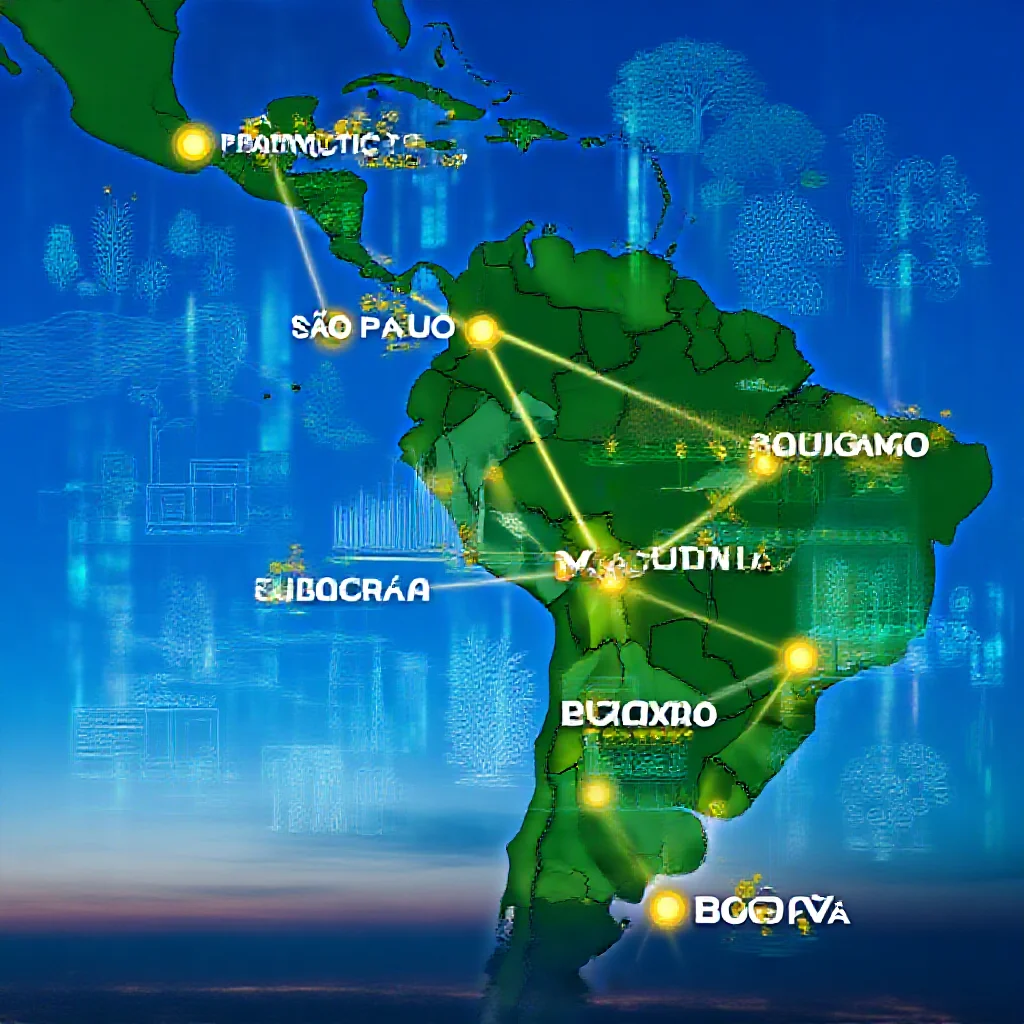
A monolithic regional strategy is a suboptimal approach. Effective expansion requires a granular, sub-regional analysis. The Pacific Alliance nations (Mexico, Colombia, Peru, Chile) have cultivated robust tech and services hubs, supported by stronger integration with global digital flows. The Mercosur bloc (notably Brazil and Argentina) presents a massive industrial base and internal consumption market, albeit with distinct regulatory complexities. Central America, particularly nations like Costa Rica and Panama, has solidified its role as a strategic nearshoring corridor for light manufacturing and logistics.
A critical, often overlooked viewpoint is the rise of secondary cities as primary investment destinations. Cities like Medellín, Guadalajara, Monterrey, and Curitiba have emerged as untapped centers of specialized talent, lower operational costs, and proactive local governance. These cities are developing innovation ecosystems that rival or surpass those in capital cities. Demographic and economic trends validating this dispersion of opportunity are documented in analyses by the Inter-American Development Bank (IDB) and the Economic Commission for Latin America and the Caribbean (ECLAC), which highlight growing educational attainment and entrepreneurial activity outside traditional megacities.
The 2026 Operator's Manual: Building for Resilience, Not Just Entry
Translating strategic rationale into operational reality requires a framework centered on resilience. The primary mechanism is the cultivation of local partnership ecosystems. Success is increasingly dependent on alliances with local firms, industry associations, and knowledge institutions to navigate regulatory environments, consumer preferences, and talent pools. Regulatory navigation must be agile, anticipating shifts rather than merely complying with current statutes.
Talent strategy must shift from cost arbitrage to capability development. Investing in local skill-building and leadership pipelines ensures long-term operational sustainability and innovation capacity. Supply chain design must incorporate redundancy and regional sourcing to mitigate disruption. This approach moves beyond market entry to establish locally-integrated operations capable of withstanding regional volatility and contributing to the regional value chain.
Conclusion: The Long Game in a Reconfiguring Hemisphere
The expansion advice circulating in 6 is a surface indicator of a profound, multi-decade reconfiguration. Latin America’s role is being redefined by the twin forces of global supply chain diversification and its own internal market maturation. Companies that succeed will be those that abandon outdated perceptions of the region. The future belongs to organizations that engage with Latin America’s complexity, invest in its mosaic of opportunities, and build operations designed for long-term integration and resilience. The region is no longer merely a destination for extraction or sales, but a foundational pillar for a diversified, modern global enterprise.