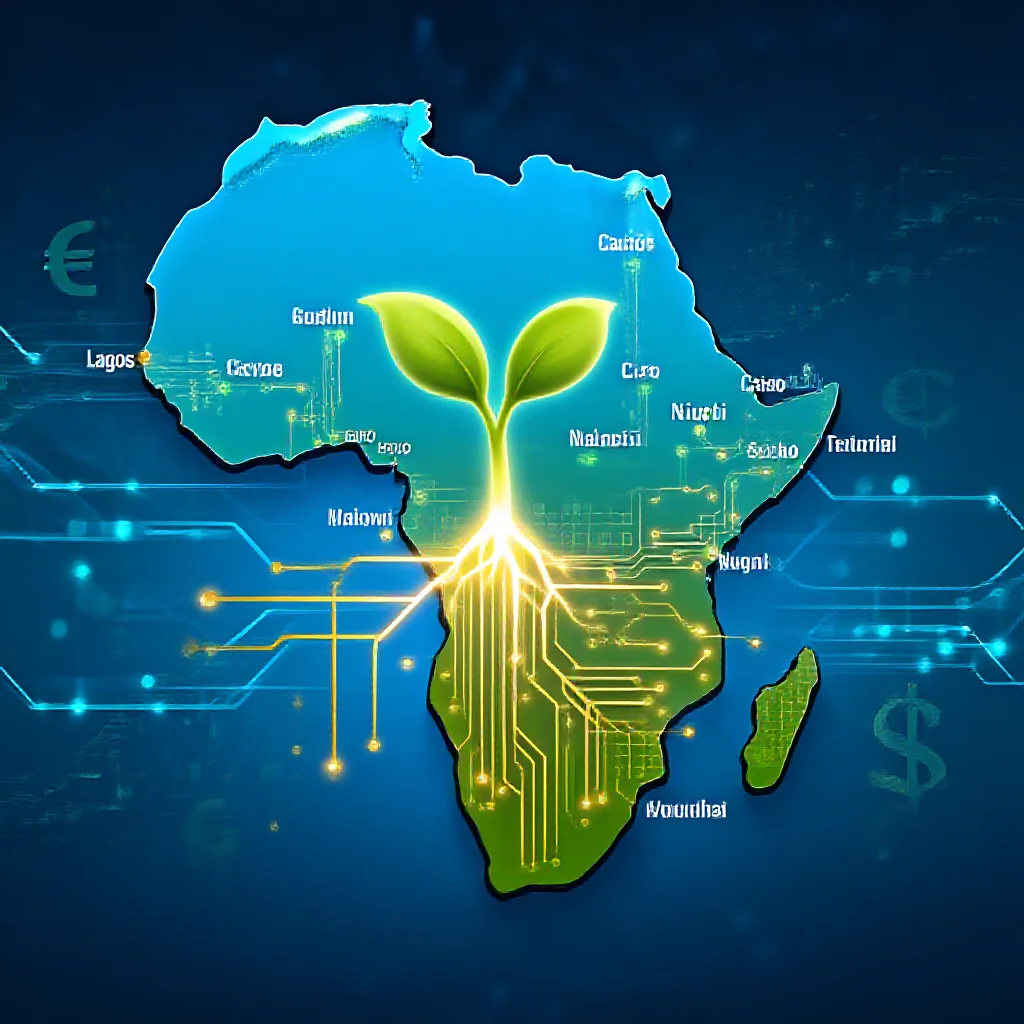
The global AI in agriculture market is projected to grow to $8.5 billion by 2030. This article analyzes the opportunities and implications for African agribusinesses and policymakers.
AI in Agriculture: How Africa Can Leverage the $8.5 Billion Global Market Growth
Executive Summary
The global market for artificial intelligence (AI) in agriculture is projected to expand from $2.8 billion in 2025 to $8.5 billion by 2030, representing a compound annual growth rate (CAGR) of 25.1%, according to a report by ResearchAndMarkets.com. This growth is driven by increasing adoption of AI technologies across the agricultural value chain, from crop monitoring to precision farming. For Africa, this trend offers significant opportunities to enhance agricultural productivity, improve food security, and attract agritech investment. This article examines market dynamics, key players, and strategic implications for African businesses and policymakers.
Introduction
Agriculture remains a cornerstone of many African economies, employing a substantial share of the population and contributing significantly to GDP. Yet the sector faces persistent challenges, including climate vulnerability, low mechanization, and inefficient supply chains. The emergence of AI-driven solutions presents a new frontier for transforming agricultural practices. The recent global market report highlights a strong growth trajectory for AI in agriculture, with significant opportunities for African stakeholders to modernize farming, boost yields, and drive economic development.
Main Analysis
Market Growth and Drivers
The AI in agriculture market is estimated at $2.8 billion in 2025 and is forecast to reach $8.5 billion by 2030, with a CAGR of 25.1%. According to the report, AI has shifted from a futurist concept to a crucial strategic tool for farmers and agribusinesses. Key applications include weather forecasting, crop monitoring, pest detection, drone-based pest control, food sorting, and livestock monitoring. These technologies enable predictive analytics, precise resource management, and data-driven decision-making, which can reduce costs and improve yields.
Technological Segments
The market is segmented by component (software, hardware, services), technology (machine learning, computer vision, natural language processing, predictive analysis), and application (precision farming, drone analytics, agricultural robots, livestock monitoring). Machine learning and computer vision are particularly relevant for African agriculture, where such tools can help detect crop diseases, optimize irrigation, and monitor soil health.
Competitive Landscape
Leading global companies such as Microsoft, IBM, Deere & Company, Syngenta, and Bayer CropScience are actively developing AI-based agricultural solutions. Their investments are likely to produce more accessible and affordable technologies over time, benefiting emerging markets, including those in Africa.
Business Impact
The growth of the AI in agriculture market holds multiple implications for businesses in Africa:
- Productivity Gains: African agribusinesses that adopt AI can improve crop yields, reduce post-harvest losses, and enhance supply chain efficiency.
- Investment Opportunities: Market expansion attracts venture capital and corporate investment in agritech startups, providing essential financing for innovation.
- SME Competitiveness: Small and medium-sized enterprises can leverage AI tools to cut operational costs and increase output, enhancing their competitive position.
- Skills and Employment: AI deployment creates demand for data scientists, agricultural engineers, and technically skilled agronomists, supporting job creation and talent development.
Regional Perspective
The report includes the Middle East and Africa as a regional segment, acknowledging the growing relevance of these markets. In Africa, AI adoption in agriculture varies by region:
- East Africa: With strong mobile money infrastructure, the region is well-positioned to integrate AI with mobile-based farmer services and advisory systems.
- West Africa: Countries such as Nigeria and Ghana are increasingly exploring AI for crop disease detection and yield prediction.
- Southern Africa: South Africa is emerging as an agritech innovation hub, with several startups focusing on precision agriculture.
Regional integration, particularly through the African Continental Free Trade Area (AfCFTA), could facilitate cross-border trade in agricultural technology and AI-enabled products. However, inadequate digital infrastructure and limited data availability remain barriers that require policy intervention.
Future Outlook
Over the next three to five years, the AI in agriculture market is expected to grow as technologies become more scalable and cost-effective. Key trends for Africa include:
- Mobile-First Solutions: Widespread mobile phone usage will drive AI-powered advisory services and market information systems.
- Data Infrastructure: Investments in data collection and connectivity are crucial for AI applications to function effectively.
- Public-Private Partnerships: Governments and development institutions are likely to partner with private companies to promote agritech adoption.
- Sustainable Agriculture: AI can support climate-smart farming practices, helping African agriculture adapt to environmental changes.
To fully benefit, African countries must prioritize digital literacy, invest in telecommunications infrastructure, and create regulatory environments that encourage innovation.
Conclusion
The projected expansion of the global AI in agriculture market represents a significant opportunity for Africa. By adopting AI technologies, African agricultural stakeholders can increase productivity, enhance food security, and contribute to broader economic transformation. The onus is on businesses, policymakers, and investors to collaborate in building ecosystems that support agritech innovation. With strategic planning and investment, Africa can position itself as a competitive player in the evolving global agricultural landscape.
Key Takeaways
- The global AI in agriculture market is expected to reach $8.5 billion by 2030, growing at a CAGR of 25.1% from 2025.
- AI applications such as precision farming, drone analytics, and livestock monitoring are transforming agricultural practices worldwide.
- African agribusinesses can leverage AI to improve efficiency, reduce losses, and attract investment.
- Regional cooperation and digital infrastructure development are critical to unlocking AI's potential in Africa.
- The AfCFTA can play a role in facilitating cross-border agritech trade and technology transfer.
Sources
- ResearchAndMarkets.com, "AI in Agriculture: Global Markets Report 2025-2030" (via Business Wire)
- Reference URL: https://www.businesswire.com/news/home/20251231669769/en/AI-in-Agriculture-Global-Markets-Report-2025-2030-Profiles-of-Leading-Players---Microsoft-IBM-Deere-Co.-Syngenta-and-Bayer-CropScience---ResearchAndMarkets.com