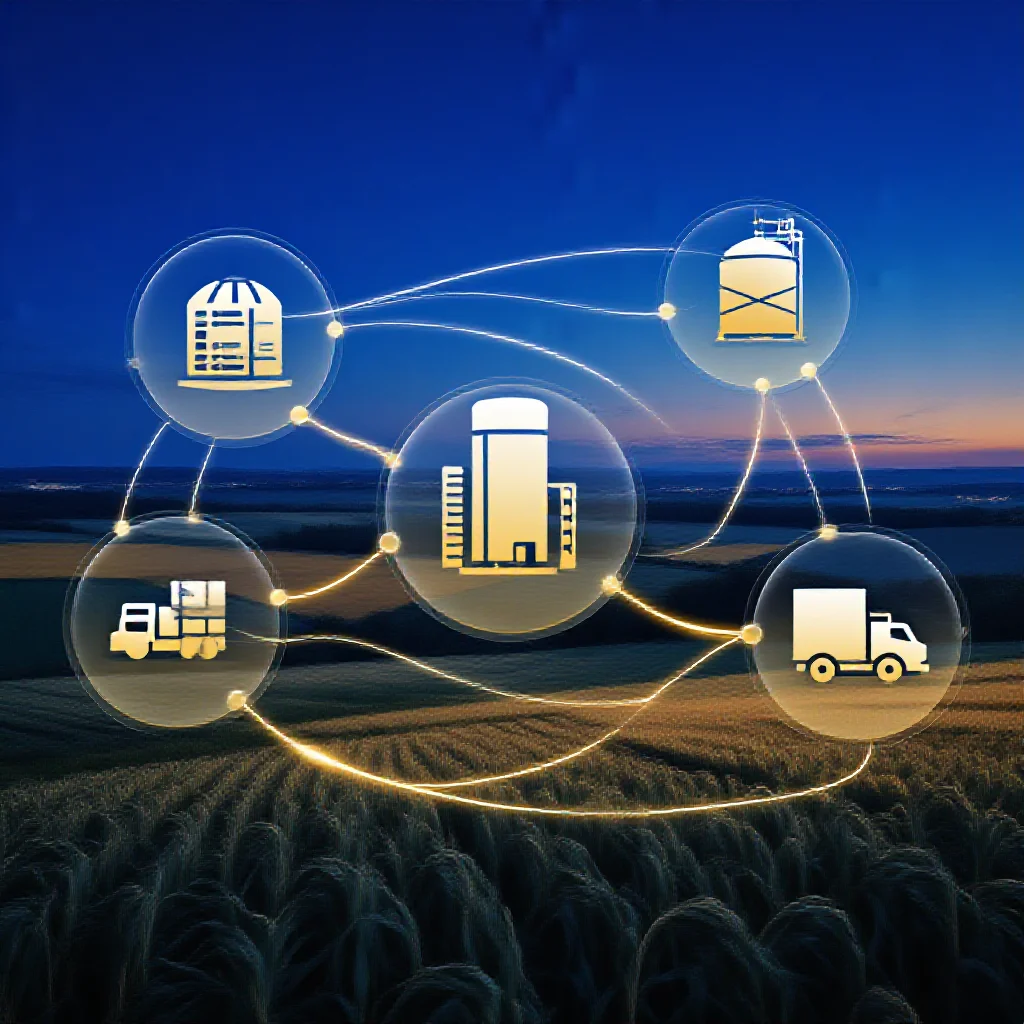
The true revolution in agricultural technology is not just in data collection,
Beyond the Farm: How Data Integration is Reshaping Agricultural Business Relationships and Value Chains
Introduction: Data as the New Connective Tissue in Agriculture
The narrative surrounding agricultural technology has progressed beyond the on-farm dashboard. The primary innovation is no longer the isolated collection of data points on soil moisture or yield but the strategic integration and management of this information across business networks. Data is evolving from a farm-level productivity tool into the core transactional and relational currency of modern agribusiness. This shift marks a transition from precision farming to precision partnerships. The central thesis is that integrated data management is redefining the mechanisms of value creation, risk allocation, and trust within agricultural value chains, moving the industry from a series of discrete transactions toward interconnected, data-driven ecosystems.
The Hidden Economic Logic: From Transactional to Relational Value
The economic imperative for data integration is rooted in the reduction of systemic costs and risks. In a traditional commodity chain, information asymmetry between producers, processors, and retailers leads to inefficiencies: overproduction, inventory mismatches, quality disputes, and price volatility. Integrated data flows act as a mitigating force. Shared data on planting schedules, input application, and projected yields allows processors to optimize capacity and retailers to manage inventory with greater precision, reducing waste and carrying costs for all parties.
This shared visibility enables a more profound shift from transactional to relational business models. The sale moves beyond a simple exchange of bulk commodity for price. Instead, value is created through verifiable attributes and guaranteed outcomes facilitated by data. For instance, outcome-based contracts can link farmer compensation to specific metrics of protein content in wheat or sustainability scores, with premiums paid for verified performance. Shared-savings models in logistics or input procurement, where efficiencies unlocked by data are financially distributed across partners, become feasible. Economic analyses underscore this: studies on supply chain transparency from institutions like the OECD highlight correlations between data integration and reduced transaction costs, improved risk management, and enhanced market access for differentiated products (Source 1: [OECD, "Digital Opportunities for Better Agricultural Policies"]).
The Dual-Track Reality: Fast Analysis vs. Slow, Strategic Integration
Agricultural data operates on two distinct temporal tracks, each serving different relational purposes.
Fast Analysis (Operational) concerns real-time or near-real-time data streams. This includes telematics from harvesters, real-time logistics tracking, and spot market price feeds. Its value is immediate and operational, enabling rapid decisions to reroute trucks, adjust drying schedules, or capitalize on fleeting market opportunities. It optimizes the existing transaction.
Slow Analysis (Strategic & Relational) involves the aggregation and interpretation of longitudinal data sets. This encompasses multi-year trends in soil organic matter, yield consistency across seasons, water-use efficiency metrics, and carbon sequestration data. This "slow data" does not drive day-to-day operations but builds the foundation for long-term business relationships. It provides the evidence base for securing preferential financing based on proven farm resilience, for contracting over multiple seasons with shared sustainability goals, and for building consumer-facing brand equity rooted in verified provenance and environmental stewardship. The profitability of an entire value chain can be enhanced by the consumer trust and premium pricing enabled by this slow, strategic data integration.
The Core Challenge: Trust, Interoperability, and Data Sovereignty
The transition to integrated data ecosystems is not a technical inevitability but is gated by significant structural challenges.
The 'Data Lock-in' Dilemma presents a paradox. Proprietary technology platforms offer powerful analytical tools but often create data silos. When a farmer's operational data is inextricably linked to a single vendor's ecosystem, it can weaken broader business relationships by making it difficult to share selective data sets with other partners, such as lenders or specialty buyers. This friction inhibits the fluid data exchange required for a truly resilient value chain.
Consequently, the issue of Data Sovereignty has moved to the forefront. The "farmer-as-data-owner" movement advocates for clear rights governing data access, control, and portability. Regulatory frameworks, such as the European Union's Data Act, are beginning to formalize these principles, shifting power dynamics by ensuring agricultural data generators maintain greater agency. Technical initiatives are running in parallel. Projects like Ag Data Transparent, which certifies clear data use agreements, and industry consortia developing open API standards aim to solve the Interoperability problem—ensuring machines and software from different manufacturers can exchange data seamlessly. The resolution of these challenges of trust, ownership, and technical compatibility is a prerequisite for widespread ecosystem development.
Forging the Future: Architecting Data-Driven Agri-Ecosystems
The future agricultural landscape will be defined by consciously architected data-sharing frameworks. Successful models will be built on principles that align incentives across the chain. Data-sharing agreements must clearly define the value proposition for each participant: what data is shared, with whom, for what specific purpose, and what tangible benefit is returned. This moves data exchange from a vague concept of collaboration to a structured component of business contracts.
This restructuring gives rise to new roles, particularly for Neutral Intermediaries. These are platform operators or data cooperatives that facilitate exchange and analysis without claiming ownership of the underlying data. They function as trusted custodians and analysts, enabling participants to derive collective insights while preserving individual sovereignty. The impact on traditional middlemen is significant; those whose value was based solely on information arbitrage will be disintermediated, while new intermediaries specializing in data validation, insight generation, and ecosystem orchestration will emerge.
The logical endpoint is a reconfiguration of profit pools. Value and margin will increasingly accumulate not just at the point of production or retail, but around the nodes that enable the most effective data synthesis, risk mitigation, and consumer connection. The agricultural businesses that master data as a relational asset will not merely optimize their operations but will fundamentally alter their strategic position, forging stronger, more transparent, and more profitable networks across the entire landscape.