Africa’s agriculture sector is the world’s fastest-growing, with value added
Africa's Agricultural Paradox: Booming Growth, Lagging Investment – What the Malabo Declaration Reveals
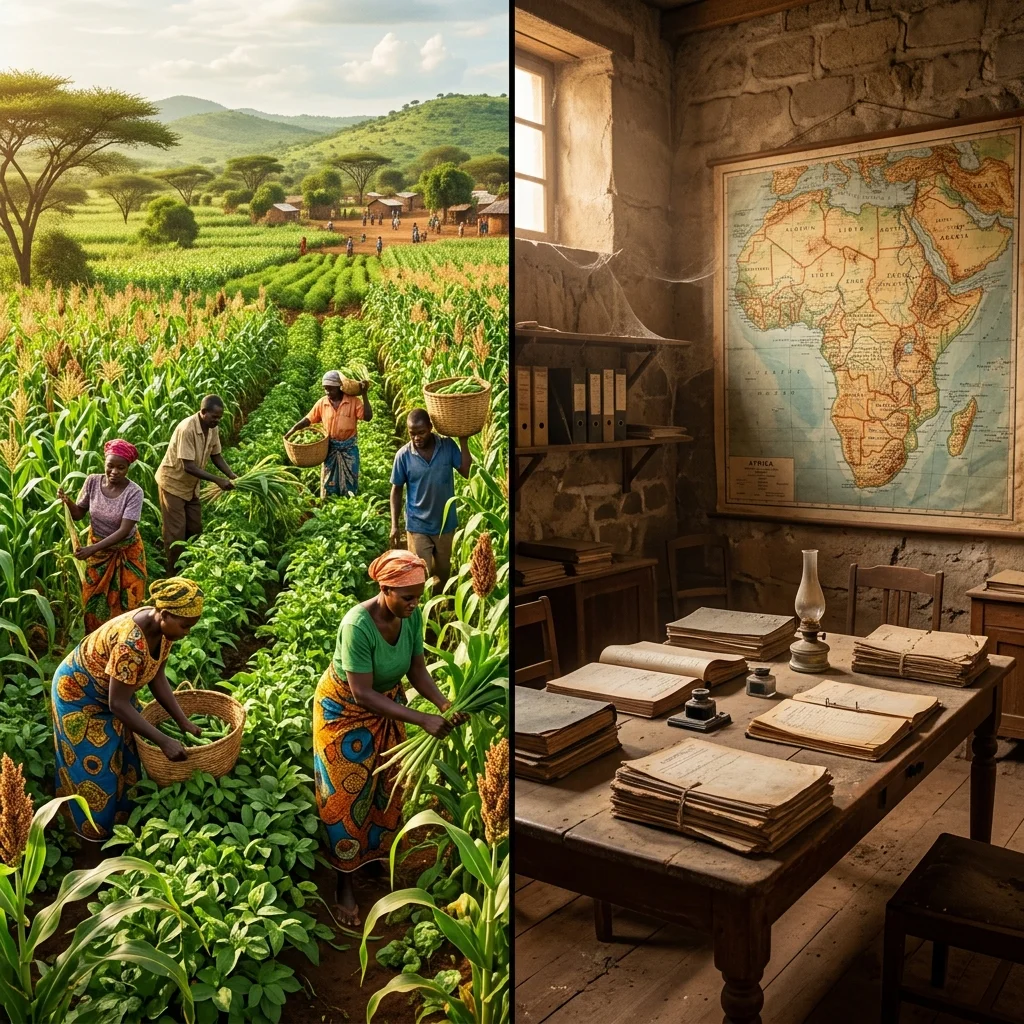
[IMAGE: A split composition: left side shows vibrant, green agricultural fields with African farmers harvesting crops; right side shows an empty government treasury room with dusty ledgers and a large map of Africa on the wall. No text or watermarks. Photorealistic, warm lighting.]
Africa’s agriculture sector is the world’s fastest-growing, with value added more than doubling from $200 billion to $425 billion since 2000. Yet the continent is far from meeting the Malabo Declaration’s 10% budget target. This article unpacks the disconnect between agricultural expansion and public investment, examining why only a handful of nations meet the commitment, where the money is actually going, and what this means for long-term food security and supply chain resilience.
---
Introduction: The African Agricultural Paradox
On paper, Africa’s agricultural story is one of remarkable success. Since the turn of the millennium, the continent’s agricultural sector has grown faster than any other region in the world. Value added surged from approximately $200 billion in 2000 to $425 billion by recent estimates. Labour productivity rose by 50%, and land productivity doubled. These are not marginal gains—they represent a structural transformation underway across much of Sub-Saharan Africa.
Yet beneath this headline growth lies a troubling contradiction. The Malabo Declaration, adopted by African Union member states in June 2014, committed nations to allocate at least 10% of their national budgets to agriculture by 2025. As that deadline approaches, only four countries—Burundi, the Democratic Republic of Congo, Ethiopia, and Mali—have achieved the target. Just one nation, Rwanda, is fully on track across all Malabo commitments according to the latest CAADP biennial review.
This article investigates why a booming sector faces chronic underinvestment, where public money is actually flowing, and what this disconnect means for Africa’s future food systems and supply chain resilience.
[IMAGE: An infographic showing rising agriculture value added line vs. flat investment share line.]
---
1. The Malabo Promise vs. Reality
The Malabo Declaration, signed in Equatorial Guinea in June 2014, was intended to be a turning point. It reaffirmed the commitments of the earlier Maputo Declaration (2003) and set ambitious targets: 10% of national budgets to agriculture, 6% annual agricultural growth, and the end of hunger by 2025. It also established the Comprehensive Africa Agriculture Development Programme (CAADP) as the framework for tracking progress through biennial reviews.
What the Data Shows
The 3rd CAADP Biennial Review, published in 2022, delivered sobering results. The continent is not on track to meet the 10% budget target. Only Rwanda is fully on track across all Malabo indicators. Four other nations—Burundi, DR Congo, Ethiopia, and Mali—met the 10% spending threshold, but have not met all related commitments.
More revealing is the trend line. Public expenditure on agriculture (PAE) nearly doubled in absolute terms, from $10.7 billion in 2000 to $17 billion in 2021. However, as a share of total government spending, agricultural allocations actually fell—from 3.9% to 2.4% over the same period. This means overall national budgets grew much faster than agricultural allocations, effectively shrinking the sector’s priority.
This is the central paradox: a sector that is demonstrably growing, creating jobs, and feeding populations is receiving a diminishing share of public resources.
[IMAGE: Bar chart comparing PAE absolute growth vs. share decline over 2000-2021.]
---
2. The Growth Story: Productivity Gains and GDP Contributions
To understand why the investment gap matters, we must first appreciate what the agricultural sector has already achieved.
Impressive Growth Rates
Agriculture value added grew at an annual rate of 4.1% between 2000 and 2015, and 3.2% between 2016 and 2021. These figures consistently outpaced global averages. Africa’s agricultural growth has not been accidental—it has been driven by improved seeds, increased fertilizer use, adoption of better farming practices, and expansion of cultivated land.
Productivity Transformation
Labour productivity in agriculture rose by 50% since 2000, meaning each worker now produces significantly more output. Land productivity—yield per hectare—doubled over the same period. These gains reflect the early impacts of agricultural research, extension services, and market access improvements in many countries.
Broader Economic Impact
Africa’s overall GDP doubled to approximately $2.7 trillion during this period, with agriculture playing a significant role as both a direct contributor and a source of demand for other sectors. However, the COVID-19 pandemic exposed underlying vulnerabilities: per capita income contracted by 5.3%, and supply chain disruptions reversed some productivity gains.
The growth story is real, but it is fragile. Sustaining and accelerating it requires consistent investment—precisely what the Malabo Declaration was designed to ensure.
[IMAGE: Graph showing productivity indices (labour, land) over time.]
---
3. The Investment Gap: Why So Few Meet the Target
If the sector is performing well, why are governments not investing more? The answer lies in a complex mix of competing priorities, institutional weaknesses, and political economy dynamics.
Competing Demands on Limited Budgets
African governments face enormous pressure to allocate resources across health, education, infrastructure, security, and debt servicing. Agriculture often loses out because its returns—while substantial—are slower to materialize than the political dividends of building a road or hiring teachers. Health crises, such as the COVID-19 pandemic and recurrent disease outbreaks, further crowd out agricultural spending.
Budget Execution Problems
Even when agricultural budgets are allocated, execution rates are often poor. Many countries allocate funds that are never released, or release them too late in the fiscal year to be effective. Weak procurement systems, limited technical capacity at ministry level, and corruption all contribute to the gap between budgeted and actual spending.
The Exception: Rwanda’s Success
Rwanda stands out as the only country fully on track across all Malabo commitments. Its success is attributed to strong political will at the highest levels, a comprehensive CAADP implementation strategy, and rigorous monitoring and evaluation systems. Rwanda integrates agricultural targets into its national development plans and holds ministries accountable for delivery. This demonstrates that the Malabo target is achievable—but it requires sustained political commitment, not just budgetary allocations.
Historical Patterns
Only five countries—Burkina Faso, Ethiopia, Malawi, Niger, and, depending on the period, Senegal—have consistently spent 10% or more of national budgets on agriculture between 1980 and 2020. These nations share common characteristics: agriculture is a dominant economic sector, political leadership prioritizes rural development, and there is continuity in agricultural policy across administrations.
[IMAGE: Map of Africa highlighting countries that meet or approach the 10% target.]
---
4. Beyond the Budget: Where Does the Money Go?
Even when funds are allocated, questions remain about how effectively they are spent. Analysis of agricultural public expenditure across African countries reveals significant variation in spending priorities.
National Agricultural Investment Plans
Most countries have developed National Agricultural Investment Plans (NAIPs) as required by CAADP. However, the alignment between these plans and actual budget allocations is often weak. In many cases, NAIPs are aspirational documents rather than operational spending guides.
The Spending Mix
Liberia and Zambia, for example, reinvest 77% and 63% of agricultural revenues respectively back into the sector—far above the continental average. However, much of this spending goes toward recurrent costs such as salaries and administration, rather than productivity-enhancing investments in research, irrigation, or market infrastructure.
The Missing Link: Smallholder Finance
A critical gap is financing for smallholder farmers, who produce the majority of Africa’s food. Traditional bank lending reaches less than 5% of smallholders in most countries. Government programs often prioritize large-scale commercial agriculture or strategic crops (such as cotton, cocoa, or coffee) over the staple food crops that underpin food security for the majority of the population.
Investment Quality vs. Quantity
The African agriculture investment gap is not simply about the total amount spent. It is also about the quality of spending. Investments in agricultural research and development, extension services, and rural infrastructure yield high returns but are often underfunded in favor of input subsidies or price support programs that can be politically appealing but economically inefficient.
---
5. Implications for Food Security and Supply Chain Resilience
The disconnect between agricultural growth and public investment has real consequences for Africa’s food security and supply chain resilience.
Vulnerability to Shocks
Without consistent investment in irrigation, storage, and transport infrastructure, Africa’s food supply chains remain highly vulnerable to climate shocks. The Horn of Africa drought, the Sahel floods, and the locust outbreaks of recent years all disrupted food systems. Countries that have invested in resilience—such as Ethiopia’s Productive Safety Net Programme and Rwanda’s irrigation expansion—fared better, but these remain exceptions rather than the rule.
Missed Export Opportunities
Africa’s agricultural export potential remains significantly underutilized. The continent imports $35–50 billion worth of food annually, much of which could be produced domestically. Closing the investment gap could reduce import dependence, create jobs, and improve trade balances.
The Private Sector Dimension
Public investment alone will not solve the problem. The private sector—including agribusinesses, processors, and logistics providers—needs an enabling environment to invest in supply chains. Public spending on rural roads, electricity, and market information systems creates the conditions for private investment to follow.
New Financing Pathways
Some positive trends are emerging. The African Development Bank’s Feed Africa strategy has committed $24 billion to agricultural transformation. Innovative financing mechanisms—such as blended finance, green bonds, and results-based financing—are being piloted in several countries. Digital agriculture platforms are improving access to credit for smallholders.
However, these initiatives remain small relative to the scale of the need. Without a sustained increase in public spending on agriculture, the gains of the past two decades risk being eroded by climate change, population growth, and geopolitical instability.
[IMAGE: A graph showing rising food import bills for African countries, overlaid with declining share of public agricultural spending.]
---
Conclusion: Resolving the Paradox
The African agricultural paradox—booming growth alongside lagging investment—is not inevitable. It is the result of policy choices, institutional weaknesses, and competing priorities. The Malabo Declaration set an ambitious target because the stakes are high: Africa’s growing population, youthful workforce, and vulnerability to climate change all depend on a thriving agricultural sector.
The evidence is clear: countries that invest consistently in agriculture see faster poverty reduction, stronger food security, and more resilient supply chains. Ethiopia, Rwanda, and Mali have demonstrated that the 10% target is achievable. The question is whether other nations will follow.
As the 2025 deadline approaches, the CAADP biennial review process provides a critical accountability mechanism. The gap between promise and reality is measurable—and fixable. What remains to be seen is whether political leaders will treat agricultural investment as the strategic priority it demands, or whether the paradox will persist into the next decade.
For Africa’s food future, the answer cannot come soon enough.
---
Keywords: Africa agriculture resources investment, Malabo Declaration, agricultural investment gap, CAADP biennial review, African food security